

Romance Tropes List for Writers: 25 Story Engines | SeaBell
A writer-side guide to using romance tropes as pressure, cost, delay, and scene engines—not as a flat list of familiar labels.
Romance tropes are familiar relationship patterns readers recognize quickly: enemies to lovers, forced proximity, fake dating, second chance, forbidden love, slow burn, fated mates, and many more. This romance tropes list is written for drafting, so it does not stop at naming the setup. It shows how each trope can create pressure, delay a choice, expose a secret, or attach a real cost to the relationship.
Writer-facing trope guides, including Writer's Digest's list of popular romance tropes for writers, usually work best when they move beyond recognition and into story use. This guide follows that line: not which trope is fashionable, but what the trope makes harder on the page.
That matters because a trope is not a plot by itself. “Only one bed” is not automatically romantic. “Enemies to lovers” is not automatically tense. “Fated mates” is not automatically emotional. The trope starts working when it gives the couple a reason to want each other and a reason not to act on that desire yet.
Use this guide in two passes. First, skim the list to find the romance trope family that fits your story. Then return to the sections on relationship pressure, scene design, and drafting briefs when you need to turn that familiar setup into actual chapters.
💡 What Are Romance Tropes?
Romance tropes are recurring story setups that shape how two characters meet, resist, desire, misunderstand, choose, or lose each other before the relationship resolves. They are not the same as clichés, although a weak version of a trope can become one.
For a broader reference list, Reedsy’s romance tropes guide is useful for naming the familiar patterns. The writer’s job starts after that: deciding what pressure the pattern creates in this story.
A trope becomes useful because it creates a reader promise. If a story uses fake dating, readers expect the public performance to start revealing private truth. If it uses second chance romance, readers expect the old wound to matter in the present. If it uses forbidden love, readers expect the relationship to carry a real consequence, not just a decorative warning sign.
For writers, the question is not “Has this trope been used before?” It has. The better question is: “What does this trope make harder for these two specific people?”
Most flat trope drafts do not fail because the setup is familiar. They fail because the setup never changes the next scene. The characters are placed near each other, opposed to each other, or destined for each other, but nothing becomes more expensive after that fact is introduced.
🧭 How Writers Should Use a Romance Trope
Before choosing from a list of romantic tropes, test the idea with four practical questions:
- What creates the attraction?
- What blocks action?
- What does acting on the attraction cost?
- What delays the confession, choice, or commitment without making the characters look passive?
If you cannot answer those four questions, you may have a label rather than a usable story engine.
For example, “rivals to lovers” sounds clear, but the actual story depends on what the rivalry threatens. Are they competing for the same grant, throne, promotion, magical apprenticeship, family approval, or public reputation? If one of them gives in emotionally, what do they lose? If the answer is only “they feel awkward,” the trope will run out of energy quickly.
A strong romance trope usually gives the story at least one job to do:
- creates unavoidable contact;
- forces a character to revise a belief;
- exposes a secret;
- raises the cost of honesty;
- makes a public role conflict with a private feeling;
- turns desire into a decision with consequences.
When I see a romance scene lose tension, the problem is often not the dialogue. It is a writing tension problem: the scene has no irreversible pressure. Two people can flirt beautifully for five pages, but if neither one risks reputation, safety, loyalty, pride, or a plan, the scene feels pleasant rather than necessary.
📚 Romance Tropes List for Writers
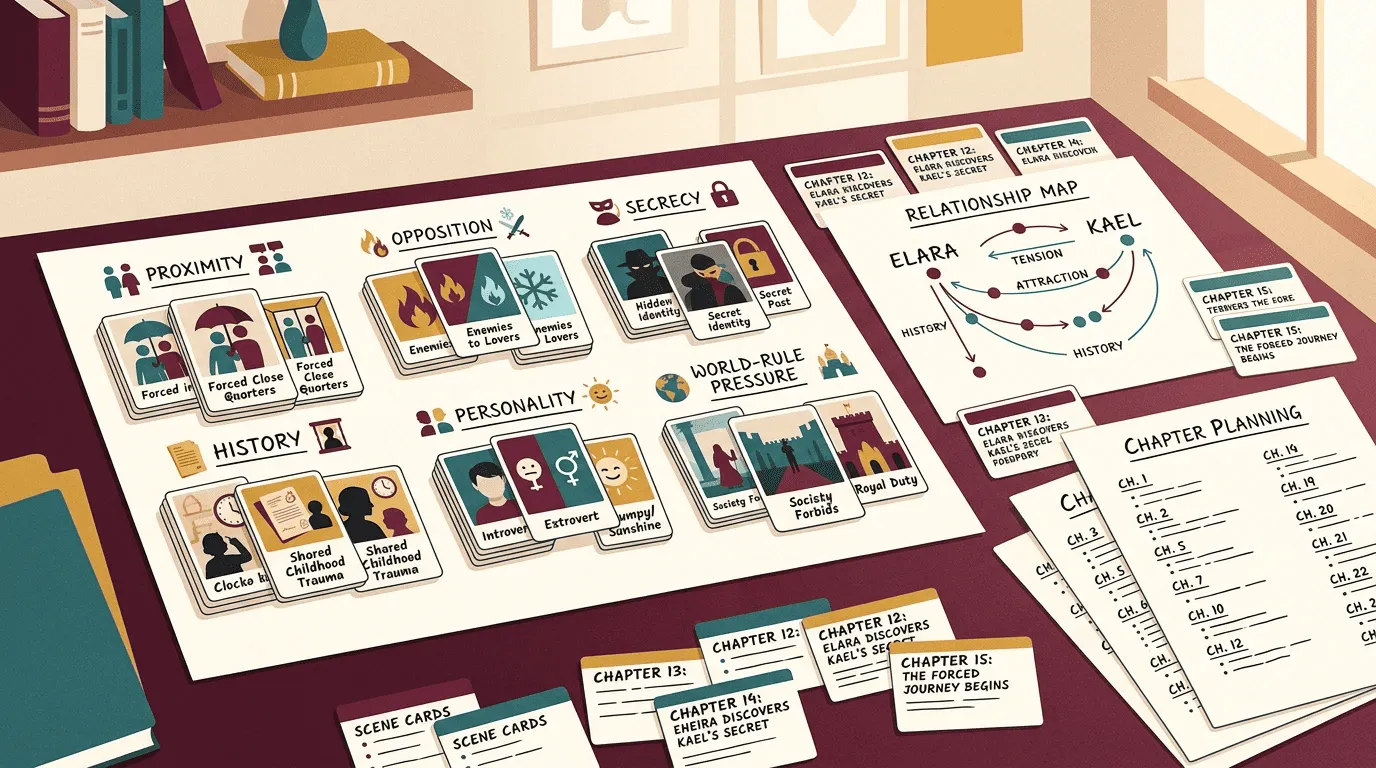
This romance tropes list groups common setups by the kind of story engine they create. That keeps the list browsable while still showing why neighboring tropes do different work.
Proximity Tropes: When Closeness Makes Avoidance Harder
Proximity tropes put characters in the same space until avoidance stops working. The risk is simple: if the closeness is only logistical, the trope becomes a cute setup with no emotional escalation.
Common proximity tropes include:
- forced proximity — the characters cannot leave the same room, mission, shelter, ship, inn, or route;
- only one bed — physical closeness exposes care, injury, restraint, awkwardness, or trust;
- road trip romance — repeated travel decisions make private habits and stress responses visible;
- workplace partnership — professional cooperation creates a reputational cost if attraction becomes obvious;
- arranged partnership — duty forces teamwork before emotional consent catches up;
- roommates to lovers — domestic routines make avoidance harder than grand gestures do;
- stuck together by weather, magic, danger, or duty — the outside pressure removes an escape route.
Readers expect small reactions to matter because the characters cannot simply walk away. A glance, a habit, a wound, or a private kindness becomes harder to ignore.
The weak draft leaves the relationship state unchanged. They share space, banter, cook breakfast, survive a delay, and end the scene with the same emotional information they had at the start.
To make the trope draftable, give the shared space a rule. One character must hide an injury. One must pretend not to care. One must protect a secret object. One must rely on the person they do not want to need. The proximity should remove an escape route, not merely place two attractive people near each other.
Example: Instead of “They are trapped in an inn with one bed,” try “She can take the floor, but doing so will reveal that she was injured during the duel she promised she avoided. He offers the bed because he already noticed the limp, and accepting his help would mean admitting he sees her too clearly.”
Opposition Tropes: When Attraction Damages a Loyalty, Role, or Belief
Opposition tropes create tension by making desire feel disloyal. The characters may want each other, but the relationship threatens something they believe, protect, or owe.
Common opposition tropes include:
- enemies to lovers — attraction crosses a real moral, political, family, or survival line;
- rivals to lovers — desire complicates competition for the same prize, status, role, or public win;
- forbidden love — the relationship carries an outside consequence that cannot be solved by private desire alone;
- betrayal to trust — one character must decide whether changed behavior can outweigh old harm;
- opposing factions — love threatens allegiance, reputation, law, or group safety;
- hero and suspect — intimacy interferes with judgment, duty, or the search for truth;
- hunter and supernatural love interest — attraction challenges the story’s rules about danger, identity, and mercy.
The point is not whether the characters snap at each other. It is what affection would damage. Enemies to lovers usually needs the strongest external conflict: helping the other person should cost something visible. Rivals to lovers can be lighter, but the rivalry still needs a prize that matters. Betrayal-to-trust is quieter and more intimate; the obstacle is not “we are on opposite sides” but “your past choice changed how I protect myself now.”
Most convincing enemies-to-lovers drafts keep the opposition alive longer than the characters want it alive. The first moment of softness should create a new problem, not end the problem. If helping him saves her conscience but damages her faction, the romance has started to move the plot.
Example: Weak version: “They hate each other but are attracted.” Stronger version: “She needs his public vote to stop a policy that will ruin her district. He knows her family secret and can expose it. Supporting her costs him his faction’s trust, but opposing her proves he has become the person she thinks he is.”
Performance and Secrecy Tropes: When the Public Lie Creates Private Truth
Performance and secrecy tropes work because characters must manage two versions of the relationship: the story other people see and the truth they are trying not to face.
Common performance and secrecy tropes include:
- fake dating — public affection forces private feelings into rehearsal;
- marriage of convenience — a practical arrangement starts creating emotional obligations;
- hidden identity — one character’s name, status, species, job, or past changes the meaning of every honest moment;
- secret relationship — the couple has truth in private but cannot survive public exposure yet;
- mistaken identity — intimacy grows around a false assumption that will eventually demand correction;
- undercover romance — duty requires deception even when the emotional response becomes real;
- celebrity and ordinary person — public image turns ordinary intimacy into a risk;
- public engagement, private deal — the public story becomes easier to perform than the private bargain is to survive.
Fake dating is about public performance: other people must believe the lie, so the couple keeps acting until the acting becomes dangerous. Hidden identity and undercover romance work in the opposite direction: the private bond may be real, but one withheld fact can rewrite everything once revealed. Secret relationship sits between them. The love may not be fake at all, but the cost of being seen becomes the pressure.
A common failure mode is to write only the visible performance. The characters pretend, blush, and move on, but the scene does not change what they know about each other.
To make the trope draftable, make each lie create a private debt. If he calls her “my partner” in front of his family, what does that word expose? If she invents a detail about how they met, why does the invented version hurt more than expected? If they stage affection for an audience, what does one character notice that no audience could have noticed?
The best fake-dating scenes often hinge on one unscripted detail. The hand on the back is planned; the moment one character quietly steers the other away from a painful conversation is not. That unscripted protection is where the trope stops being a costume.
History Tropes: When the Past Still Controls Present Behavior
History tropes give the relationship emotional weight before the first chapter begins. They can make desire feel layered, but they become vague if the past is only referenced and never dramatized through present choices.
Common history tropes include:
- second chance romance;
- childhood friends to lovers;
- exes to lovers;
- first love returns;
- unrequited love;
- old promise;
- missed connection;
- reunion after betrayal.
The old version of the relationship should still shape how the characters speak, avoid, test, or misread each other now. If the backstory only explains why they are sad, the trope stays inert. If the backstory creates a present rule, the scene has something to press against.
Turn the past into behavior: they never discuss the final letter; she always leaves before breakfast; he refuses to enter her workshop; they both remember the promise, but only one knows why it was broken.
A second-chance romance needs more than “they still have feelings.” It needs evidence that the old wound has become a habit. If the breakup made one character control every plan, the reunion should put them in a situation where control stops working. If one character disappeared to protect someone, the present plot should make that same sacrifice impossible to hide.
Personality and Rhythm Tropes: When Contrast Changes Choices
Personality tropes are easy to recognize and easy to develop generically. Grumpy/sunshine, slow burn, mutual pining, and caretaking romance can all work, but only if the contrast changes decisions.
Common personality and rhythm tropes include:
- grumpy sunshine — one character’s guardedness meets another’s deliberate warmth;
- sunshine protector — kindness is not softness; it becomes the way a character defends others;
- cinnamon roll hero — gentleness creates trust, but the story still needs spine and choice;
- ice queen thaw — distance protects a wound, duty, shame, or fear;
- slow burn — desire grows through delayed choices, not empty waiting;
- mutual pining — both characters want the relationship but misread signals, timing, or risk;
- opposites attract — contrast matters because each person solves life differently;
- caretaking romance — vulnerability shifts the balance of pride, trust, and dependence.
The characters’ temperaments should reveal different survival strategies. One is not simply cheerful; cheerfulness may be how they keep control. One is not simply cold; distance may be how they avoid debt, shame, or fear.
The mood-board version is easy to spot: one character scowls, the other smiles, and the story assumes contrast is the same as chemistry. A stronger scene asks what the trait protects, then puts that protection under pressure.
Slow burn and mutual pining are related, but they are not the same delay. Slow burn works when every step forward creates a new consequence: a look changes what they know, a rescue changes what they owe, a near-confession changes what they can safely pretend. Mutual pining works when the delay comes from interpretation. Each character may be emotionally close to the truth, but a past rejection, social risk, duty, or badly timed kindness makes the other person’s feelings look uncertain.
Caretaking needs the same care. A fever scene, wound treatment, or emotional breakdown should not exist only to make one character look tender. It should change what help means between them. The person being cared for may have to accept dependence; the caretaker may have to stop using competence as a way to avoid being known.
Power, Status, and World-Rule Tropes: When Desire Has Consequences
Power, status, and world-rule tropes can add scale to romance, but they need careful handling. If one character has institutional, social, supernatural, or economic power over the other, the story should acknowledge the imbalance instead of treating it as automatic fantasy fuel.
Common power, status, and world-rule tropes include:
- royal and commoner;
- bodyguard romance;
- boss and assistant;
- mentor and rival apprentice;
- fated mates;
- supernatural bond;
- monster romance;
- vampire or werewolf love interest;
- arranged alliance between houses, packs, courts, or kingdoms.
Readers expect consequences beyond private attraction. A public role, law, bond, curse, hierarchy, or world rule should shape what the couple can choose.
The weak version uses status or destiny as proof of love before the characters make meaningful choices. “The bond chose us” cannot do all the emotional work. Neither can “he is powerful” or “she is forbidden.”
A practical safeguard is to give the lower-power character a real refusal path and make the higher-power character pay a visible cost for respecting it. In a royal/commoner romance, that might mean the commoner can leave court without losing family protection. In a bodyguard romance, it might mean the bodyguard requests reassignment before confessing. In a supernatural bond story, it might mean the bond creates awareness but not permission; the characters still choose distance, terms, and timing.
This is especially important in paranormal, romantasy, vampire, and werewolf examples. A supernatural bond can heighten stakes, but it should not erase agency. The most interesting version is often not “the bond proves they are meant to be,” but “the bond creates pressure, and the characters still have to decide what kind of love would be ethical, mutual, and survivable.”
🎯 How to Choose the Right Romance Trope for Your Novel
Do not start by asking which trope is most popular. Start by asking what kind of pressure your couple needs.
Try these questions:
- What does each character want before romance complicates it?
- What would become harder if they admitted attraction?
- Who else would be affected by the relationship?
- What belief would each character have to revise?
- What scene becomes more difficult because of this trope?
- What truth can the trope expose that ordinary conversation would avoid?
If those answers start turning into relationship state, secrets, alliances, and unresolved pressure, move them into a character relationship chart template instead of leaving them as loose notes around the draft.
Adjacent tropes often look similar until you ask where the cost comes from. Choose enemies to lovers when the couple’s affection would betray a real side, oath, or moral position. Choose rivals to lovers when the main pressure is competition and public pride. Choose betrayal-to-trust when the story is less about opposite sides and more about whether changed behavior can repair a specific wound.
Choose forced proximity when the story needs private contact the characters cannot avoid. Choose fake dating when the pressure comes from public performance and the fear that the lie is becoming emotionally true. Choose fated mates when the world itself creates a bond, but choose forbidden love when the central question is whether the relationship can survive a social, legal, family, or moral barrier.
A practical test: describe the trope without using the trope name. If the story still sounds specific, you have a usable engine. If it collapses into “two people are attracted but cannot be together,” the idea needs more pressure.
For example:
- Label only: “It is a forbidden love story.”
- More useful: “She is the healer assigned to keep the rebel prisoner alive until trial; if she helps him escape, her sister loses the legal protection that keeps their family safe.”
The second version gives you scenes: treatment room, trial deadline, sister conflict, escape opportunity, moral choice, and a cost that does not disappear when the couple kisses.
🎬 How to Turn a Trope Into a Scene
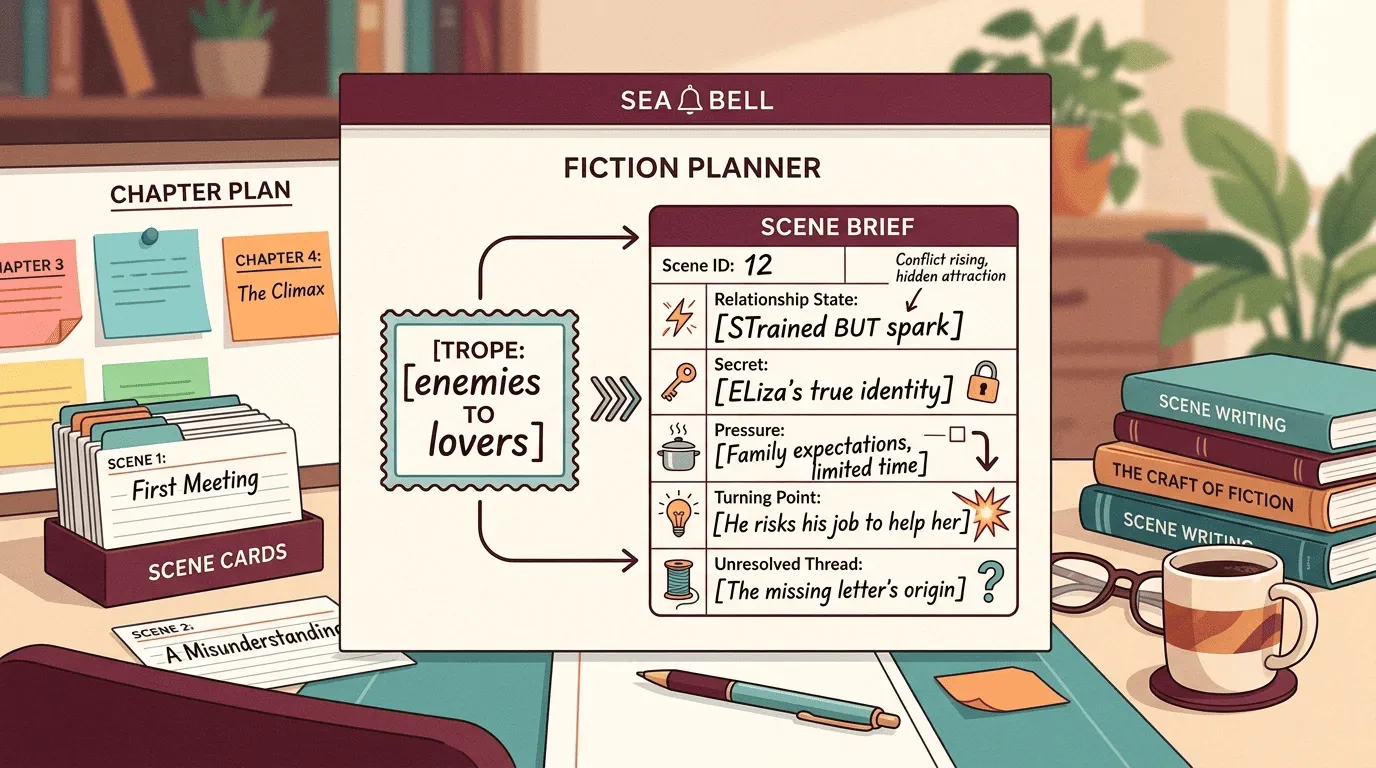
Once you have a trope, turn it into a light scene brief before drafting. This is not a full scene card template or a complete chapter-planning system. It is a quick bridge from trope label to scene pressure, so the chapter does not become general banter or repeated longing.
Use this mini-template:
- Trope:
- Current relationship state:
- What each character wants in this scene:
- What each character cannot say yet:
- Secret, wound, or outside pressure:
- Romantic pressure:
- Turning point:
- Unresolved thread to carry forward:
Example:
- Trope: rivals to lovers
- Current relationship state: public competitors, private respect they refuse to name
- Character A wants: to win the council vote
- Character B wants: to avoid making his faction look weak
- Cannot say yet: she needs his judgment; he admires her courage
- Outside pressure: a leaked document could ruin her family
- Romantic pressure: he offers help but demands a public concession
- Turning point: she realizes he protected the document before using it
- Unresolved thread: accepting his help makes her look compromised
This kind of brief gives the scene a spine. It does not replace deeper scene planning, but it keeps the romance connected to action.
🌍 Romance Trope Examples by Subgenre
A trope changes when the source of pressure changes. That is why a broad romance tropes list should not treat every example as interchangeable.
In contemporary romance, forced proximity might be a work trip, a shared apartment problem, or a community project. The pressure is often social, professional, or emotional.
In romantasy, forced proximity might be a quest, treaty, curse, or magical trial. The pressure may involve public duty, survival, or world rules.
In paranormal romance, vampire and werewolf examples often use danger, secrecy, bonds, pack politics, or immortality to raise the stakes. Those elements can be powerful, but they should not take over this article’s main axis. Reader-side guides to vampire romance books and werewolf romance books can own those genre expectations; here they are useful as examples of how world rules change a trope.
For a longer romance arc or series, track the reader promise, relationship state, world rules, and continuity decisions in a story bible template so the trope does not reset every time the couple enters a new chapter or book.
In dark romance or high-status romance, power dynamics must be handled with extra care. If a trope depends on control, captivity, hierarchy, debt, or authority, the story needs clear agency and consent-aware framing. The point is not to flatten dangerous setups into safe ones. The point is to make sure the emotional contract is intentional rather than accidental.
“Forbidden love” shows the difference clearly. In a small-town contemporary, it may threaten family reputation or a shared business. In romantasy, it may threaten a treaty. In vampire romance, it may threaten secrecy, mortality, or allegiance. The label is the same; the cost is not. That same test sets up the worked example below.
✍️ Example: Turning Enemies to Lovers Into a Drafting Brief
Here is a fuller drafting brief built from the opposition-trope logic above.
Weak premise:
“They are enemies, but they are attracted to each other.”
Why it is weak: It names the trope but gives the writer no scene pressure. We do not know what they oppose, what attraction costs, or why they cannot simply change their minds.
Stronger drafting brief:
“She is a reform candidate who needs one public vote to stop a law that would remove protection from her district. He is the son of the faction leader who benefits from the law. He knows her family once accepted money from that same faction, and exposing it would destroy her credibility. Helping her would make him look disloyal. Destroying her would prove he has inherited everything he secretly hates about his family.”
Now the trope creates draftable scenes:
- a public debate where he can humiliate her but chooses not to;
- a private meeting where she realizes he knows the secret;
- a family dinner where he is pressured to use the information;
- a crisis where helping her costs him visible status;
- a near-confession that cannot happen because the vote is still unresolved.
This is still enemies to lovers, but the romance is no longer floating above the plot. Every emotional step changes the political and personal situation.
🔔 Where SeaBell Fits in a Romance Writing Workflow
After you choose a trope, the hardest part is often continuity. You may know the couple is using fake dating, slow burn, or rivals to lovers, but by chapter seven you also need to remember the current relationship state, the secret they are avoiding, the line they cannot say yet, and the unresolved thread from the previous scene.
If you are drafting a short one-off scene, a simple note may be enough. For a longer romance, romantasy, paranormal arc, or serialized story, the risk is not that you forget the trope name. It is that the relationship resets because the pressure note, character state, and next chapter plan live in different places.
This is where SeaBell can hold the working context without taking over the creative decision. A writer can turn the trope choice into reusable drafting material: save the current relationship state in an AI character card for novel writing, carry the unresolved secret into a chapter brief, and check the next confrontation inside an AI book writer workspace.
The practical habit is to save the pressure, not just the label. “Fake dating” is less useful than “public lie: engaged for the inheritance hearing; private truth: she knows the ring belonged to his mother; cost: he must defend the lie in front of the sibling who was disinherited.” That note gives the next scene something to use.
❓ FAQ
What are romance tropes?
Romance tropes are recognizable relationship patterns that help shape attraction, conflict, delay, and emotional payoff in a love story. For writers, a trope is most useful when it creates pressure: something the couple wants, something that blocks them, and something that changes if they act on the attraction.
What are the most popular romance tropes?
Common romance tropes include enemies to lovers, friends to lovers, fake dating, forced proximity, only one bed, second chance romance, forbidden love, grumpy sunshine, slow burn, marriage of convenience, and fated mates. “Popular” does not mean automatically better; the best choice is the trope that gives your specific couple the clearest barrier, cost, and emotional turn.
What is the difference between a trope and a cliché?
A trope is a familiar pattern readers recognize. A cliché is a familiar pattern used without enough specificity, consequence, or emotional truth. Enemies to lovers is a trope; two characters insulting each other for no meaningful reason until they suddenly kiss is closer to cliché.
How many romance tropes should one novel use?
A romance novel can use several tropes, but one or two should do the main structural work. Too many equal-weight tropes can make the story feel unfocused. Choose the central relationship engine first, then use smaller tropes only when they support that engine.
How do writers make common romance tropes feel fresh?
Writers make common romance tropes feel fresh by making the cost specific. Freshness usually comes from the characters’ private wounds, public roles, secrets, choices, and consequences, not from inventing a completely new setup. If the trope changes what a character must risk in the next scene, it will feel less generic.
What is the enemies-to-lovers trope?
Enemies to lovers is a romance trope where two characters start in genuine opposition and gradually develop attraction, trust, and emotional vulnerability. For writers, the key is making the opposition real enough that affection creates a new problem before it becomes the solution. If helping her costs him his faction’s trust, the romance has started to move the plot. That keeps the opposition alive longer than the characters want it alive.
What is the fated mates trope in romance?
Fated mates is a romance trope where the story world marks two characters as destined, bonded, or uniquely connected. It is common in paranormal romance, werewolf romance, romantasy, and supernatural stories. The strongest versions still give the characters agency, consent, and meaningful choices, so destiny creates pressure rather than replacing the relationship arc.
Can romance tropes work outside traditional romance novels?
Yes. Romance tropes can work in fantasy, mystery, science fiction, horror, web novels, literary fiction, and other genres when the relationship affects the plot. The key is making the trope change decisions, risks, alliances, or emotional stakes rather than treating it as a side decoration.
Related Posts
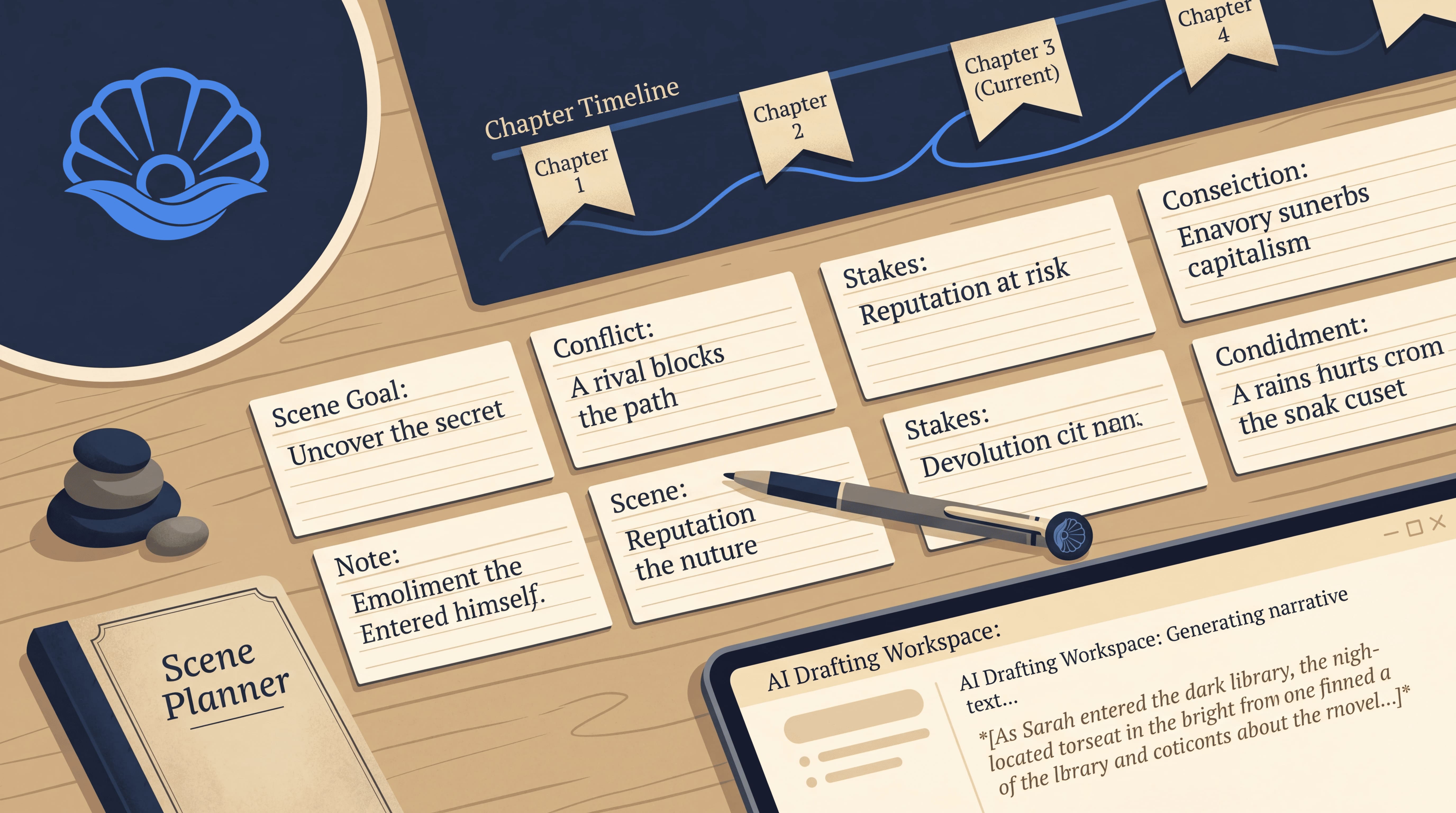
Scene Card Template for Novel Writers | SeaBell
Copy a scene card template for fiction writing, see a filled example, and turn your scene plan into a focused AI drafting brief

Vampire Romance Books: Dark, Spicy, Gothic Reading Guide
Choose vampire romance books by mood, trope, heat level, series format, Twilight-style restraint, online stories, and writing ideas.
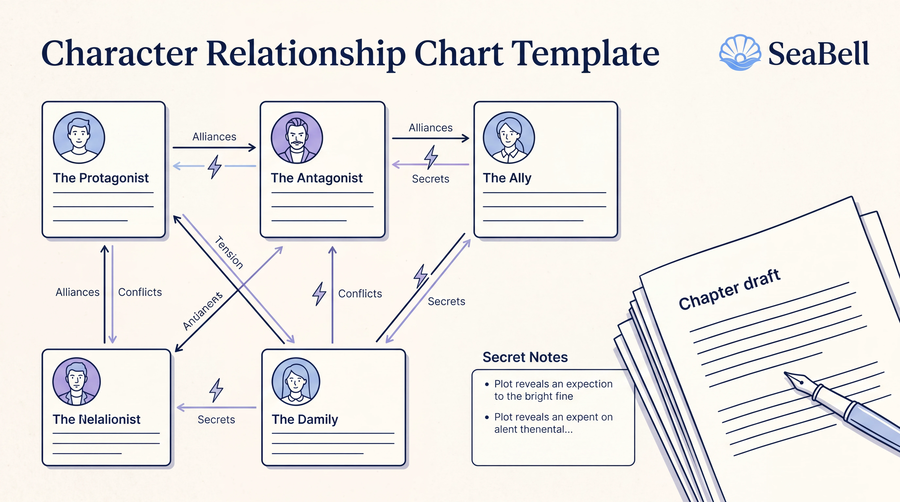
Character Relationship Chart Template for Fiction Writers
Use this character relationship chart template to track alliances, secrets, conflict, romance, family ties, and relationship changes across your fiction draft.