

Character Flaws List: 75 Flaws That Create Story Pressure | SeaBell
Character Flaws List: 75 Flaws That Create Better Story Pressure
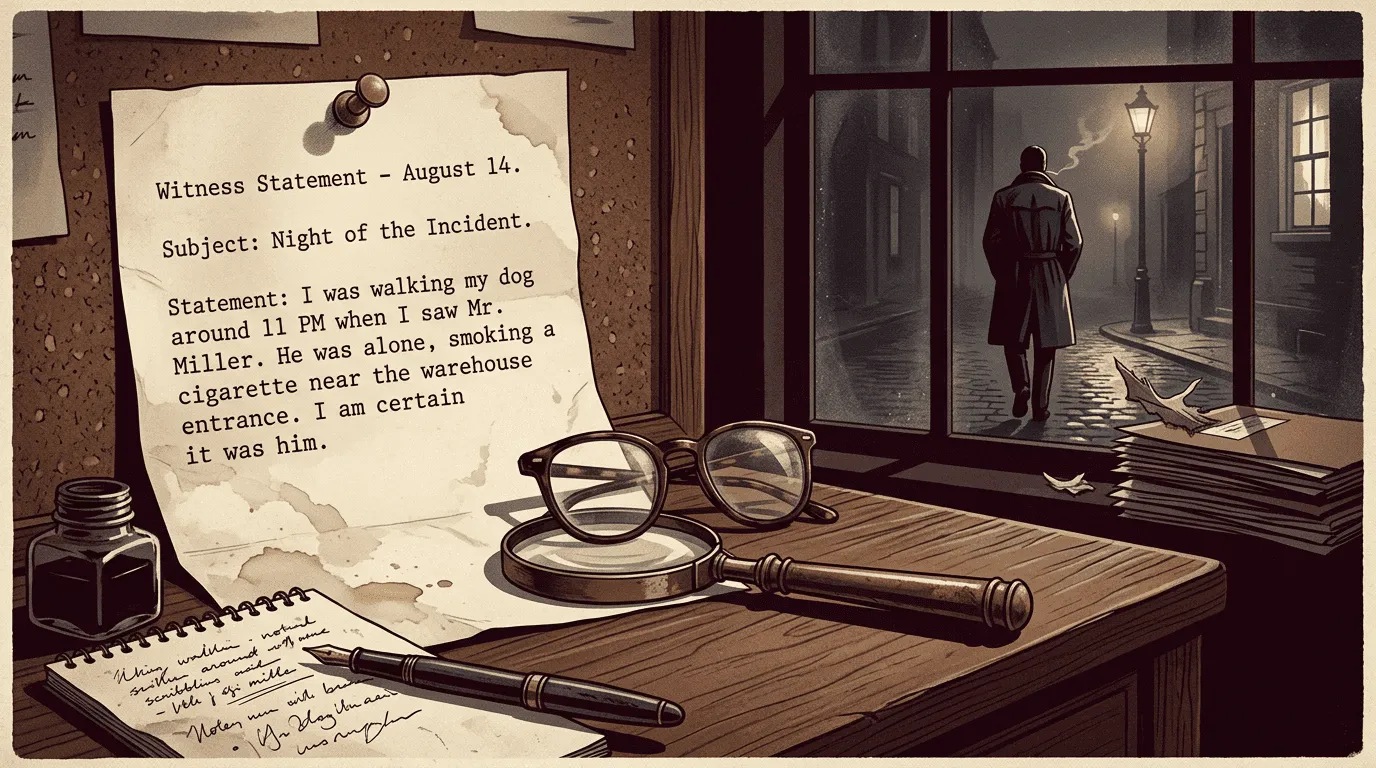
A detective dismisses one inconvenient witness. By the next scene, the real culprit knows she is close, and the witness no longer trusts her.
A character flaw is not a diagnosis, a moral verdict, or a decorative imperfection. For fiction, a flaw is a repeated failure pattern: the character shows a visible behavior, chooses the wrong move when pressure rises, misreads something important, and leaves a cost the next scene has to answer.
That is why a useful character flaws list should do more than collect negative adjectives. Labels such as “prideful,” “jealous,” and “reckless” only help once you know what the character does because of the flaw: what they hide, rush, control, refuse, overprotect, or damage before they understand the price.
Use this list as a drafting tool for fictional characters. It is not a self-diagnosis list, a 12-step inventory, or a clinical label bank. The entries are grouped by the kind of story pressure they create, so you can scan for the failure pattern your scene actually needs.
🧭 What Counts as a Character Flaw?
This guide focuses on story-active flaws: repeated patterns that alter a choice, relationship, conflict, or consequence. A character can also have smaller imperfections that add texture without carrying the plot. A messy desk, a habit of interrupting, or an awkward sense of humor may shape chemistry without becoming the engine of an arc.
A story-active flaw bends a character’s choices in the wrong direction under pressure. It can be subtle or dramatic, sympathetic or ugly, comic or tragic. The character is not automatically “bad.” The useful gap is between what they want and the strategy they keep using to get it.
A flaw is different from a quirk. A quirk makes a character recognizable: they alphabetize their desk, hate silence, or talk to their plants. A flaw changes outcomes: they refuse help, punish honesty, dodge responsibility, or assume love must be earned through usefulness. Ordinary patterns can create meaningful friction; the character does not need to become abusive or monstrous for the flaw to matter.
It is also different from a simple weakness, an external obstacle, or a motivation. A weakness may be a limitation the character has to work around. An external obstacle is pressure from the world. Motivation explains what the character wants and why they move. A flaw is the distorted strategy they keep using in pursuit of that want. If you need to build the deeper want, fear, wound, and pressure behind that strategy, use a character motivation framework rather than turning this list into a full motivation lesson.
Trauma, disability, addiction, and mental-health conditions are not moral defects or ready-made character flaws. If an experience shapes a repeated protective strategy, write the observable choice and its story cost instead of using a diagnosis or physical difference as shorthand. Do not frame recovery as a simple matter of willpower.
🎯 How to Choose a Flaw That Can Carry a Scene
Do not fill an empty “flaw” field with a random label. Start where the story already creates pressure, then look for the response the character is likely to repeat.
- Goal collision: What strategy keeps blocking what the character wants? A detective may want the truth but protect her first theory because admitting doubt feels like failure.
- Worldview or protective rule: What belief makes the wrong move feel reasonable from inside the character’s point of view? “Depending on people is dangerous” can justify secrecy long after secrecy stops protecting anyone.
- Scene discovery: What response keeps appearing when pressure rises in the draft? Repeated deflection, control, withdrawal, or escalation may reveal the flaw after several scenes already exist.
Outliners can use the first two routes before drafting. Discovery writers can name the pattern after it appears on the page. Either way, revision confirms whether it is truly recurring or only a one-scene reaction.
A flaw does not drive the plot by itself. Goals and obstacles create the decision point; the flaw shapes the tactic the character reaches for and the consequence that follows.
For a flaw you expect to carry part of the story, test whether it can produce three things:
- A visible behavior readers can notice.
- A wrong move the character makes under pressure.
- A cost that changes a relationship, conflict, or following scene.
Several behaviors may be expressions of one connected pattern rather than separate flaws. Look for the rule underneath them before collecting more labels.
If the flaw only sounds interesting in a profile, keep searching. If it can make the character lie in chapter three, misread a friend in chapter seven, and sabotage a hard-won opportunity near the climax, it is doing story work. For broader diagnosis before you choose the flaw, character development questions belong upstream; this page is for turning the chosen weakness into usable failure patterns, not for building a second question bank.
When scanning the list, do not treat the groups as personality taxonomy. Pick the bucket that matches the pressure you want in the scene: bad judgment, avoidance, damaged trust, escalation, failed responsibility, or strength turning into harm.
🧠 Flaws That Distort Judgment
Use this group when a scene needs the character to misread people, risk, or themselves. These flaws often work well in mysteries, rivalry plots, coming-of-age arcs, and any story where a confident interpretation turns out to be costly.
1. Arrogance — The warning sign is advice dismissed before it is heard. A challenge becomes a chance to prove superiority, so they act alone. Allies stop warning them before the preventable mistake.
2. Overconfidence — Early success becomes proof that they understand the whole problem. Under pressure, they skip preparation and walk into a situation their talent cannot solve. The next scene can force them to ask whether luck looked like mastery.
3. Too trusting — They assume good intentions before evidence has earned it. When secrecy or urgency appears, they share information with the wrong person. The cost is learning caution without becoming cynical or losing warmth.
4. Cynicism — They mock hope before it can disappoint them. Under pressure, they reject a sincere offer because believing it would feel dangerous. The cost is isolation at the exact moment cooperation would help.
5. Confirmation bias — The first theory feels true, so contradicting evidence must be noise. When the clock is tight, they defend the wrong target and explain away the clue that could correct them. By the next scene, the real problem has grown around their protected certainty.
6. Impulsiveness — Speed feels like courage. They move before asking the second question, choosing motion over understanding and leaving a teammate to repair damage that an apology cannot undo.
7. Stubbornness — They treat changing their mind as humiliation. New evidence arrives, but they double down because backing down would expose the earlier error. A small mistake becomes a public failure.
8. Suspicion — They read hidden motives into ordinary kindness. When closeness would help, they test people instead of speaking plainly. The cost is a relationship that might have been safe but now has to defend itself.
9. Romanticizing danger — Risk feels meaningful because it is intense. Under pressure, they choose the dramatic option over the wise one. Someone who did not consent to the gamble pays for the performance.
10. Black-and-white thinking — They sort people into loyal or disloyal, brave or cowardly, worthy or useless. When a compromise could save the situation, they refuse it as betrayal. The scene cost is that everyone else must pick a side too early.
11. Short-sightedness — They solve the immediate discomfort and ignore the longer chain. When an escape appears, they take it before checking what it will break. A partner inherits the larger problem they refused to see.
12. Overgeneralizing — One betrayal, failure, or rejection becomes a rule about everyone. Under pressure, they punish a new person for an old wound. The cost is repeating the past while claiming to avoid it.
🛡️ Flaws That Produce Avoidance and Self-Protection
Use this group when the character’s “safe” move should create the real danger. These flaws are useful for scenes where silence, delay, emotional retreat, or false peace carries a price.
13. Cowardice — They find reasonable excuses not to act. When danger arrives, they let someone else take the risk. The cost is not only guilt; another character now knows exactly who was left alone.
14. Denial — Evidence becomes something to argue away. They discredit the witness, invent an innocent explanation, or delay action until certainty is impossible. A partner must decide what to do with a truth the character refuses to face.
15. People-pleasing — They agree before checking their own limits. When two loyalties collide, they betray one promise to satisfy another person. Trust suffers because everyone assumed the yes was honest.
16. Passivity — They wait for clearer signs, permission, or rescue. Pressure makes inaction feel prudent. The cost is that someone bolder defines the future for them.
17. Fear of intimacy — Closeness is the trigger. After a vulnerable exchange, they find fault, make a joke, or withdraw from the person who now knows too much. They mistake being unseen for being free.
18. Emotional repression — They perform calm while anger or grief leaks into unrelated decisions. A cold new rule looks rational on the surface, but a colleague is punished for an emotion the character refuses to name.
19. Perfectionism — The deadline, not quality, becomes the enemy. One more polish pass costs them the messy, timely chance, and the flawless version arrives after someone else has moved.
20. Procrastination — They handle trivial tasks while avoiding the real one. Under deadline pressure, they rush a decision that needed care. Avoidable chaos becomes everyone else’s emergency.
21. Conflict avoidance — Keeping the room pleasant matters more than resolving the disagreement. They make incompatible promises to both sides, and each person later discovers that the peace was built on deception.
22. Dependency — They ask others to decide what they should want. When the choice matters, they give away responsibility and later resent the person they asked to lead. The next scene can make that resentment visible.
23. Self-pity — Every setback becomes proof the world has singled them out. Under pressure, they refuse practical help because accepting it would interrupt the story of unfairness. People grow tired of being cast as savior or enemy.
24. Defeatism — They say “there’s no point” before trying. When a narrow chance opens, they surrender early because hope feels like another setup for pain. The cost is that survival becomes an excuse not to choose.
25. Emotional avoidance — Work, jokes, and caretaking keep private pain at a safe distance. When grief demands their presence, they choose another useful task. The person beside them receives service instead of company.
🤝 Flaws That Damage Trust and Relationships
Use this group when the story needs the flaw to land on another person. These entries help when the conflict is not just “the character makes a mistake,” but “someone else has to decide whether to stay close.”
26. Jealousy — Attention becomes a scoreboard. When a friend praises a rival, they needle the rival or test the person they love until the relationship feels unsafe.
27. Possessiveness — They frame control as devotion. When they feel someone slipping away, they restrict choices “for their own good.” Affection turns into resistance.
28. Manipulativeness — Consent is the obstacle they try to route around. Guilt, omission, or staged vulnerability gets the answer they wanted, but trust collapses when the other person sees the design.
29. Dishonesty — They edit the truth to protect image or advantage. When a hard conversation approaches, they lie to postpone it. Later truth must fight through every earlier lie.
30. Neediness — They treat reassurance as a debt others must keep paying. Pressure makes them test love instead of receiving it. The cost is exhausting the people most willing to stay.
31. Holding grudges — A private debt ledger sits behind every kindness. After saying everything is fine, they punish a partner for an old grievance; the partner is sentenced for an offense they were never allowed to repair.
32. Judgmentalness — They turn personal standards into a verdict on everyone else. When guidance is needed, they shame the person instead. Distance and secret-keeping become safer than honesty.
33. Entitlement — They expect exceptions as proof of importance. Under pressure, they take what was not offered. Others stop seeing them as wronged and start seeing them as dangerous.
34. Disloyalty — Their allegiance shifts when status, comfort, or safety changes. In a vulnerable moment, they abandon someone who counted on them. They gain short-term protection and lose moral authority.
35. Gossiping — They bond through private information. When social danger rises, they use someone’s secret to manage the room. The cost is becoming known as useful but unsafe.
36. Poor boundaries — They overstep, overshare, or accept too much intrusion. Under pressure, they confuse closeness with access. Intimacy becomes suffocating rather than secure.
37. Conditional kindness — They help warmly until gratitude, obedience, or admiration stops. When disappointed, they withdraw care as punishment. Other characters question whether the kindness was ever free.
⚡ Flaws That Intensify Conflict Under Pressure
Use this group when a scene needs the hard moment to become louder, sharper, or more dangerous. These flaws are especially useful when the character’s first reaction turns a solvable problem into a turning point.
38. Hot temper — A raised voice or slammed door lands before the room understands what happened. The unforgivable line follows, and the next scene belongs to the person carrying the damage.
39. Defensiveness — They hear feedback as attack. When repair is possible, they counter with blame instead of listening. The person who asked for repair now has to defend the right to be hurt.
40. Aggression — They escalate tone, posture, or force to gain compliance. Under pressure, they intimidate the wrong person. Fear appears where respect was needed.
41. Vindictiveness — An opening for peace looks like a chance to inflict equivalent pain. They choose retaliation over repair, forcing an ally to take sides and expanding the conflict they claim to be ending.
42. Competitiveness — Neutral moments become scoreboards. They sacrifice the shared goal to win the visible comparison, so teammates stop sharing information that might help a rival look good.
43. Impatience — They interrupt process and press for results. When something fragile is still forming, they force a premature reveal, confession, or decision. The cost is breaking what needed time.
44. Provocativeness — They poke weak spots to see what people will do. Under pressure, they trigger the reaction they feared. They can say “I knew it” while ignoring their role in causing it.
45. Recklessness — Consequences become tomorrow’s problem. When risk rises, they gamble with resources, safety, or trust. Someone else pays part of the bill.
46. Control obsession — They need every variable named and contained. Under pressure, they refuse to delegate because only their plan feels safe. The plan fails because no one else can act freely.
47. Moral rigidity — They quote principles before reading the situation. Under pressure, they choose purity over mercy. They may be right on principle and still hurt the people in front of them.
48. Secretiveness — They withhold information by default. When timing matters, they keep a crucial fact private too long. Others make bad choices from incomplete knowledge.
49. Escapism — They disappear into pleasure, fantasy, work, or distraction when stakes rise. Under pressure, they leave the crisis unattended. Absence becomes a choice others remember.
📌 Flaws That Undermine Responsibility
Use this group when the plot needs consequences that no apology can instantly erase. These flaws create missed duties, broken credibility, and the slow collapse of other people’s patience.
50. Blame-shifting — Someone else must become the cause of every failure. To protect themselves, they sacrifice an honest ally, and their credibility disappears once the pattern repeats.
51. Irresponsibility — They treat obligations as flexible until they become urgent. When someone depends on them, they drop the duty. The cost is a practical consequence apologies cannot undo.
52. Excuse-making — They always have a reason that sounds almost fair. Under pressure, they narrate the failure instead of repairing it. Others stop listening to explanations.
53. Laziness — They avoid effort when no one is watching. When tested, they rely on talent, charm, or luck instead of preparation. The cost is failing someone who believed they were ready.
54. Complacency — A preventable crisis is the bill for yesterday’s success. They reuse the old solution, dismiss signs that the situation has changed, and leave the group unprepared when the threat arrives.
55. Carelessness — They miss details that matter to others. When handling a fragile issue, they act casually because the stakes do not feel personal to them. Another character feels unseen or unsafe.
56. Opportunism — They ask “what can I get from this?” before “what is right here?” Under pressure, they take advantage of a vulnerable opening. They gain leverage and lose moral ground.
57. Unreliability — They promise with feeling and follow through inconsistently. When a commitment becomes inconvenient, they assume affection will cover the miss. People begin planning around their absence.
58. Avoiding accountability — They apologize vaguely without naming the harm. Under pressure, they seek quick forgiveness. Repair fails because the wound was not understood.
59. Wastefulness — They spend time, money, goodwill, or chances as if the supply is endless. In a tight moment, they burn a resource the group needed later. The future becomes narrower.
60. Careless curiosity — They open doors, read files, or ask questions without considering consent. Under pressure, they expose information before understanding it. Knowledge arrives with damage attached.
61. Image management — They prioritize how the choice will look. When the honest path is messy, they choose the clean story. The cost is becoming trapped performing a version of themselves.
62. Rule-dodging — They treat small exceptions as proof of cleverness. Under pressure, they bend a boundary that existed for a reason. The next scene reveals who was protected by the rule they mocked.
🪞 Flaws That Hide Pain Behind Strength
Use this group when a trait looks admirable until pressure reveals its cost. These flaws work well for protagonists whose strengths have helped them survive but now distort love, courage, leadership, or growth.
A flattering label is not enough. “Too loyal” becomes story-active when loyalty binds the character to the wrong person, makes them suppress evidence, or forces them to betray another value. Use the same test every time: trait + wrong pressure + concrete choice + visible cost.
63. Pride — Help feels like defeat, so suffering looks safer than vulnerability. The people ready to stand beside them are shut out by the need to appear unbreakable.
64. Martyrdom — They take on burdens and then resent being burdened. When support is offered, they refuse it because being needed has become their proof of worth. Other people feel guilty instead of invited.
65. Overprotectiveness — They guard others from pain, knowledge, or choice. Under pressure, they hide danger to keep someone calm. The protected person is less prepared and more betrayed.
66. Workaholism — They measure worth through output. When pressure rises, they sacrifice rest, intimacy, or ethics to keep producing. The work gets done, but rest and intimacy are what pay for it.
67. Self-righteousness — They use good intentions as armor against criticism. Under pressure, they refuse to examine harm because the cause is noble. They hurt people while calling it service.
68. Hyper-independence — The visible strength is self-sufficiency; the hidden cost is a team with no access to the plan. They reject useful help to look unbreakable, and the mission weakens around that performance.
69. Emotional guardedness — They reveal facts but not feelings. Under pressure, they give the minimum truth needed to continue. Others know what happened but not what it meant.
70. Sacrificial control — They frame every controlling choice as protection or duty. Under pressure, they make decisions for the group without consent. Gratitude turns into anger when the hidden cost appears.
71. Fear of being ordinary — They chase distinction even when peace is available. Under pressure, they reject a meaningful but unglamorous path. They confuse significance with spectacle.
72. Inability to forgive — They remember every wound in usable detail. When a necessary alliance appears, they block it because forgiveness feels like surrender. Justice hardens into captivity.
73. Shame-driven secrecy — They hide anything that might lower others’ opinion. Under pressure, they protect the secret instead of the relationship. The reveal hurts more because of the concealment.
74. Fear of happiness — They become restless when life starts to feel safe. Under pressure, they sabotage a good thing before it can be taken away. Familiar pain feels more controllable than unfamiliar peace.
75. Reluctance to be seen — They let others admire the useful surface but dodge real recognition. When someone notices the truth, they retreat, deflect, or make a joke. The cost is being known only for the mask they can maintain.
🎬 Three Mini Cases: Turning a Flaw Into Story Pressure
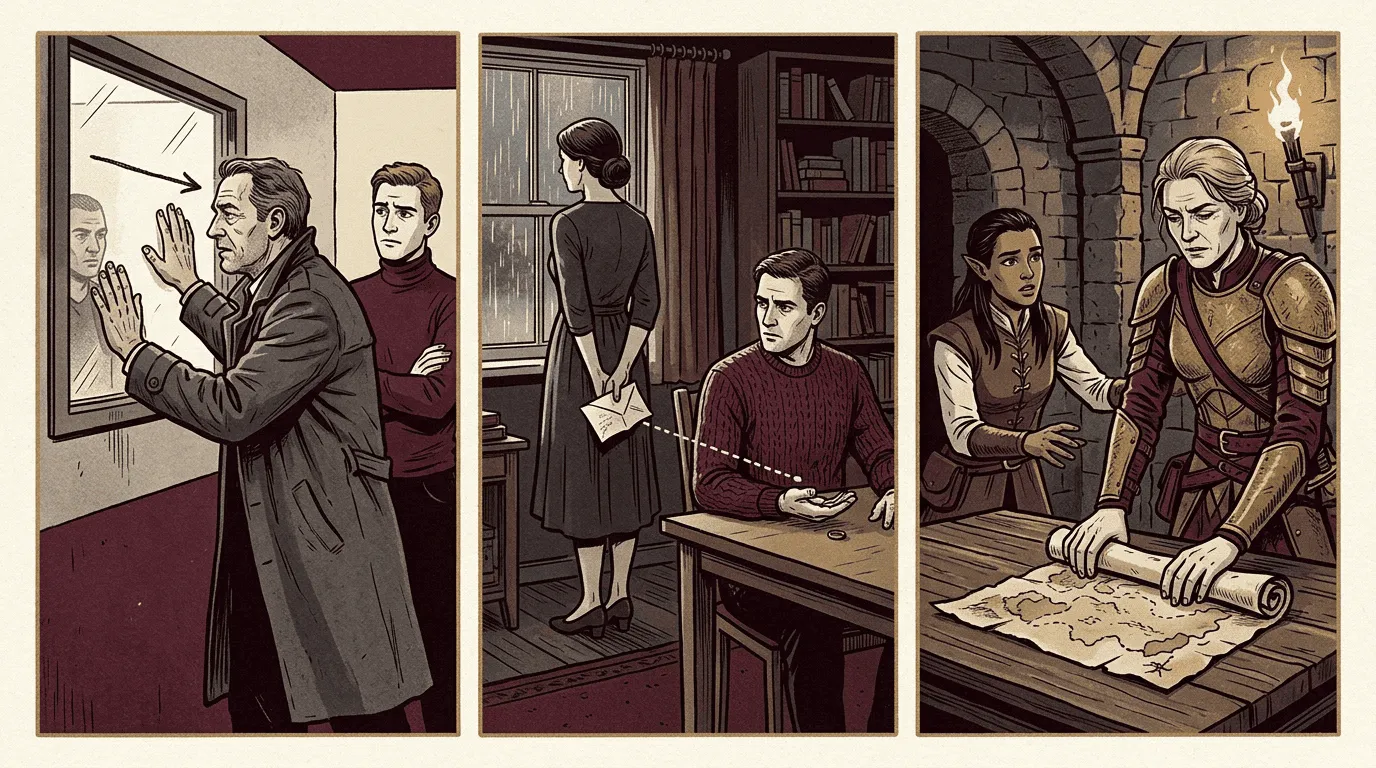
Mini case 1: Arrogance in a mystery plot
A young investigator is brilliant enough to solve patterns quickly, so arrogance feels earned. The visible behavior is that she stops interviewing witnesses once her first theory feels elegant. Under pressure, she accuses a suspect too early, and the public accusation warns the real culprit that she is close.
That cost changes the next scene. A frightened witness refuses a second interview, her partner quietly starts checking her decisions, and the case can only move forward through a detail she dismissed. The flaw is not “she should be humble.” It is a pressure machine: her need to be the smartest person in the room makes her miss the person who actually saw the truth.
Mini case 2: People-pleasing in a romance
A character wants to be easy to love, so he says yes to dinner plans, family expectations, favors, and emotional labor. The visible behavior looks charming until pressure divides his loyalties. He agrees to keep one person’s secret, then breaks a promise to someone else because saying no would make him feel selfish.
The next scene is no longer about whether he is kind. It is about whether anyone can trust his yes. One person doubts his honesty, the other starts using his guilt, and the romance has a concrete conflict that does not require making him cruel. His arc is learning that honest limits are part of love.
Mini case 3: Overprotectiveness in a fantasy quest
A commander has survived by anticipating danger. She withholds information from a younger ally because she thinks fear will make him reckless. Under pressure, she changes the route without telling the group, believing secrecy will keep everyone calm.
The consequence arrives fast: the ally walks into a trap without the knowledge that would have helped him survive it, then refuses to trust her orders in the next crisis. Protection has become control. To the ally, her experience now looks like secrecy. The story can test whether she can protect people without stealing their choices.
➡️ A Simple Next-Scene Test
Once you choose a flaw, test it against the next scene before committing to it.
Ask:
- What does the character do that another person can actually see?
- What pressure makes the flaw stronger?
- What wrong move does the flaw encourage?
- What mistaken belief makes that wrong move feel reasonable?
- Who pays for the wrong move?
- What must be different in the following scene because this flaw appeared?
If you cannot answer the last question, decide what job the trait is meant to do. A minor imperfection can remain texture or chemistry. A central story-active flaw needs a visible result. Once the wrong move changes the goal, opposition, stakes, turn, or outcome of a scene, hand the execution to a scene card template rather than expanding this list into a scene-planning worksheet.
🧩 Turning a Chosen Flaw Into a Writing Workflow
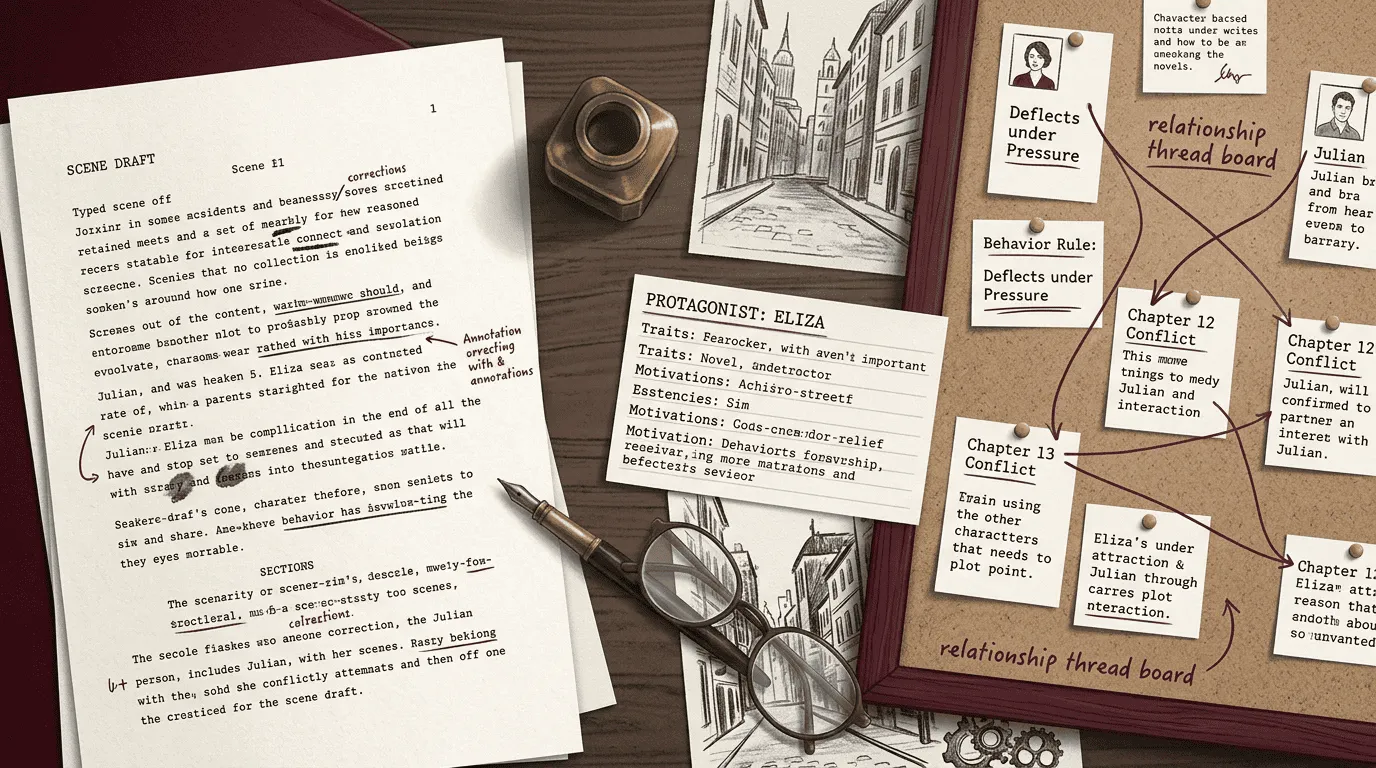
After you identify the clearest story-active pattern, stop collecting labels. Convert the core pattern into a short behavior rule you can reuse while drafting. Related behaviors can sit under the same rule instead of becoming a pile of disconnected flaws.
A useful rule looks like this:
When [pressure] appears, this character tends to [wrong move] because they believe [mistaken belief], which usually costs them [relationship or plot consequence].
For example:
When someone questions her expertise, this investigator acts alone because she believes needing help will make her ordinary, which usually costs her trust and shared information.
Test the rule in an actual scene before turning it into long-term context. If the flaw survives that test across several chapters, keep the selected behavior rule and current arc state near the draft. SeaBell can hold that active character context beside the work, so the next scene can check the same pressure pattern without treating the flaw as a rigid formula or asking you to rebuild the character from scratch.
If the flaw keeps damaging one specific bond, track the repeated consequence in a character relationship chart template. If it becomes part of the character’s recurring context across chapters, an AI character card for novel writing is the better place to preserve the behavior rule, current arc state, and what has already changed.
❓ FAQ
What are examples of character flaws?
Examples of character flaws include arrogance, jealousy, cowardice, denial, recklessness, perfectionism, people-pleasing, overprotectiveness, defensiveness, and shame-driven secrecy. A flaw becomes fiction-ready when it creates visible behavior, a bad choice under pressure, and a consequence for the plot or relationships.
What makes a good character flaw in fiction?
A good character flaw in fiction changes what the character does when the scene becomes difficult. It should push them toward a believable wrong move, reveal a mistaken belief, and leave a cost that affects another person, the next scene, or the larger plot.
What is a fatal flaw?
A fatal flaw is a central pattern that drives an irreversible downfall. “Fatal” does not have to mean physical death; it can mean losing a relationship, position, value, or moral self. The pattern matters because it causes the decisive choice, not because the label sounds dramatic.
What is the difference between a character flaw, a weakness, a quirk, and an external obstacle?
A character flaw is a repeated inner pattern that creates bad choices; a weakness is a limitation, a quirk is a recognizable habit, and an external obstacle is pressure from outside the character. For example, hating silence may be a quirk, poor stamina may be a weakness, a locked door may be an obstacle, and refusing help because vulnerability feels shameful is a flaw.
Can a kind character still have a strong flaw?
Yes. Kind characters can have strong flaws when the flaw distorts how they offer care. People-pleasing, overprotectiveness, martyrdom, conflict avoidance, and conditional kindness can all hurt others while still coming from a character who wants to be good.
How many flaws should one character have?
There is no universal number. A novel usually needs one clear story-active pattern, not a limit on how many imperfections a person can have. Supporting flaws work when they connect to that pattern or create a distinct conflict the story has room to develop.
For example, a character who believes dependence is dangerous may become controlling in a crisis, secretive with information, defensive when questioned, and unable to ask for help. Those behaviors can be connected expressions of one underlying rule. The character does not need to overcome every imperfection.
How do I avoid making a flawed character unlikeable?
Make the pattern understandable without excusing the harm. Show the pressure, the mistaken belief, the wrong move, and the cost. A character can make bad choices and still feel human if the story lets readers understand the logic while still letting the consequences matter.
Related Posts
Character Motivation for Writers: A 5-Part Framework | SeaBell
Learn how to build character motivation with a five-part framework for want, need, fear, wound, and pressure that creates difficult choices on the page.
Character Development Questions for Fiction Writers | SeaBell
Use these character development questions by story stage: premise, motivation, arc, relationships, scene pressure, and revision. - Slug: character-development-questions