
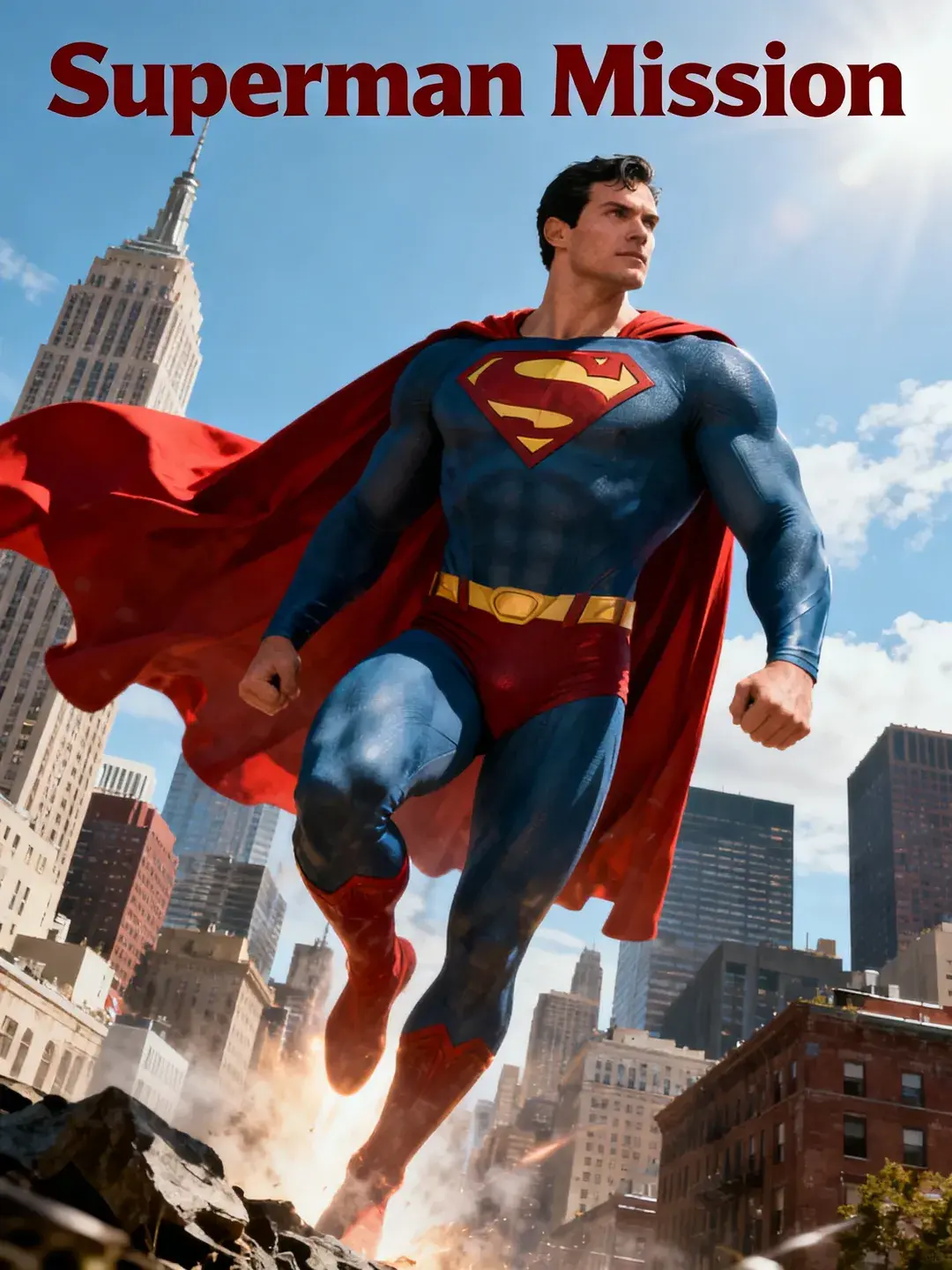
Superman Out Of Earth
説明
Power Of Superman
エピソード1
The twin suns of Virex-9 came up fast, one after the other, like two copper coins dropped onto a table. Clark Kent felt the second sunrise hit the back of his neck while he was still queued outside the hiring trailer. The line moved slow. Alien workers shuffled forward, boots scraping pink dust into little storms that died as soon as they rose. Everyone smelled of resin and last night’s yeast-rice.
“Name.” The foreman sat on an upturned crate, datapad balanced on his knee. His badge said “RIL—Level 3.” The letters meant nothing to Clark; the man’s eyes meant everything—small, red, tired.
“Kal,” Clark answered. He had learned to shorten it here. The full name carried too much weight, even among people who had never seen a red cape.
Ril’s stylus hovered. “Strength grade?”
“Medium,” Clark lied. He could have lifted the trailer with two fingers.
“Shift starts when the girders sing,” Ril said, stamping the pad. “Don’t be late. Don’t be early. Just be there.”
Clark nodded and stepped aside. The next body took his place, already reciting stats.
Inside the hostel—a converted cargo hold—Clark found his cot. The mattress foam had given up years ago; it felt like plywood under a sheet. He sat, peeled off his Earth boots, and examined the cracks along the soles. Dust poured out, finer than flour. He thought of Ma Kent tapping shoes on the porch back in Smallville, telling him, “Dirt tells where you’ve been, not where you’re going.” He shook the memory away, wrapped the boots in plastic, and slid them beneath the cot. No symbols, no colors. Just cracked leather.
A bell clanged: shift call. Workers filed out, buckling tool belts that jangled with unfamiliar metals. Clark joined the river of bodies, keeping his shoulders rounded, eyes down. Anonymous was a job skill here.
Outside, the sky burned white. Two suns meant double shadows—every person walked split across the ground, one shadow short, one long, both wavering. The worksite sprawled across a dried lakebed. Crystal girders waited in stacks, each longer than a city bus, translucent and humming. Alien cranes—spindly things like steel mosquitoes—hovered overhead, magnetic tethers glowing blue.
Ril clapped once. “Listen up. We’re short a loader crew. Girders go to Frame Nine before noon heat. You lag, you drag. Let’s move.”
Clark’s crew numbered six. They paired off, shoulder straps looped through crystal handles. The first beam came free with a sigh, as if the stack itself exhaled. Weight settled across Clark’s back—nothing to him, but he let his knees dip the same as the others. You fake strain the same way you fake ease: by believing it.
“Up,” grunted the man beside him—Dorren, thick as a cargo drum. Clark matched his rhythm, boots sinking into powdery crust. Each step crunched. The beam sang, a low note that vibrated in teeth.
They carried it thirty meters, set it onto waiting pins, and returned. Again. Again. Sun One climbed; Sun Two followed. Between them, the air thickened, tasting of hot copper. Clark’s shirt stuck to his spine—cotton from Earth, faded blue, now blotched dark with sweat. He could have willed the moisture away, but sweat was honest currency here, so he let it run.
By the seventh beam Dorren was breathing like bellows. “You’re new,” he said between steps. “But you keep pace.”
“Used to farm work,” Clark answered. Half-truth; the Kent farm felt as distant as Krypton now.
“Farm boy, huh?” Dorren spat pink dust. “Out here crops are girders. Same sunburn, less dinner.”
They laughed, a dry sound.
Frame Nine grew ahead: a skeleton of crystal and cable rising out of the lakebed. Other crews perched on joints, welding with light-wands. Sparks drifted down, vanishing before they touched ground. Clark’s team slid the new beam into place. Pins clicked. The whole frame shivered, settled, and accepted the weight. For a moment the humming stopped, as if the structure itself paused to listen. Then it started again, softer.
Ril waved from a sandblock. “Water break. Ten ticks.”
Workers collapsed beneath a tarp strung on poles. Shade felt like mercy. Clark sat cross-legged, head low, drinking from a shared canteen. The water tasted of iodine and old barrels. He swallowed slow, counting breaths, keeping himself ordinary.
Dorren dropped beside him, offered a strip of dried root. “Chew. Keeps salt in.”
Clark took it, bit. The root stung, then sweetened. “Thanks.”
Around them, men and women spoke in mixed trade tongue—short, chopped sentences about pay rates, ship gossip, someone named Kessa who owed money. No one asked where anyone came from; origin was baggage. Clark listened, chewing, letting the voices braid.
A woman—Nessa, lean, freckled skin tinted green by sun—leaned forward. “You hear about the loader cracked yesterday? Beam snapped his harness. Fell twenty meters. Dust took him, no splash.”
Dorren nodded. “Girders don’t forgive.”
Clark stared at the tarp above. Twenty meters was nothing to him, but everything to them. He felt the old instinct rise: you could stop this, you could make the site safe. He crushed it the way he crushed coal in his palm—quietly, beneath the table of his mind. Not here. Not today.
Nessa studied him. “Farm boy, you got soft eyes for a place this hard.”
“Eyes are eyes,” Clark said.
She laughed once, surprised. “You ever think of moving on? Better moons, easier coin?”
“Moving’s all I do,” he said. The sentence surprised him with its truth.
Dorren elbowed Nessa. “Leave him. He’s still got hope stuck in his teeth. Give him a week.”
The bell clanged again. Break over.
Afternoon brought wind. Hot, grainy, it scoured faces. Girders now burned to the touch; gloves smoked if held too long. Crews worked faster, racing the heat that softened joints. Clark’s skin reddened like anyone’s. He let it. Pain was a passport.
On the sixteenth carry, the frame above gave a different sound—sharp, cracking. A pin sheared. A beam slipped, sliding toward the crew below. Workers shouted, scattering. Dorren froze, directly under the falling crystal.
Clark moved without deciding. Three steps, shoulder up. The beam slammed him, weight of a small building. He caught it palms-up, knees bending just enough to sell the effort. Dust rose. For a heartbeat the only noise was the beam’s angry hum against his gloves.
“Rope!” he barked. Voices echoed, ropes snaked forward. Together they wrestled the girder back onto supports. Pin holes realigned; someone hammered new bolts. The crisis folded itself into routine, the way a torn sleeve is knotted and work continues.
Dorren stared at Clark, chest heaving. “Medium strength, huh?”
Clark wiped blood from a split knuckle—real blood, drawn by choice. “Adrenaline,” he said. “Farm boys and falling cows.”
Ril arrived, face dark. “Accident logged. No bonus lost. Back to places.”
No speeches, no medals. Just the bell. Clark returned to the line, shoulders aching for the first time in decades. The ache felt earned; he carried it like a gift.
Sun One touched the horizon, bloated and dull. Sun Two still hung high, refusing to leave. Shift ended when the air cooled enough to crack glass. Workers trudged toward the hostel, shadows finally merging into one long stripe.
In the wash-shed Clark stood under a pipe that spat lukewarm mist. Pink dust ran off him in muddy rivers. He watched it circle the drain, Earth sweat mixing with alien soil. He thought of nothing heroic, only that the water smelled like wet hay after a storm.
Boots waited by his cot, still cracked. He pulled them on anyway, lacing slow. Around him men collapsed into sleep, snores rising like sawing. Clark sat, back against cool metal, and flexed his fingers. They trembled—not from weakness, but from the memory of weight.
Dorren’s whisper came across the aisle. “Hey, farm boy. You saved my skin.”
Clark shook his head once. “Beam was lighter than a barn door.”
“Liar,” Dorren said, voice soft. “But thanks.”
Silence stretched. Clark listened to the hum of the girder stacks still vibrating in the distance, a lullaby of stressed crystal. He closed his eyes. For the first time since leaving Earth he pictured the Kent barn not as a monument to a past life, but as something still standing, waiting for new hands.
Boots still cracked, shirt still damp, he lay back on the plywood mattress. The twin suns finally set together, plunging the hold into true dark. Around him strangers breathed in rhythm, the shared cadence of bodies that had labored. Clark matched it, let it pull him under.
Tomorrow the girders would sing again. He would rise, queue, lie about his strength, and carry crystal until the suns tried to bake him hollow. And if another beam slipped he might catch it again, or he might not—choice dressed in work clothes. Either way, the boots would go on, the dust would rise, and the frame would climb one row higher toward a sky no one here would ever touch.
That was enough.
In the dark he pressed the soles of his cracked boots together, felt the grit between the treads, and slept without dreams.
最新エピソード
Chapter 5
The roll stopped, but the quiet kept spinning.
Overhead, the single w
Chapter 3 – Off-World
The maintenance capsule had no name, only a stenciled code:
Chapter 3 – Off-World
The maintenance capsule had no name, only a stenciled code:
Chapter 3 – Off-World
The maintenance capsule had no name, only a stenciled code: