

Witch Hat Atelier Magic System Explained: Writing Lessons
Witch Hat Atelier's Magic System: Why It Works and What Fantasy Writers Can Learn
Witch Hat Atelier's magic is memorable not just because the spells look beautiful. The story makes magic feel like a craft: something learned through practice, bounded by rules, and dangerous when handled carelessly.
As the TV anime brings new attention to Witch Hat Atelier, the magic system is one of the clearest reasons the story stays with readers and viewers. Magic is not treated as a random burst of power. It belongs to a culture of tools, instruction, secrecy, and consequences.
This is a spoiler-light look at the Witch Hat Atelier magic system, not a plot recap. The focus is why the system works and what fantasy writers can borrow without imitating its surface.
The early premise is enough for this discussion: Coco wants to become a witch, meets Qifrey, and learns that the common story about who can use magic is incomplete. That official premise, outlined on Kodansha's Witch Hat Atelier series page, keeps the article spoiler-light.
For fans and writers, the appeal comes from the same place: the magic is beautiful on the page, but tense because readers can follow how it might go wrong.
🧭 How Witch Hat Atelier's Magic System Works (Spoiler-Light)
Magic in Witch Hat Atelier works like a learned craft, not a random power. Drawing and tools matter, but so do knowledge, secrecy, and rules, which is why mistakes feel dangerous instead of arbitrary.
At the spoiler-light premise level, the crucial idea is simple: magic is not only an inborn gift. It depends on drawn forms, special tools, and knowledge that society keeps under control.
Readers do not need a textbook version of every rule. They need enough pattern to know when a spell feels earned, when it feels risky, and when a scene has skipped a step.
When fantasy uses magic less carefully, it appears when the plot needs it, solves the immediate problem, and vanishes before it creates trouble. Witch Hat Atelier avoids that feeling by tying magic to practice, knowledge, tools, and risk.
🔍 Magic Feels Stronger When It Has a Visible Logic
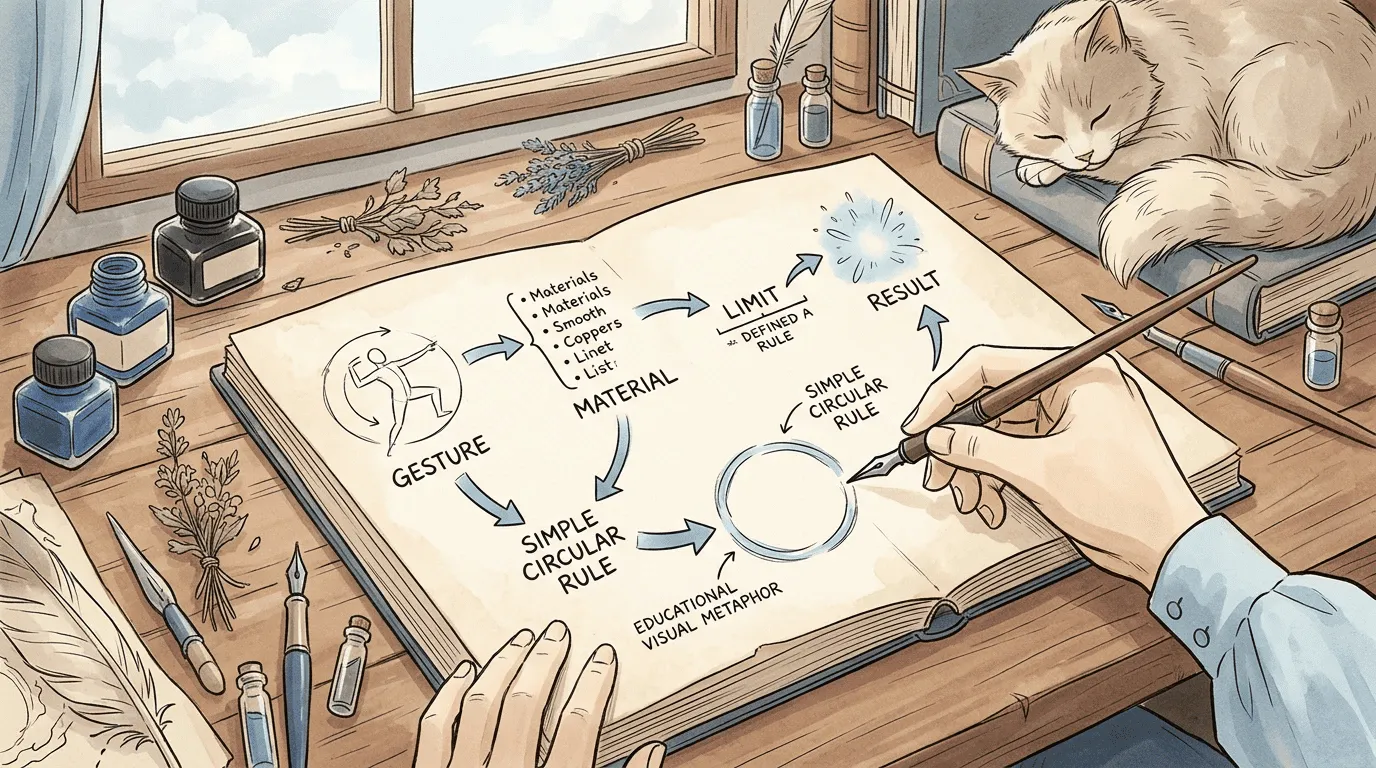
One reason the system stays memorable is that readers can watch the process before they see the result. That visible logic gives them something to follow and something to worry about when the process is rushed, hidden, or interrupted.
For writers, the first useful lesson is simple: give magic one repeatable action the reader can track. The action should be something a reader can watch go wrong: a line drawn too quickly, a binding name spoken under pressure, or a material mixed in the wrong order.
That visible action does not have to explain everything. In fact, explaining everything can make magic feel sterile. Give readers a pattern, then break the conditions around it: rush it, hide it, forbid it, or hand it to someone who is not ready.
Writing takeaway: give your magic one repeatable action
If your story's magic has no visible action, every spell risks feeling less like cause and effect and more like the author simply allowed it to happen. If it has one repeatable action, readers can ask better questions: Who can do it? Who teaches it? What happens when someone does it badly?
✨ Rules Create Wonder Instead of Killing It
A common fear in fantasy writing is that rules make magic less magical. Witch Hat Atelier argues the opposite: rules can deepen wonder because they give the audience a way to anticipate danger.
When readers understand that magic has a procedure, mistakes, shortcuts, and forbidden uses start to carry real weight. A character who bends a rule is no longer just doing something impressive; they are stepping into a known risk.
In hard-versus-soft magic terms, Witch Hat Atelier leans toward a hard magic system without becoming purely mechanical. Procedure, limits, and knowledge matter, but the story does not drain the mystery out of magic. You do not need to explain every rule. You need enough visible logic for wonder to turn into tension.
Rules matter most when the reader can see the edge before the character reaches it.
Imagine a story where a spell normally requires two steps, but a desperate character adds a forbidden third. If the reader already knows that the extra step risks physical harm or public punishment, the rule does the heavy lifting for suspense. The scene becomes tense before the spell even succeeds or fails.
⚠️ The Best Magic Systems Have Costs, Limits, and Consequences
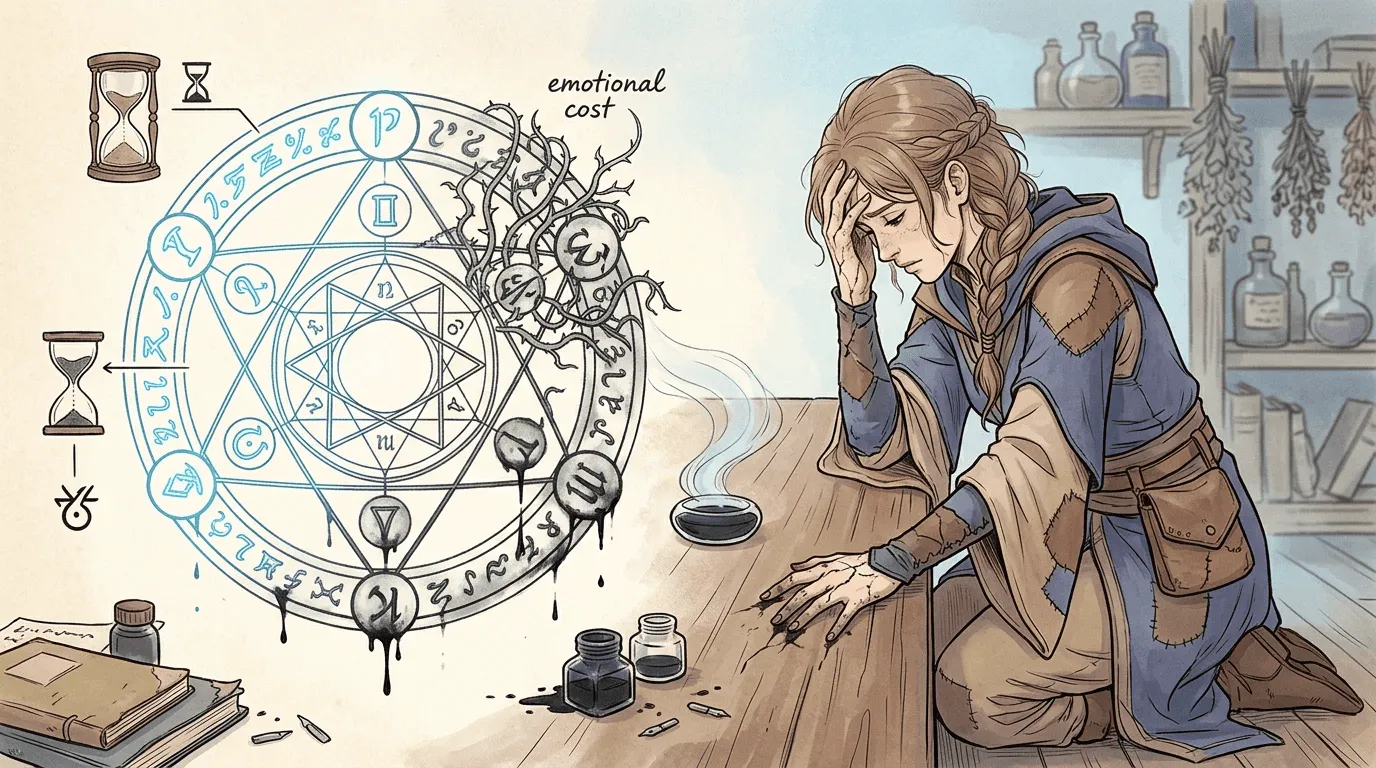
Magic loses tension when it can solve problems without risk. If a character can use magic safely every time, it becomes decoration. It may look impressive, but it stops shaping the story.
Costs do not have to mean exhaustion or physical pain. A spell can expose a secret, a shortcut can break a law, and a forbidden method can solve one problem by creating the next chapter's problem.
To test whether the system is shaping the story, ask what magic cannot do, what it should not do, and who gets hurt when it is used carelessly. If the answer is "nothing," the system may be beautiful but weightless.
The most interesting cost is often not the spell itself, but the system around it: who is allowed to learn it, who is kept away from that knowledge, and what happens when someone crosses that boundary.
A useful revision test: remove the magic from a key scene and ask what still changes. If the emotional conflict, social danger, and character choice stay almost the same, the magic is probably not integrated deeply enough. A strong system changes what the character is allowed to try, what they are afraid to risk, and what kind of mistake they can make.
🌍 Worldbuilding Gets Better When Society Responds to Magic
A good magic system does not stop at the spell. It changes the society around it. If magic exists, someone will teach it, control it, hide it, regulate it, profit from it, or punish its misuse.
That is one reason the world of Witch Hat Atelier feels larger than Coco's personal coming-of-age story. Magic is not only a private talent. It is tied to knowledge, education, secrecy, rules, professions, taboos, and unequal access; it reveals how the world is organized.
For a writer, the useful question is who controls the conditions around magic. If you use a worldbuilding template for fiction writers, make it track institutions, not just powers:
- Who teaches magic, and who is excluded?
- What uses are legal, forbidden, or shameful?
- Who benefits from keeping magical knowledge restricted?
- What profession, class, school, guild, temple, or government grows around the system?
- What happens to people who learn too much too soon?
Most worldbuilding-heavy drafts do not fail because the setting lacks details. They fail because the details never pressure the plot. If your society has rules about magic, those rules should eventually make a character's choice harder.
✍️ Magic Should Change the Character, Not Just the Plot
Coco first reaches for magic as a dream, not a duty. That is why her mistakes matter: she has to learn that magic asks something of anyone who uses it.
A magic system should not only give the protagonist abilities; it should change what they believe about themselves and the world. Learning magic should reveal the flaw the character brought into the lesson: impatience, pride, guilt, fear, or a hunger for control.
When you design a magic system for your own story, ask character questions alongside rule questions:
- What does magic tempt the protagonist to do before they are ready?
- What mistake teaches them the cost?
- What rule do they resent?
- What responsibility do they have to earn?
- Who gets hurt if they treat magic as a shortcut?
If the protagonist can use magic in chapter twenty the same way they used it in chapter two, the system may be solving plot problems while leaving the character arc untouched.
🧩 What Fantasy Writers Can Borrow Without Copying Witch Hat Atelier
The wrong lesson is "make a story like Witch Hat Atelier." Do not copy its setting, symbols, spell mechanics, characters, or visual identity. That would weaken your story, make the influence too obvious, and create avoidable rights concerns.
What transfers is the pressure beneath the system, not the surface:
- One clear rule: Give magic a basic logic readers can recognize.
- One learning path: Let characters practice, misunderstand, and improve.
- One forbidden area: Decide what use of magic creates danger or taboo.
- One social consequence: Show how institutions respond to magical knowledge.
- One emotional test: Force the character to choose between desire and responsibility.
In practice, that means asking different questions from the source material. Do not copy what the magic looks like; build the pressures that decide who can use it, what it costs, and which choice it makes harder.
📋 A Quick Magic System Template for Your Own Fantasy Story
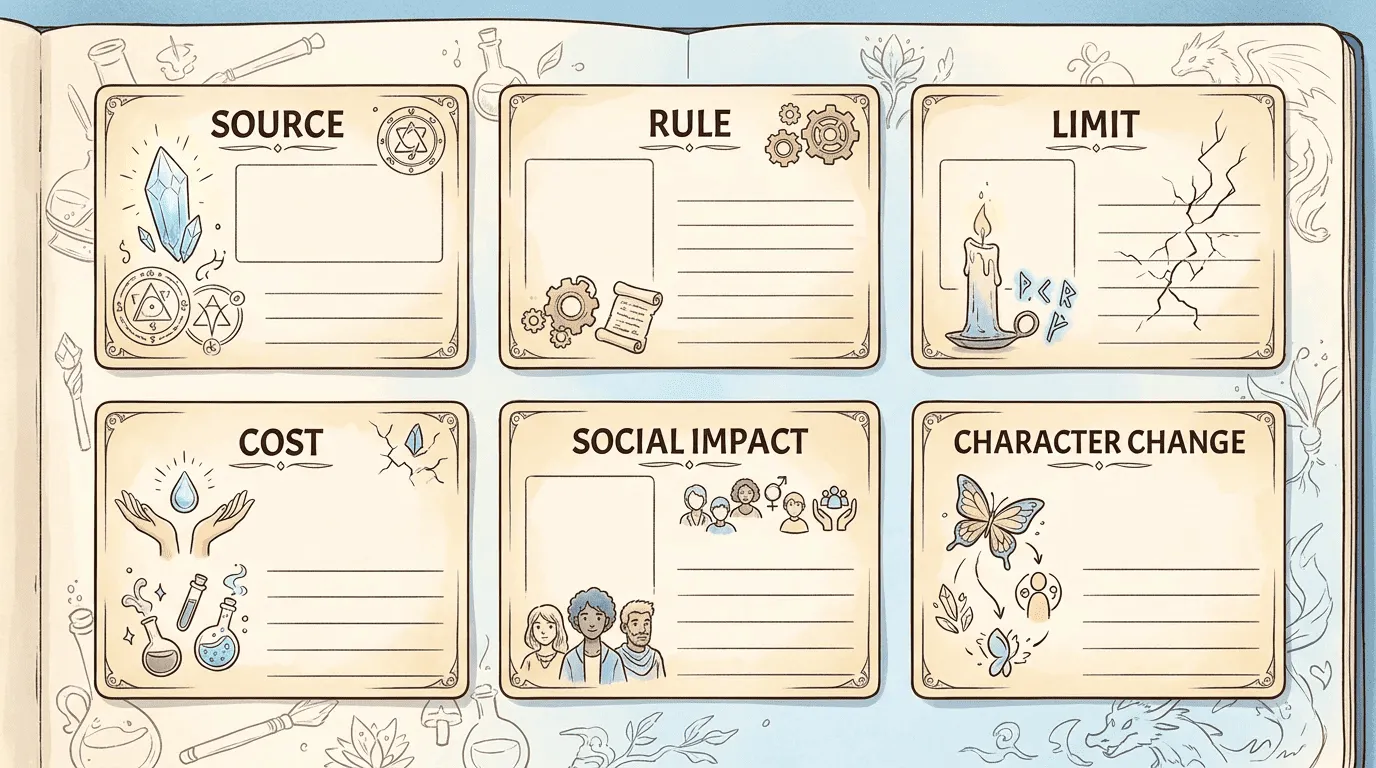
Use this compact magic system template when your ideas are still scattered and you need to turn inspiration into usable story rules:
- Core principle: What makes magic possible?
- Visible action: What does a magic user physically or mentally do?
- Limit: What can magic not do?
- Cost: What does using magic risk?
- Institution: Who teaches, controls, bans, or profits from magic?
- Forbidden use: What boundary creates danger?
- Character wound or need: Why does the protagonist need magic emotionally?
- Chapter test: What scene forces the character to use magic under pressure?
A magic system on a notes page can feel complete and still fail the moment a character has to choose under pressure. The chapter test shows whether the rule creates drama, not just lore.
For example, if magic rearranges promises, a spell might require a signed vow and cost the caster one remembered promise. The chapter test is no longer "can they cast it?" but "which promise are they willing to lose?"
🛠️ Turning a Magic System Into Chapter Drafts
Once the rules exist, the risk is that they stay in the notes. The job is to keep them shaping chapters instead of turning into background exposition.
Rules may start as worldbuilding notes, but costs create plot pressure, forbidden uses create conflict, and character desire decides which rule gets tested first. In a chapter outline template, those pieces become scene-by-scene decisions instead of background lore.
The practical problem is context drift: the rule lives in one note, the character motive in another, and the chapter draft somewhere else. SeaBell can keep those pieces beside the draft, so the writer starts the next scene with the story context in view.
This is not about generating a Witch Hat Atelier-style story. It is about testing your own chapters against what magic costs, who controls it, and why your protagonist still wants it.
❓ FAQ About the Witch Hat Atelier Magic System
How does the magic system in Witch Hat Atelier work?
In spoiler-light terms, the system treats magic as a craft built around drawing, tools, guarded knowledge, and rules. That structure makes success feel earned and mistakes feel dangerous.
Is Witch Hat Atelier a hard magic system?
Witch Hat Atelier has many qualities of a hard magic system: rules, procedures, and limits matter. It is not purely mechanical, though; the series keeps enough mystery that the rules create tension without flattening the wonder.
What can fantasy writers learn from Witch Hat Atelier?
Fantasy writers can learn how to connect magic rules with visible action, social consequences, forbidden uses, character growth, and plot pressure. Give magic a logic, then let that logic change what characters can safely do.
How do you write a magic system for a fantasy novel?
Start with one principle readers can understand, then add a limit, a cost, and a social rule around who controls the knowledge. The system becomes story material when a character has to test those rules under pressure.
Can AI help write a fantasy magic system?
AI is useful for brainstorming rules, costs, terms, institutions, and outline beats, but writers still need stable story context. Without it, magic rules can drift from chapter to chapter, especially in long-form fantasy where the same rule may matter differently in chapter three, chapter twelve, and the ending.
🎯 Final Takeaway: Wonder Works Best With Structure
Witch Hat Atelier works because magic feels like wonder with structure, not random spectacle. The craft is visible, mistakes carry real weight, and magic changes the people who reach for it.
If you are building your own fantasy magic system, start small: one rule, one limit, one consequence, and one character test. Once those pieces hold together, the magic has a better chance of becoming part of the story instead of sitting on top of it.
Before the next scene, bring the rule, the cost, and the character test back into view.
Related Posts
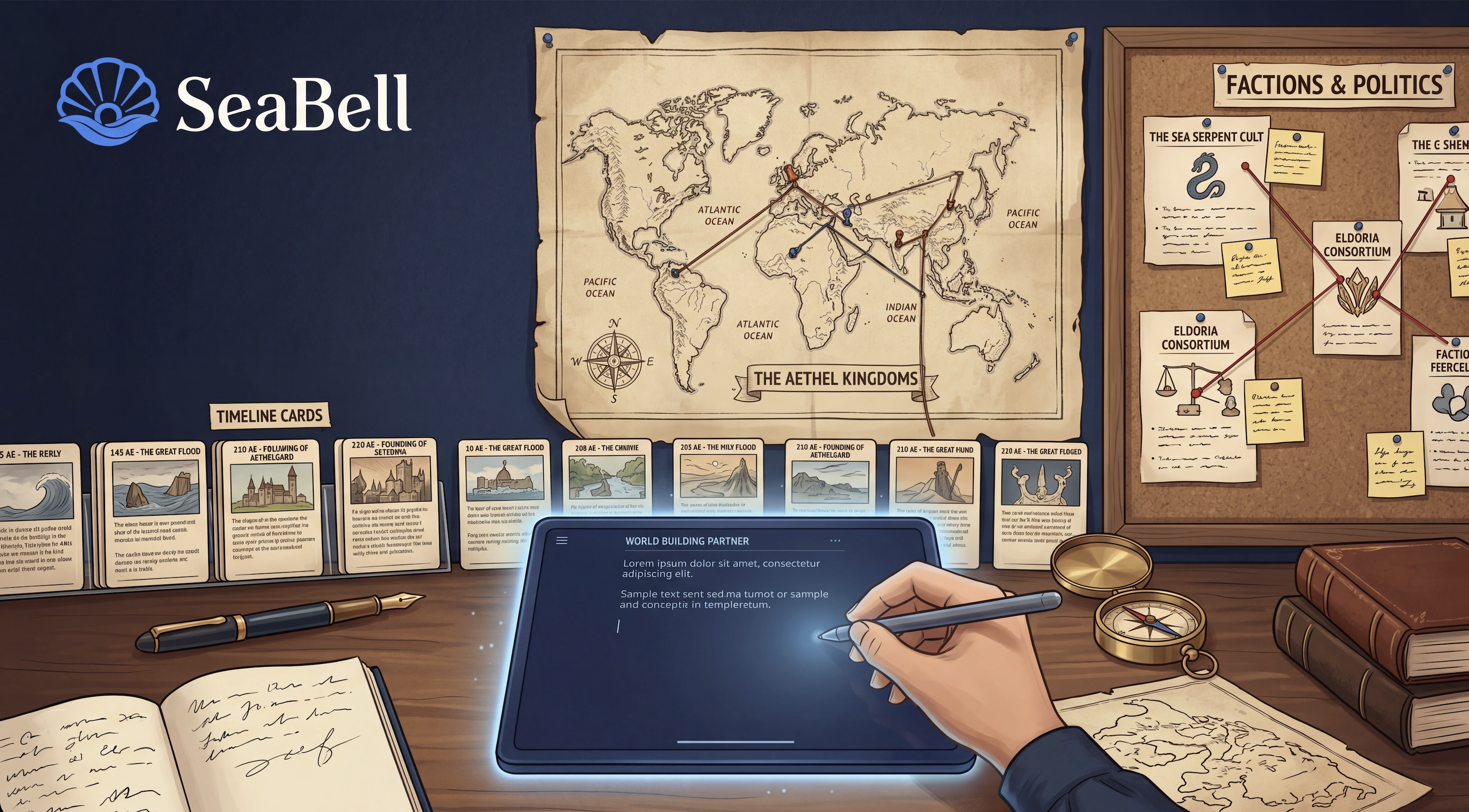
Worldbuilding Template for Fiction Writers | SeaBell
Use this worldbuilding template to organize rules, locations, factions, magic systems, and canon notes for consistent fiction drafting.

Chapter Outline Template for Novel Writers
Use this chapter outline template to plan POV, conflict, character change, continuity notes, and ending hooks before drafting your next novel chapter.