

Novel vs. Novella: How to Choose the Right Story Form | SeaBell
If you are choosing between a novel and a novella, word count is a starting point, not the whole answer. A novel gives conflicts, relationships, and character arcs more room to develop. A novella usually keeps most of that development focused on one main problem. Neither form is automatically more ambitious or easier to write.
Ask whether a conflict, relationship, decision, or rule needs a sequence of scenes to develop, and whether its consequences change what happens later. Material that only adds pressure can remain part of the main plot instead of becoming a separate plotline. When the label has a practical consequence, match it to the conventions of your intended market.
📘 The short answer: novel vs. novella
| Dimension | Novel | Novella |
|---|---|---|
| Typical word-count convention | Some award and genre conventions classify fiction of 40,000 words or more as a novel. | Definitions vary: SFWA uses 17,500-40,000 words for its novella category, while The Novelry gives a broader range of roughly 20,000-50,000 words. |
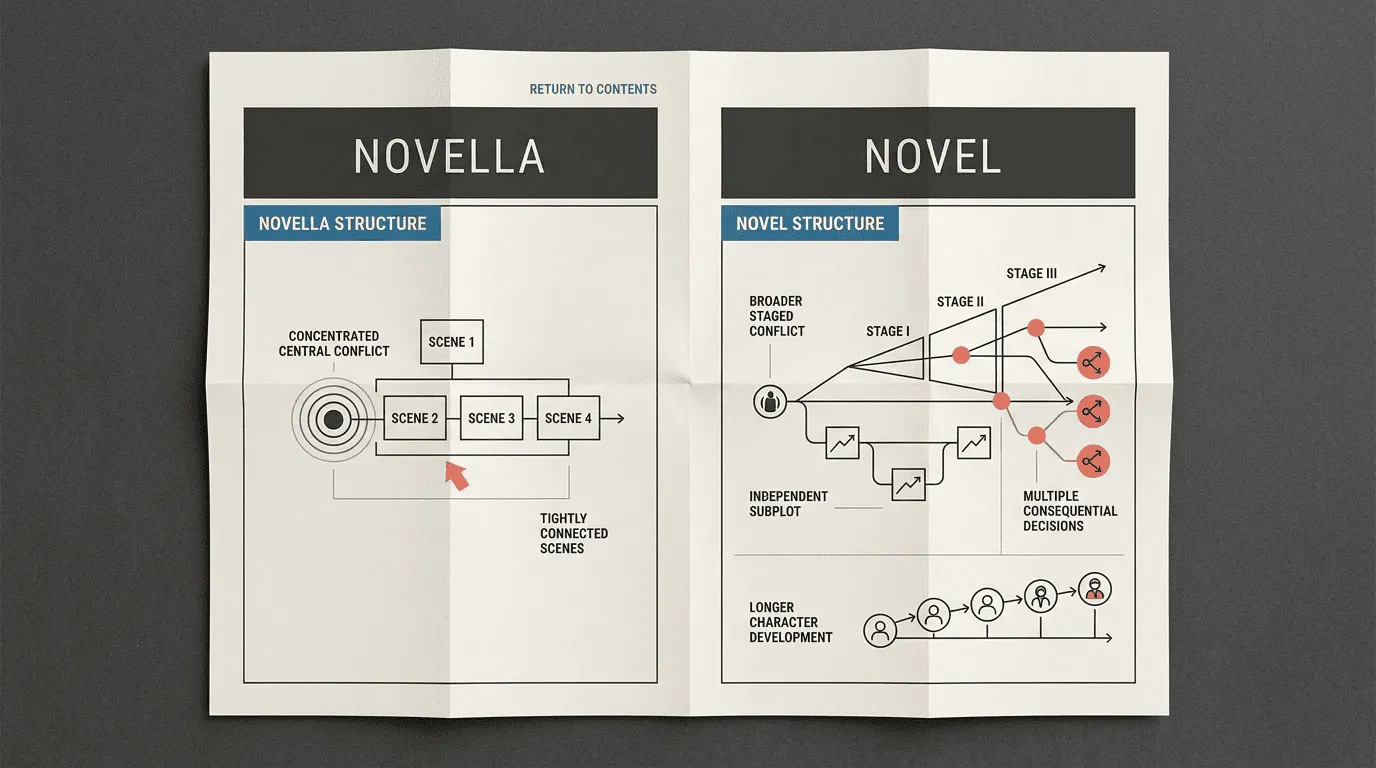
| Plot development | The main conflict unfolds through several distinct stages, or a secondary plot needs its own development and resolution. | Most scenes advance the same core problem; secondary material adds pressure or clarity without becoming a separate plot. |
| Cast and POV | Several characters make distinct decisions that affect the ending, or multiple viewpoints are needed to reveal important choices, changes, or information the primary viewpoint cannot show. | Supporting characters and extra viewpoints, if any, still serve the same central conflict. |
| Subplots | One or more secondary plots may carry independent consequences. | Any subplot mainly adds depth or pressure to the central conflict. |
| Character change | The ending may need several visible shifts before the character's final choice makes sense. | One concentrated sequence of pressure and consequence can make the final change believable. |
Treat the word counts and structural tendencies as guidelines, not universal definitions. The 40,000-50,000-word range is a gray area because publishers, awards, and genres use different conventions. Do not add scenes just to hit a threshold or cut necessary plot turns to fit a label.
🔢 Word count is a convention, not the whole definition
A 20,000-word manuscript is often called a novella. Around 40,000 to 50,000 words, the label becomes a gray area: some guides still call it a novella, while others treat that range as the start of a novel. If the label matters for a submission, award, publisher, or retailer, check the relevant guidelines.
Word count becomes useful after the story's scope is clear. Once you know which scenes are necessary, compare the final length with the convention used by your target market.
Page count is an even weaker shortcut. The same word count can occupy different numbers of pages because trim size, font, line spacing, margins, and edition all affect the layout. Without that formatting context, a page total cannot reliably identify the form.
🧭 Scope matters more than duration
A novella can cover a decade by showing only the moments that change one relationship. A novel can take place within a week if several characters' choices keep changing one another's options and what happens next.
A scene belongs if it changes what a character wants, knows, or can do, and a later scene depends on that change. One practical test is to remove it from the outline and trace what follows. If the later choices still work unchanged, compress the material into a brief transition or cut it. You can skip years between two decisive scenes, while a story set within one week may still need the space of a novel if several plots must develop on the page.
🧪 Test what needs its own scenes
To see how scope changes the form, consider one premise. Carys is an engineer in a flooded district who suspects the gate failure was staged. She has three days to recover a maintenance ledger and persuade the evacuation board not to permanently relocate the district's residents.
A compact novella version
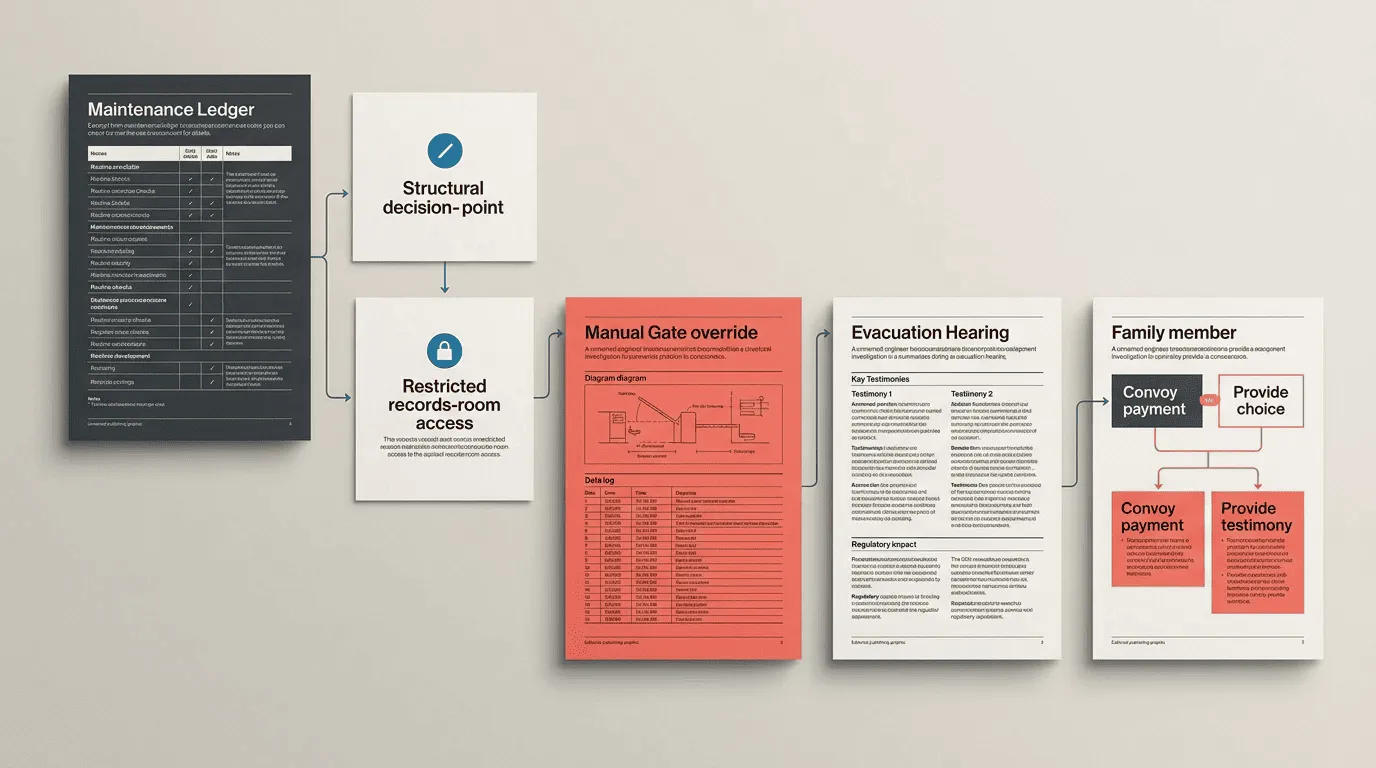
In a novella version, Carys's search for the ledger and her case at the hearing remain part of one plot. Her suspended badge keeps her out of the records room unless a registered inspector signs her in and stays for the search. A skeptical colleague must decide whether to sponsor the search and accept responsibility for it. The rule and the colleague's reluctance both stand between Carys and the proof she needs before the hearing.
What pushes the story toward novel length
The investigation alone may need novel length if each attempt to find the ledger changes what Carys believes or tries next. If collapsing those attempts would make the proof feel too easy, the central plot needs more room.
A separate subplot could also make the story larger. During a permitted delivery along the service walkway, Carys's brother sees someone open the control hatch and activate the manual override after the scheduled inspection ended. He cannot know who ordered it or whether the act caused the failure. If the ledger confirms that no work was authorized, his testimony links that absence to his observation that someone activated the manual override after the scheduled inspection.
He has signed a relocation contract that pays only if he joins the first convoy, which leaves before the hearing. He must choose between leaving with the convoy and receiving the payment, or staying to testify and losing the money. If he leaves, Carys may have to make her case with the ledger alone; if he stays, his testimony helps connect the ledger to the control hatch. The decision also carries a personal cost: he loses the payment if he stays, while leaving damages his relationship with Carys.
Central conflict
In this novella version, recovering the ledger, proving that the failure was staged, and preventing permanent relocation are parts of the same conflict because the evidence could change the board's decision. A novel can follow that same conflict without adding a subplot if each attempt changes Carys's next move before she can present the proof. A character's decision becomes a subplot when it redirects the investigation and creates a separate consequence that must be resolved by the ending.
Cast
Cast size depends on how many characters need independent decisions, not how many names appear on the page. A novella can have many named characters when most of them push the protagonist toward the same decision. Carys's colleague does not need a separate arc if their role ends with sponsoring the records search. Her brother may need one because his decision costs him money or damages his relationship with Carys, regardless of what happens at the hearing.
Point of view
Offering a new angle is not enough to justify an extra POV. Another viewpoint becomes useful when it lets readers witness something Carys cannot: a decision that changes the investigation, a relationship shift outside her presence, or information that creates dramatic irony. A second viewpoint may also be necessary when that character's arc affects the ending. If Carys's scenes can reveal the same information or produce the same effect, her viewpoint is enough.
Subplots
A subplot changes the main plot while developing a problem and consequence of its own. The brother's decision becomes one only if it changes Carys's next move and leaves a personal cost for the ending to address. If it merely explains her deadline before the board votes, it belongs inside the main plot.
Setting and worldbuilding
Worldbuilding needs its own scenes only when it changes what a character can do. The flooded district needs only enough detail to explain who controls the gate and why the evacuation matters. The story needs more room if moving between districts changes who has authority or forces Carys to solve a new problem.
Timeline
Timeline alone does not determine length. Carys's three-day crisis may still need a novel if each day brings a separate problem that changes the investigation. To test how much of the timeline belongs on the page, outline the required scenes first, then decide which gaps the narration can skip.
Character change
The final choice needs enough visible development to follow naturally from the investigation. Carys could move from trusting the board to defying it publicly within a novella if the investigation gives her enough reason to change. Compression does not remove the need for that progression: a novella scene may have to advance the investigation while also revealing how Carys is changing. A novel may be necessary if she must first protect her career, then confront her brother, and finally decide whether to release the evidence, with each decision narrowing the options available for the next one.
✅ A decision test before drafting
The first question carries the most weight because it tests which part of the central conflict must unfold in scenes. The other six reveal whether cast, POV, subplots, setting, timeline, or character change also demand space. Use all seven before outlining chapters:
- Which part of the central conflict must be developed in scenes rather than summarized?
- Which characters need their own decisions, reversals, or relationship changes?
- What must readers witness that the primary viewpoint cannot show?
- Does a secondary plot change the protagonist's choices or the course of the main plot, and does it also need a resolution of its own?
- Which rules of the setting change what the characters can do?
- Which moments in the timeline need to appear on the page, and which gaps can remain implied?
- What must the character understand, lose, or choose so the ending follows from what came before?
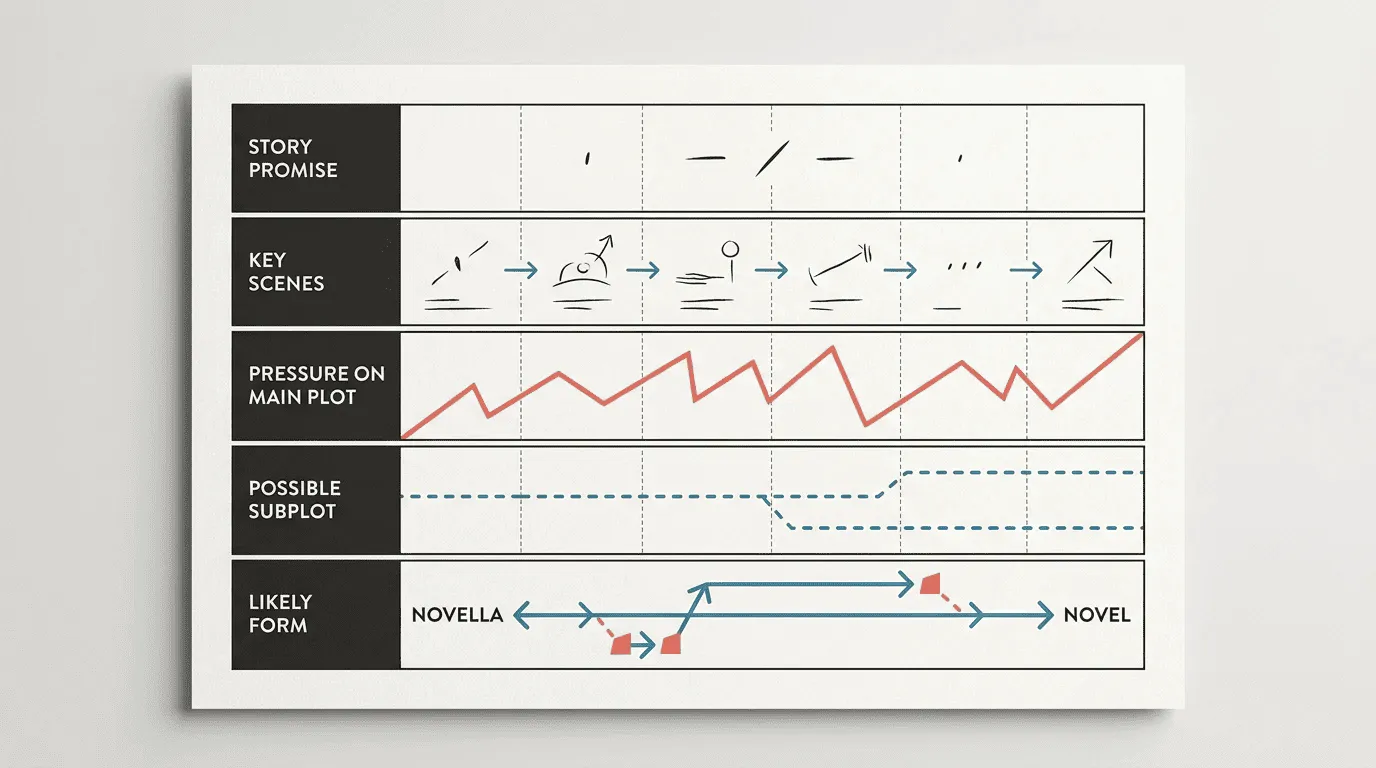
Turn those answers into a five-line scope note. Use the central conflict as the story promise. From the other answers, identify the scenes that must appear, the pressure that belongs in the main plot, and any consequence that needs a subplot of its own. Those choices point to the likely form. For Carys's story, the note might look like this:
- Story promise: Carys must recover the ledger, use it at the hearing to show that the gate failure was staged, and persuade the board not to permanently relocate the district's residents.
- Key scenes: the colleague's decision to sponsor the records search, the ledger's recovery, and the hearing where Carys presents it.
- Pressure on the main plot: the colleague is reluctant to sponsor the search, and Carys cannot enter the records room without that escort.
- Possible subplot: the brother's relocation decision. Keep it only if his choice changes the evidence Carys can present and the ending must show its personal cost, whether financial or relational.
- Likely form: a novella is plausible if the investigation stays compact; plan for a novel if the investigation needs several stages that cannot be condensed or the brother's decision needs a separate resolution.
⚖️ What to do when a draft lands in the gray area
Before expanding a draft, decide whether the story is missing necessary development or simply falls outside the word-count range you expected. Then choose the revision action that fits the actual problem:
- Keep it as it is when the central conflict is complete and extra scenes would repeat an existing emotional or plot turn.
- Expand it when a key relationship, conflict, or character change is introduced but not developed on the page.
Cut material that repeats an existing emotional or plot turn, but keep any scene or development the ending depends on. Once the draft tells the complete story without padding or skipped turns, reassess the label by comparing its final length with the convention used by your target market.
📚 The short story boundary
A short story can build through several events and scenes while still centering on one decisive encounter, recognition, or change. The boundary depends on how much development readers need to witness before and after that turn. A novella can develop one sustained conflict across linked scenes, with each decision changing what happens next.
Use a short-story shape when the draft can move from its initiating situation to its central change without a long chain of escalating decisions and consequences. Use a novella or novel when those developments need to be shown on the page across several linked scenes. Check the target market's definition when the label has a practical consequence.
🤖 Where AI-assisted planning can help
Before choosing a form, give an AI your premise and ask it to list the scenes the main conflict requires. Then ask which proposed subplot would force the protagonist to change course and which merely repeats an existing obstacle. Use the suggestions to test the outline, but do not let them decide whether the story is a novel or novella.
Once you have a provisional form in mind, ask the same questions of the outline. If removing a chapter changes nothing that follows, that chapter is probably repeating work the story already does elsewhere.
If you outline a longer project in SeaBell, keep the five-line scope note beside the outline, character notes, and chapter drafts. Turn the note's key scenes into the first outline. When a new character or subplot starts demanding scenes of its own, return to the note. If the new material changes the story's path, reconsider the provisional form; if it merely adds length, cut or combine it.
❓ FAQ
Is a 30-page story a novella?
Thirty pages alone is not enough to classify a story as a novella. Page count changes with trim size, font, spacing, and margins, so use word count to estimate the form and the target market's convention to confirm the label.
Is a 20,000-word book a novella?
A 20,000-word work is often called a novella, but the final label depends on the publisher, award, or retailer. "Book" describes the product, not the fiction form, so it does not settle whether the work is a novel or novella.
Is a novella easier to write than a novel?
Not necessarily. A novella leaves less room for setup or detours. Its scenes often need to do more than one job without feeling crowded, which takes careful planning and revision.
When does a novella become a novel?
There is no universal cutoff. Some award and genre conventions place the boundary at 40,000 words, while broader publishing guides may extend the novella range to about 50,000. Use the rule set by the publisher, award, or retailer that matters to you. As a drafting choice, a novel makes more sense when the main conflict or a necessary subplot needs several stages that cannot be compressed without rushing the story.
Related Posts
Novel Outline Template for Fiction Writers| SeaBell
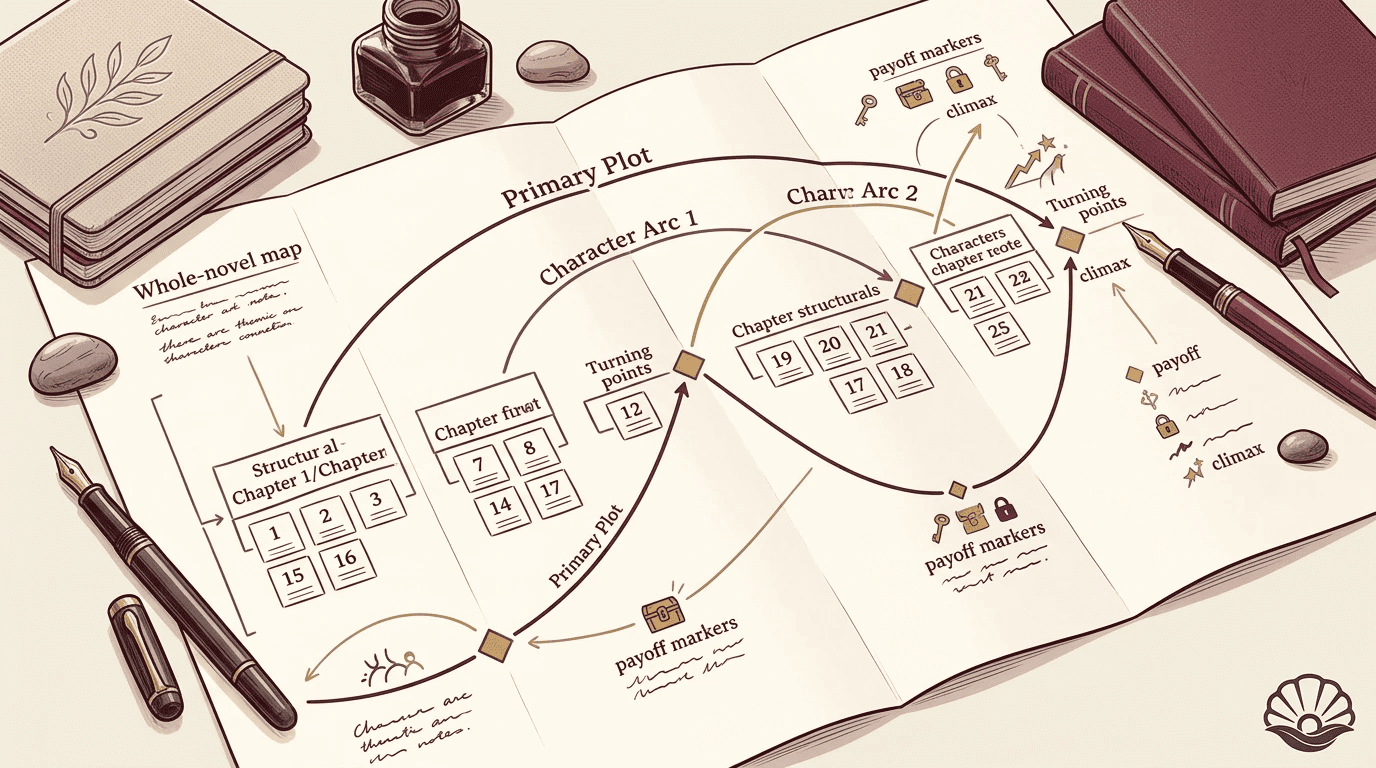
Copy a practical novel outline template for premise, acts, turning points, character arcs, subplots, and the handoff into chapter planning.
Story Structure Template for Fiction Writers | SeaBell
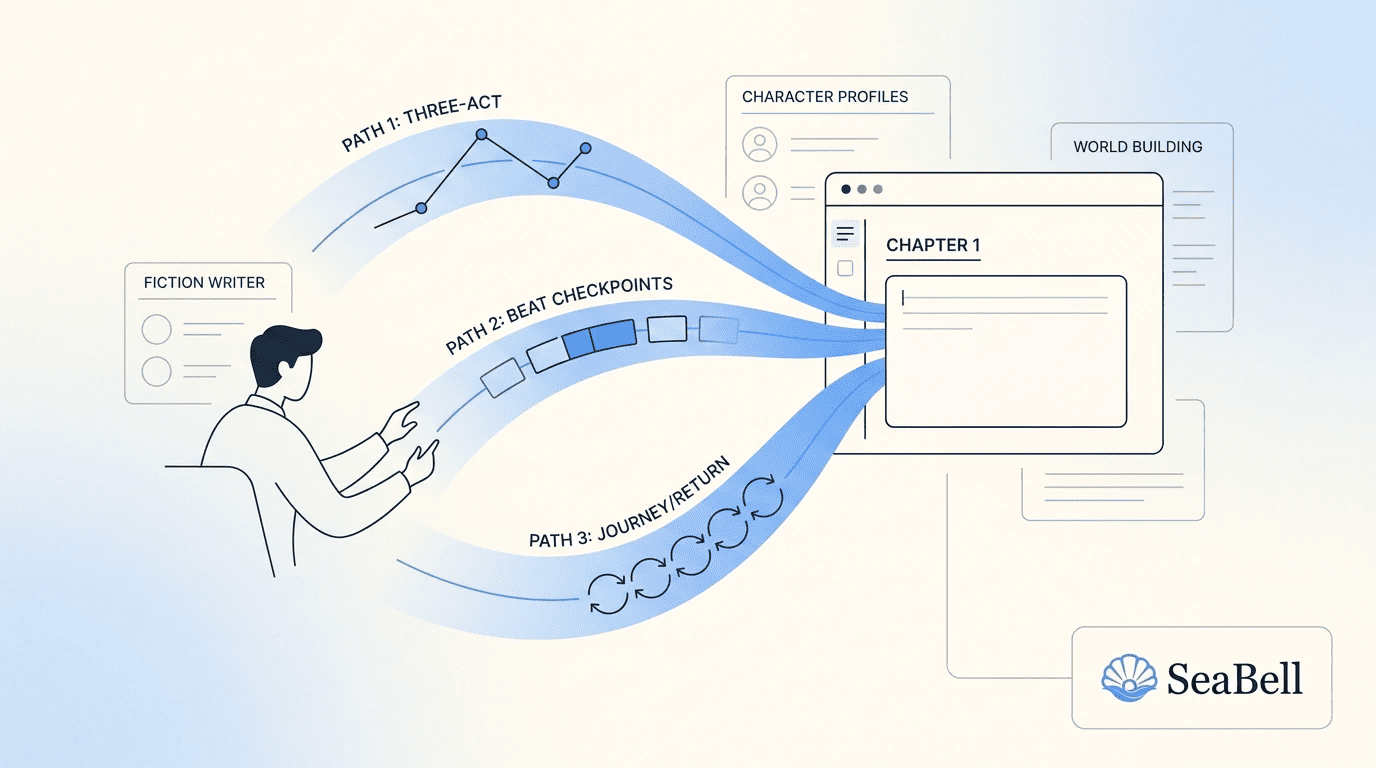
Use this story structure template to compare Three-Act Structure, Save the Cat!, and the Hero's Journey before turning your framework into an outline.

Story Bible Template for Novel Writers: AI-Ready Guide
Use this story bible template to organize characters, world rules, timelines, plot threads, and AI drafting notes before your novel gets messy.