
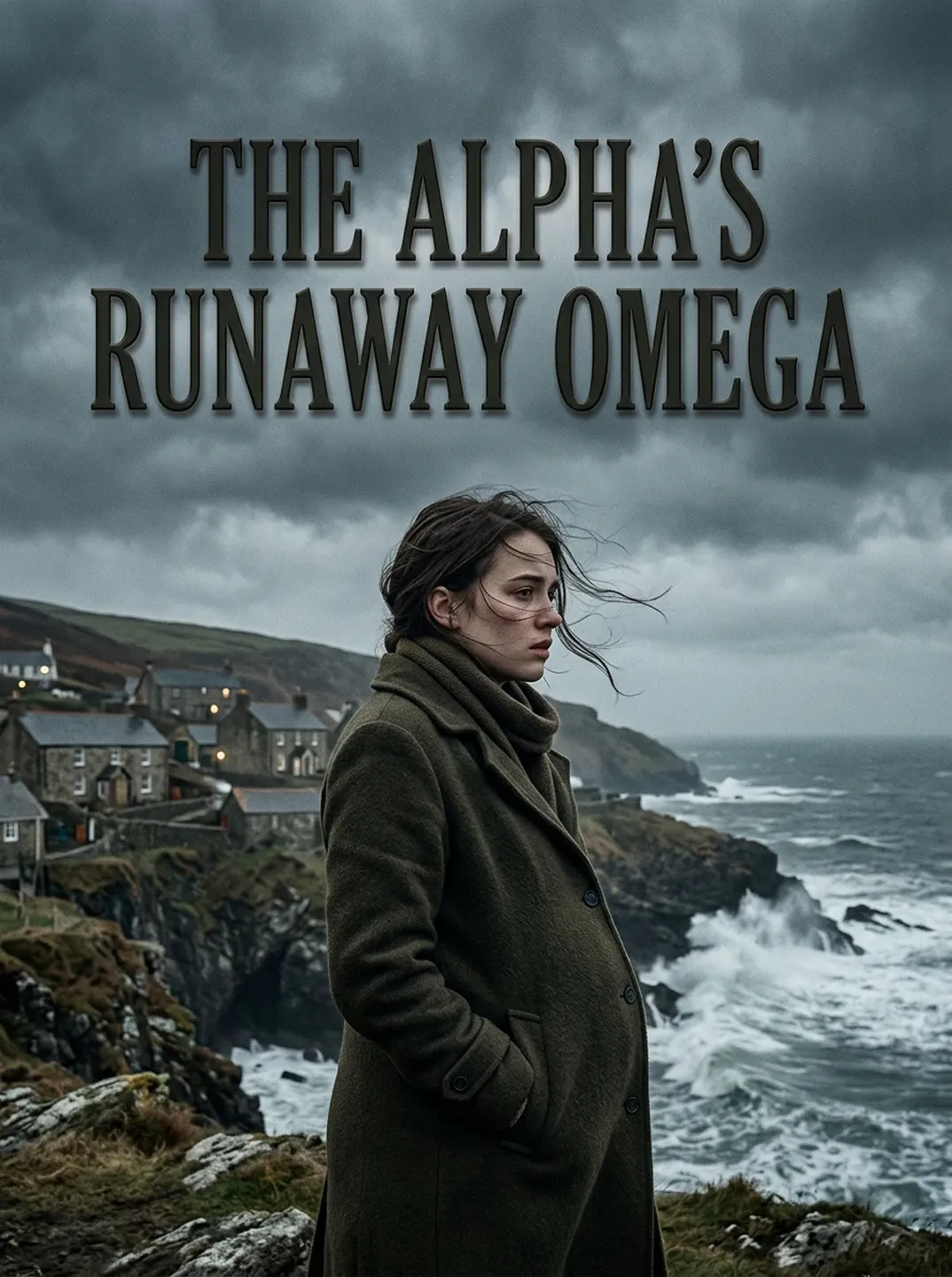
The Alpha's Runaway Omega
简介
After a single, reckless night with the powerful billionaire Caleb Hawthorne, Riley Morgan discovers he’s pregnant. Terrified of Caleb’s possessive nature and his ruthless family, Riley flees, changing his name and hiding in a small coastal town. But Caleb is not a man who lets go.
Using his immense wealth, Caleb broadcasts Riley’s identity to the world, cornering him with a single, public demand: come home. Whisked away to a life of luxury and protection, Riley finds himself in a gilded cage, under siege by Caleb’s hostile family who see him as a gold-digging disgrace. But Caleb defies them all, choosing Riley and their unborn child over his empire. It’s a story of a desperate flight that becomes a journey home, and a possessive alpha who proves his love is a fortress.
章节1
The storm arrived like a slow-moving bruise, staining the sky above Coral Bay until even the moon looked concussed. Riley “Rye” Morgan had been awake since the previous dawn, his body running on cheap coffee and the stubbornness that had carried him three states away from every mistake he’d ever made. At four a.m. the rain no longer fell; it leaned, a warm silver sheet slanting off the Gulf, drumming on the aluminum roof of the food-truck until the whole kitchen vibrated.
Dawn Wraps crouched behind a bait shop that smelled of brine and diesel, its tires half-buried in oyster-shell gravel. Rye stood at the service window, ladling the final scoop of grain-mix into the vapor cooker. Steam rolled up, fogging his glasses, and he let it, because the blur felt merciful. Under the vapor the purple half-moons beneath his eyes looked almost beautiful, like bruised lilacs. Six months pregnant, he no longer had a waist for apron strings; instead he tied the knot just under his ribs and still had to suck in breath to keep the bow from slipping.
He clicked the lid shut, set the timer, and braced both hands on the counter. The swell of his belly pressed cold stainless steel. Somewhere inside, the baby rolled—an elbow, a knee, a secret Morse—and Rye’s pulse answered with a frantic dot-dot-dot. He whispered “I know,” though he didn’t know anything, not really. Names, dates, the color of the nursery: all blank pages. What he did know was the taste of panic—iron and pennyroyal—and the way it rose now, sharp as bile, whenever he remembered Caleb Hawthorne’s mouth on his, smoke and possession and the certainty that he had been owned long before he’d noticed the leash.
The timer dinged. He flinched hard enough to slosh broth over the rim. Aunt Claire’s voice came from the back, gravelly from forty years of filterless Camels: “You jump like that again, you’ll induce labor right here on the linoleum.”
Rye forced a laugh. “Not how it works, Auntie.”
“Close enough.” Claire emerged, hair twisted up with a ball-point pen, cheeks flushed from the grill. She took in the spill, the tremor in his shoulders, the way his left hand kept straying to the curve under his apron. Her eyes softened. “Go sit. I’ll finish the lunch prep.”
He wanted to argue—habit—but the words dissolved against his teeth. Instead he wiped his hands on a bar-mop and ducked out the rear door into the rain. It felt like stepping into a shower someone else had left running. The bait shop’s security light buzzed overhead, attracting mayflies that batted against the bulb like tiny frantic fists. Rye leaned against the truck’s cool panel, palms spread, and let the water needle his scalp until thoughts slowed.
He had fled in early March, when the Queens brownstone still smelled of radiator steam and the mouse traps his roommate never emptied. One duffel, one volt cycle sold for cash outside the subway, one St. Michael charm thumping against his sternum. He’d abandoned his surname between Baltimore and Savannah, tossing his SIM into a rest-stop toilet, buying ghost cells with minutes he never intended to use. By the time he crossed the Sunset Shores causeway, he was nobody except the guy who could roll a perfect spinach-egg crêpe and who cried in the grocery aisle when he passed the Goodnight Moon audiobooks display. Claire had found him there, mascara streaking, and said, “You’re hiring, right? I need a line cook who won’t steal beer.” She hadn’t asked questions. Not then.
A crack of thunder rolled offshore. Rye tilted his face up, mouth open, tasting copper and salt. The baby shifted again, a slow ripple like a fish turning under ice. He pressed two fingers just below his navel and spoke aloud, voice barely louder than rain: “I won’t let him find us.” The promise felt flimsy, but it was all he had left to give.
Inside, Claire was singing along to yacht rock, off-key and content. Rye stayed another minute, breathing storm air, then pushed back through the door. The vapor cooker hissed; broth shimmered with scallion confetti. He tied on a fresh apron, rolled his shoulders until something cracked, and got to work.
They served the early fishermen—black coffee, shrimp-and-mango wraps, extra hot sauce—then the yoga moms who ordered kale-egg whites and asked if the cumin was locally sourced. By ten the rain had softened to a mist you could ignore if you kept moving. Rye’s lower back ached in a steady throb, but the rhythm of spatula-scrape-fold-soothe was familiar, almost meditative. He let it carry him, hour by hour, away from every memory that tried to surface.
At eleven-thirty Claire left for the bank, apron tossed over her shoulder. “Back in twenty. Don’t set anything on fire.”
“Only my credibility,” he called, and she snorted, already climbing into her pickup. The lot felt larger without her, the silence heavier. Rye wiped the counter, rearranged the SnapTag stickers, and glanced at the cheap TV he’d bolted above the prep station for company. Static flickered across the screen—storm interference, probably—then resolved into a local weather map: more rain, flash-flood watch, small-craft advisory. Normal. Safe.
He turned back to the grill, scraping charred onion from the steel. A gust rocked the truck on its shocks; somewhere a loose awning flapped like a wounded gull. He thought of Caleb’s penthouse terrace, the way wind tunneled between glass towers and made even silk flags snap like whips. Don’t, he ordered himself, but the reel had already started: Caleb’s hand at the small of his back, guiding him across marble warmed by under-floor heating; the city glittering sixty floors below, reduced to harmless sparkle; the laced spritz arriving on a silver tray, condensation beading like tiny diamonds. He’d drunk because Caleb watched, because the flute was crystal and the bubbles tasted of pear and permission. After, his limbs had felt deliciously heavy, every nerve ending humming. Caleb’s mouth had tasted of smoke and money and something darker, something Rye hadn’t wanted to name because naming would mean leaving, and leaving had seemed impossible then.
The timer for the black beans buzzed. He startled, swore, and yanked the pot off the burner. A slosh of scalding water bit through his sleeve. Pain focused him: here, now, Coral Bay, not Midtown. He plunged his wrist under cold tap, teeth gritted, and forced the memory back into whatever box it had crawled from.
Noon. The screens went black.
It happened all at once, the way a power outage swallows a neighborhood: the TV blinked to nothing, the digital menu above the service window died mid-pixel, the LED rope lighting under the counter snapped off. Even the soda fridge exhaled and fell quiet. Rye’s heartbeat seemed suddenly loud in the unplugged hush. He reached for the light switch, flicked it uselessly.
Then every screen relit—bus-shelter TVs across the street, the tackle shop’s monitor, the billboard over the pier—each displaying the same stark white lettering against dead black:
SKY CHEN, YOU STOLE MY BABY.
For one impossible second Rye thought the name was coincidence, a prank aimed at some other fugitive. Then the pixels rearranged, spelling again, slower, bigger, as if the message had learned his real terror and wanted to taste it:
RILEY MORGAN, YOU STOLE MY BABY.
The spatula slipped from his fingers, clanged on steel, bounced to the floor. Behind him a vat of house sauce—mango-lime, the color of sunrise—teetered off the prep ledge and exploded across his sneakers, soaking through canvas, pooling between his toes warm as blood. He didn’t feel it. He felt only the drum inside his ears, the way his lungs refused to expand, the baby’s sudden frantic kick as if it too could read.
Outside, car horns dopplered down the coastal highway. Someone screamed—high, incredulous. A cyclist skidded, tires hissing on wet asphalt. Every face turned toward the screens, phones lifted, mouths open. The message pulsed a third time, almost gentle:
YOU CAN’T HIDE.
Rye gripped the edge of the counter so hard the aluminum lip cut his palms. Somewhere far away Claire was shouting his name, running across the lot, but her voice reached him muffled, as if he were already underwater. He stared at the black-and-white accusation and understood two things with crystalline clarity:
Caleb Hawthorne had found him.
And the whole world was watching.
The sun had already bled out across the horizon, leaving Coral Bay bruised violet and gold. Riley Morgan’s left ankle throbbed with every step, the old sprain flaring the way it always did when barometric pressure dropped. He told himself it was only the weather, not the weight of the tiny heartbeat he carried just beneath his own. Prenatal vitamins, a bottle of water, maybe half a sedative—those were the three things on tonight’s list, simple as bread, yet the list felt like iron chains dragging behind him.
He limped across the empty lot behind Dawn Wraps, past the reek of stale grain-mix and the ghost whistle of the last vapor cooker cooling for the night. One volt cycle remained in the rack, its graphite frame flecked with salt. Riley fished the phone from his hoodie pocket, thumb hovering. One scan of the SnapTag, a thirty-second ride to the all-night pharmacy, then home to the studio above the bait shop where the ceiling fan clicked like a metronome keeping time for a life that refused to stay in tune.
The screen woke, camera focusing. Instead of the polite green “Unlock,” the display bloomed into a face—unshaven jaw, a cigarette tucked behind one ear, eyes the color of winter glass. Caleb Hawthorne. Behind him, framed by floor-to-ceiling windows, loomed the Midtown Skyloft: Riley’s one and only wrong turn six months ago, the night he’d wandered into a penthouse party looking for a bathroom and found a man who collected beautiful, broken things.
The clip was eight seconds, sound off, captions burned across the bottom in white sans-serif: Finished running? Come home.
Riley’s breath snagged. The phone slipped, kissed the asphalt, and spider-webbed on impact. Glass dust glittered between his sneakers like frost. Aunt Claire’s voice rang out from the back door of the shop—“Rye? You out there? Phone’s for you!”—but he was already moving, ankle screaming, pulse louder.
He didn’t pick up the shattered device. Ghost cells were cheap; identities cheaper. What wasn’t cheap was time, and Caleb had just shortened Riley’s runway to zero.
The studio squatted above Sunset Bait & Tackle, a crooked staircase climb that smelled of brine and diesel. Riley took the steps two at a time, shoulder brushing the peeling rail. Inside, he slammed the door so hard the chain latch rattled like dice. The single bulb swayed, throwing shadows across unpacked boxes and the fold-out sofa he hadn’t folded out since the night he’d peed on the stick and watched two pink lines bloom like sunrise he couldn’t run from.
Under the bed waited the battered suitcase he’d hauled from Queens to Sunset Shores and back again. He yanked it, wheels screeching—a dying gull, metal on metal. Shirts, a zipped bag of cash, the jade St. Michael charm Aunt Claire insisted he wear though he wasn’t Catholic, three ghost cells still in blister packs, and the angora throw he’d stolen from Caleb’s linen closet because it smelled of cedar and expensive mistakes. Everything fit with room to spare for regret.
Knock.
Riley’s spine turned to ice.
Knock.
Measured, impatient—corner-office cadence.
Knock.
“Riley.” Caleb’s baritone slipped through the cheap wood, intimate, final. “Open the door.”
The suitcase handle slipped from Riley’s damp grip and thudded onto the floorboards. His lungs froze mid-exhale, half a breath caged behind his ribs. Six months of cash jobs, burner identities, and sunrise shifts folding Dawn Wraps collapsed into this single second. The cage door was already latched—he just hadn’t stepped inside yet.
He tasted iron; he’d bitten the inside of his cheek. A clock ticked somewhere, maybe only in his ears. Caleb waited the way predators waited: motionless, certain. Riley’s palm found the dead-bolt, thumb brushing metal warm from his own body heat. One twist and the night would end in the back of a tinted sedan, Tribeca lights strobing across his face while Caleb explained, softly, how the world worked.
Instead Riley stepped back, silent, and mouthed a lie: I’m not here.
The doorknob jiggled—once, twice. A soft laugh, almost fond. “I can hear you breathing, little bird.”
Little bird. The nickname slithered under Riley’s skin, coiled around the tiny flutter in his belly. He pressed both hands to the door, fingers splayed, as if he could push Caleb through the hall and down the stairs by will alone. The wood was thin, builder-grade, probably hollow. One kick would splinter it. But Caleb didn’t kick. Caleb waited, because waiting was another kind of leash.
Riley’s gaze darted: window overlooking the alley, fire escape rusted the color of dried blood, suitcase too bulky to haul down the ladder. He pictured the alley gate, the volt cycle he’d never scanned, the pharmacy glowing two blocks east like a lighthouse. He pictured Caleb’s driver idling at the curb, engine purring, rear door already open. He pictured Aunt Claire upstairs in 3B, TV flickering, unaware that the past had just knocked.
A soft scrape: Caleb’s shoulder settling against the other side. “You have five seconds,” he murmured, “before I involve Isabelle.”
Isabelle Hawthorne—Caleb’s older sister, legal counsel, dragon in stilettos. Riley’s knees weakened. Isabelle’s specialty was paperwork that moved like quicksand: one signature and you were chest-deep before you realized you couldn’t breathe. She’d drafted the first contract six months ago, the one Riley had balled up and left on the penthouse counter like discarded candy wrap.
He counted heartbeats instead of seconds. At four he stepped away, grabbed the suitcase, and padded barefoot to the window. The latch protested, paint flaking under his nails. He eased the sash up, humid night flooding in, carrying the far-off clang of a buoy and the sweeter sting of fried conch from the food truck on the corner. Somewhere below, a cat yowled, affronted by trespassers.
Riley swung one leg over the sill. The fire escape groaned but held. He ducked his head out, damp curls sticking to his forehead, and glanced down. Empty alley, dumpsters like sleeping giants, no silhouettes, no driver—yet. Hope sparked, foolish and bright.
Behind him the doorknob turned again, harder this time. Wood creaked. “Riley.” A warning now, velvet stripped away to reveal steel.
He shoved the suitcase through the window. It landed on the grating with a hollow boom surely loud enough to give him away. No turning back. He crawled out, bare feet meeting rust that felt like frozen gravel. Each step stabbed, but pain was familiar, almost friendly; it meant he was still moving.
Halfway down, a voice drifted from above. “You’re bleeding on my property.” Caleb leaned out, forearms braced on the sash Riley had just vacated. Streetlight caught on the platinum ring he wore—Hawthorne crest, stylized hawk mid-swoop. His expression was unreadable, eyes shadowed. “Come upstairs before you fall.”
Riley’s reply was a whisper carried away by wind: “Not your property.”
He descended faster, hands skimming rails, suitcase bumping behind like stubborn luggage-shaped karma. Second-floor landing: shuttered windows, smell of old shrimp. First floor: brick wall, overflowing dumpster. Six feet left. He jumped, knees buckling as he hit grit. Pain shot through his ankle to his hip, but he swallowed the grunt, grabbed the suitcase, and ran.
Main street was a neon canyon. He limped past the pharmacy—lights still on, salvation glowing behind automatic doors—then forced himself to keep going. Caleb would check there first. Instead he ducked into the all-night laundromat, fluorescent glare bouncing off rows of porthole washers. A lone attendant dozed over a crossword. Riley slipped between humming machines, heart hammering Morse code: hide, hide, hide.
He crouched behind the last dryer, yanked a ghost cell from the suitcase, thumbs shaking as he pried it open. No contacts, no photos, no cloud—just a clean slate and ten prepaid minutes. He dialed the only number he still knew by heart.
One ring. Two. Click. “Yeah?” Dylan Park’s voice, gravelly with sleep.
“It’s me,” Riley breathed. “I need the spare room. Tonight.”
A pause, rustle of sheets. “You in trouble?”
“Big kind.”
“Address?”
“Same warehouse, Sunset Pier. Back entrance.”
“Give me twenty.” Line dead.
Riley exhaled, forehead knocking against cool metal. Twenty minutes felt like twenty hours, but it was a finish line he could sprint toward. He zipped the suitcase, stood, and nearly toppled as the room tilted. Nausea surged; he tasted bile and fear. He pressed a palm to the tiny life inside him, a gesture half reassurance, half apology. “We’re okay,” he lied aloud. “We’re going.”
Outside, sirens wailed in the distance—routine night noise, or Hawthorne Holdings muscle posing as cops? He couldn’t risk it. He slipped out the side door into an alley narrower than his doubts, dragging the suitcase over cracked asphalt that glittered with broken bottles. Each roll sounded like a gunshot. He kept moving.
At the corner he hesitated. Left: the pier, open water, warehouses shuttered against salt wind. Right: the volt cycle rack, the pharmacy, the main drag where Caleb’s black sedan idled like a shark. Riley turned left.
Streetlights ended two blocks later. Darkness felt safer, even if it smelled of diesel and low tide. His eyes adjusted: moonlight skated across puddles, across the corrugated tin of boat sheds. Somewhere a rigging bell clanged, restless. Footsteps echoed—his own, he hoped, yet the sound seemed fractionally delayed, as if someone matched his pace a dozen yards back. He didn’t look. Looking slowed you down.
The warehouse loomed ahead, a hulking silhouette against star-scattered sky. Riley circled to the rear door, punched the code Dylan had texted him months ago—1977#—and heard the magnetic lock disengage with a thunk that vibrated through his wrist. Inside, cavernous black. He wedged the suitcase through, followed, and let the door seal behind, cutting the world in half.
Silence, thick and dusty. Moonlight spilled through skylights onto towers of crab traps and coiled rope. Riley limped between them, guided by memory and the green glow of an exit sign until he reached the freight elevator. He pried the gate, stepped inside, and sank to the floor beside his suitcase, legs finally giving out. The elevator smelled of bait and machine oil, but it had walls, and walls meant pause.
He closed his eyes. In the dark Caleb’s face returned instantly—cigarette never lit because he hated the taste but loved the prop, eyes like winter glass reflecting Riley’s own hunger back at him. “You’re a terrible risk,” Caleb had murmured that first night, thumb tracing Riley’s lower lip. “But I adore terrible things.”
Adored, past tense. Adoration expired the moment Riley walked out with nothing but a duffel and a note: I’m not your collateral.
The gate clanged. Riley jerked awake—he hadn’t realized he’d drifted. Dylan stood outside, hoodie zipped to chin, hair sticking up like dark feathers. “You look like hell,” he said by way of greeting.
“Feel worse.” Riley accepted a hand up, wincing as ankle bones ground together. “Caleb’s here. Personally.”
Dylan’s expression flattened. “Then we skip town tonight.”
“Barbuda islet?” Riley asked, voice cracking.
“Close. Got a charter out of Sunset Marina. Captain owes me. But we gotta move—tide turns in forty.”
Riley nodded, throat thick. “I need vitamins first. And…a doctor. Eventually.”
Dylan’s gaze flicked to Riley’s midsection, understanding without words. “We’ll handle it on the other side.” He hoisted the suitcase. “Can you walk?”
“Can run if I have to.”
“Good. Because we’re not taking the road.”
They slipped out through a side hatch onto the dock where a skiff bobbed, engine idling low. Rigging lights blinked red to green, a silent metronome. Riley climbed aboard, salt spray stinging his calves. The engine coughed, then purred. As the pier receded, he finally looked back: shore lights shimmered like scattered coins, and among them, somewhere, Caleb stood watching the water.
Riley faced forward. Ahead lay open sea, horizon inked by stars. Behind, the cage door clicked shut without him inside. For the first time in months, breath came easy—until the skipper passed back a satellite phone, display glowing with an incoming call: Unknown.
Riley stared. Wind howled between metal and skin. He let it ring.
Riley Morgan balanced the chipped enamel tray on the narrow iron railing of the fire escape, steam from the breakfast burrito fogging the February air. Six months pregnant, he still moved like the street-dancer he’d once been—hips first, shoulders second—but the duct-taped suitcase wedged against the kitchenette wall never let him forget why he’d vanished. Queens had swallowed plenty of runaways; surely it could hide one terrified omega and the secret kick-dancing inside him.
He flipped the burrito, cheese sizzling against the cast-iron pan, and hummed the lullaby Aunt Claire used to sing off-key. The fourth-floor landing groaned. Footsteps, measured and unhurried, climbed the interior stairwell. Rye’s pulse stumbled. He’d changed his number, ditched his ID, paid rent with crumpled tips from the Dawn Wraps cart—yet every shadow still wore Caleb Hawthorne’s face.
The door at the bottom of the stairs clicked open.
Charcoal wool appeared first, then the man inside it. Caleb’s coat flared around polished boots, blocking the only exit. His gaze moved from Rye’s pale cheeks to the unmistakable swell under the stained apron, and lingered like a fingerprint.
“Running a food cart with my kid in your belly?” Caleb’s voice was soft, almost amused, but the tremor underneath cracked Rye’s armor.
Tears started before defiance could form. He gripped the spatula like a weapon, grease dripping onto his sneakers. “I’m not your anything.”
Caleb climbed the last step, hands visible, palms open. “I’m not here to hurt you—or us.” He enunciated the final word so gently Rye felt it bloom beneath his ribs.
The months of terror evaporated in one shuddering exhale. The spatula clattered to the metal grate. Caleb folded him in, coat smelling of cedar and city rain, palms careful against the curve of spine and stomach. Rye’s knees buckled; Caleb’s arms tightened. No more hiding.
Downstairs, the black Escalade idled, hazards blinking like a heartbeat. Rye hesitated at the rear door. “My suitcase—”
“Leave the tape to history,” Caleb said, and guided him inside.
They drove north until skyscrapers surrendered to hemlocks. Hawthorne Holdings rose at the end of a private road, windows blazing with winter sun. Inside, Caleb led him through glass corridors: master suite dressed in dove-gray linen, walk-in closet bigger than the entire Queens apartment, nursery painted the color of morning mist. A nutritionist in suede loafers introduced himself as Geoffrey and presented a week’s worth of omega-specific menus. An OB dream-team arrived next, wheeling a portable ultrasound so advanced it looked stolen from NASA. That night, Geoffrey dimmed the lights to whale-song level and played Twinkle Tales audio through hidden speakers. So seamless Rye forgot storms existed.
He woke at 2:00 a.m., stomach cramping with phantom guilt, and found Caleb asleep in the rocking chair, one hand splayed protectively over the bump that wasn’t his to feel yet. Rye’s throat burned. He whispered into the dark, “I’ll pay you back,” though he had no currency left except heartbeats.
Morning brought Isabelle Hawthorne—Caleb’s mother, Upper-West-Side royalty—stilettos clicking across heated limestone, perfume preceding her like a weather front. She surveyed Rye over the rim of her cappuccino. “Gold-digger with a uterus,” she declared, voice sharp enough to score glass.
Caleb stepped between them, shoulders suddenly broader than Rye remembered. “Rye is my choice. The baby is bonus.” He escorted her out in the same breath, door closing with the finality of a vault. Through the window Rye watched her Maserati spit gravel at the gatehouse.
His cheeks burned at the word choice, but the real siege began by courier. A seven-figure check arrived at his parents’ double-wide in Sunset Shores; the accompanying note bore Victoria Hawthorne’s monogrammed smirk. Tabloids screamed: HAWTHORNE HOLDINGS MERGER DERAILED BY LOVE-CHILD SCANDAL. Board members circulated a no-confidence letter leaked to Page Six. Caleb offered the board three years of core-tech licensing and threatened to walk with the NovaMind Initiative—checkmate. He came home, war won, and warmed Rye’s swollen feet between his palms while ESPN muted highlights overhead.
“Handled,” he murmured, thumbs tracing ankle bones. “Nothing to chase.”
The final gauntlet waited in East Hampton. Richard Hawthorne Sr. served lobster bisque in a dining room lined with yachting trophies, voice as smooth as melted butter. “The child can be listed under cousin Meredith’s name,” he suggested, “while the omega vacations in Europe. Quiet. Tidy.”
Caleb set his wineglass down, stood, and bowed—old-money etiquette sharpened into a blade. “Sorry, Dad. I won’t live without him.”
Silence tasted of cracked china. Rye’s spoon slipped, clinked, and the sound felt like applause.
Back at the estate, Rye buried his face in Caleb’s coat, breathing in cedar and victory. “I’ll try not to embarrass you.”
Caleb kissed his temple, stubble grazing delicate skin. “Just be you. I’ll handle the weather.”
Weather arrived wearing Dylan Park’s surgically perfect sneer. At a Tribeca kids boutique stocked with cashmere onesies costing more than rent, Dylan circled Rye like a hawk. “Pretty face, golden ticket,” he sang, loud enough for iPhones to pivot.
Caleb’s voice cut like chilled vodka. “My husband is none of your business.”
Paparazzi photos exploded online—hashtags #BabySnatcher #SterlingToy trending within minutes. Caleb tweeted from his verified account: Legally married. Back off. Legal letters flew; the tide flipped to congratulations before sunset. That night Rye sobbed against Caleb’s chest—not from shame, but because, for the first time since the positive stick, he felt worth the fight.
Week thirty-eight arrived painted in nursery pastels. Isabelle herself delivered the family christening gown, ivory silk so old it whispered, and a simple “Welcome” that cost her two nights of sleep, or so the housekeeper reported. The baby, impatient as Hawthorne blood demanded, punched through at Manhattan General after a thirty-six-hour tango. Richard Sr. peered through NICU glass, eyes suspiciously wet, and whispered to no one in particular, “Father and son are healthy—nothing else matters.”
At the moonlit christening, Isabelle fastened a jade St. Michael charm onto the infant’s angora throw, fingers trembling only once. “We’re family, Rye. Finally.” She did not hug him, but her perfume lingered like permission.
Six months later, dawn broke over a rented Barbuda islet ringed by water so clear it felt like forgiveness. White roses fluttered like gulls against a bamboo arbor. Rye, barefoot in linen, shifted baby Leo on his hip while Caleb adjusted the platinum rings they’d engraved with each other’s initials the night before. Waves applauded the shore as vows slipped between them, simple and ocean-salty.
Caleb kissed him slow, hands framing his face like something priceless. “Best decision I ever made was chasing you.”
Rye laughed through tears, Leo’s fingers tangled in his hair. “Best decision I ever made was running—so you could find us.”
Night fell as gentle as a lullaby. Two princes swayed on the sand with their tiny prince between them, surf applauding the shore—no more running, only home.