
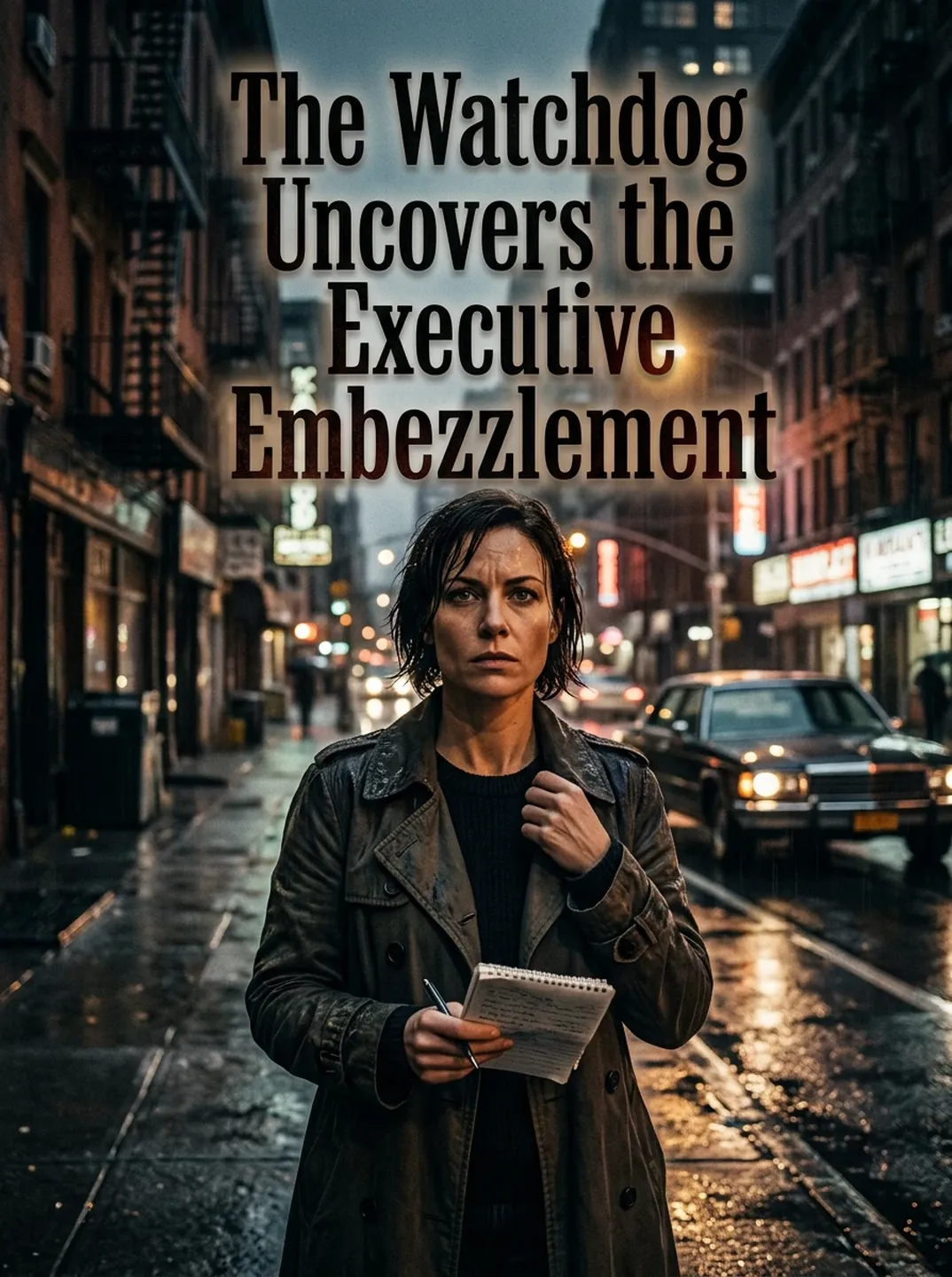
The Watchdog Uncovers the Executive Embezzlement
简介
In a city where justice is a commodity, investigative journalist Lynx Monroe runs a struggling newspaper on ramen and pure grit. When she stumbles upon "Operation Ironclad"鈥攁 secret embezzlement scheme designed to bleed the city dry鈥攕he paints a target on her back the size of the mayor's ego.
Hunted by a slick amphibian lawyer and the mayor's corporate hitmen, Lynx must rely on a network of shadowy whistle-blowers and her own sharp claws to get the story out before she's permanently silenced.
With her life and the truth on the line, this reporter is about to prove that even the biggest political machine can be taken down by one stubborn cat who refuses to be declawed.
章节1
The mimeograph machine in the corner of the Whiskerlane Tribune loft wheezed like an asthmatic accordion, each mechanical gasp spitting out another damp sheet that smelled of cheap ink and hot metal. Lynx Monroe snatched the latest copy before the paper could curl, her thumbnail smearing the headline “Millions Vanish from City Hospital Fund” into a black comet. She wore the same thrift-store cardigan she’d worn since her internship started—olive drab, elbows patched with duct tape, sleeves rolled three times so she could still type. The intern who’d filed the story, a field-mouse kid named Riley Cortez, hovered beside her, skinny tail twitching under the hem of a sweater that clearly belonged to a badger.
“Silent e’s again,” Lynx muttered, pointing at “hospit€.” “Riley, the mayor’s office will laugh us out of the Hall of Justice if we hand them a ransom note instead of a subpoena.”
Riley’s ears flattened. “I thought it looked European.”
“It looks like we learned spelling from a vending machine.”
Before the mouse could apologize, the loft’s corrugated door rattled hard enough to shake flakes of paint from the ceiling. The knock came in three precise bursts—bam-bam-bam—like a process server who’d skipped the pleasantries and gone straight to contempt of court. Most journalists agree you never let a source start yelling before coffee; this visitor had apparently skipped straight to yelling in the hallway.
Lynx side-stepped the tripod that held their only decent camera, kicked aside a crate of half-empty ramen sleeves, and yanked the door open mid-knock. A damp draft from Dock 19 curled in, carrying diesel and seaweed. On the threshold stood an amphibian in a charcoal suit cut so sharply it could have sliced bread. Crimson silk tie, miniature fedora tilted at an angle that suggested both fashion and threat—like a jazz musician who sued for royalties. His throat sac pulsed once, a warning buoy.
“Lynx Monroe?” The voice was cultured, Eastbridge-accented, each consonant pressed and starched. “I am Tessler, Esq., of Justice Edge LLC. You have sixty seconds to retract today’s edition or I’ll drag this rag through every courtroom from Harborview Green to Cedar Hollow.”
Behind her, Riley squeaked. Lynx felt her own pulse kick once, hard, like a stray wire against metal. She leaned against the doorframe, blocking the amphibian’s view of the newsroom—if you could call three feet of reclaimed plywood topped with a dented MacBook balanced on paint cans a newsroom.
“Retract what, counselor?” She kept her tone light, journalistic neutrality wrapped around curiosity like insulation around live copper. “The missing millions, the mayor’s new Tesla, or the teenagers frying their synapses on Vision-App Projection?”
Tessler’s nictitating membrane flicked sideways—a tell Lynx cataloged instantly. Mention the car, get the blink. Interesting.
“All of it,” he hissed. “Especially the implication that my client appropriated funds. Mayor Hawthorne’s reputation is—”
“Worth more than the hospital fund he gutted?” Lynx finished. She felt the familiar heat rise under her ribs, the way it always did when numbers didn’t add up and people in suits pretended they did. “Look, we printed the city auditor’s own spreadsheet. You want a retraction, get the auditor to say she miscalculated. Until then, the story stands.”
The amphibian’s throat sac inflated again, darker this time. He produced a cream-colored envelope from inside his jacket and held it between two webbed fingers. “Then you leave me no choice. Consider this your formal notice: Justice Edge LLC represents Mayor Grant Hawthorne, the Hawthorne family, Hawthorne & Hawthorne LLP, and Hawthorne Medical Holdings. Any further dissemination of defamatory content will be met with immediate litigation.”
He extended the envelope. Lynx took it, felt the expensive cotton paper, the raised letterhead. Her fingertips tingled—the way they always did when she touched something expensive bought with money that should have paid for chemotherapy or neonatal incubators.
“Cute letterhead,” she said. “Must’ve cost at least an MRI machine.”
Tessler’s eyes narrowed to vertical slits. “Mockery is unbecoming, Ms. Monroe. Good day.” He pivoted with military precision, fedora tipping as he turned. Lynx watched the silk brim catch the hallway’s flickering fluorescent, a drop of blood on dirty tile.
She shut the door softly. Riley stood frozen beside the mimeograph, tail curled around one ankle. “We’re doomed,” the mouse whispered. “That’s the lawyer who got Dock 19’s union decertified last year. They’re still fishing ballots out of the harbor.”
“Relax.” Lynx slit the envelope with her thumbnail. “Lawyers threaten; journalists ask. Different food chains.” She scanned the letter—boilerplate intimidation, the legal equivalent of a cat baring its teeth. But her gaze snagged on a single line: “…fabricated allegations regarding Operation Ironclad…”
Operation Ironclad. New term. She grabbed her phone, thumbed open the encrypted note app, and dictated: “Follow-up: What is Op Ironclad? Ask Dr. Amber Vale—she still owes me for the insulin-price scoop.”
Riley tugged the cardigan tighter. “You’re really going to keep digging?”
“Digging is what we do.” Lynx crossed to the window overlooking Kingsport’s maze of docks. In the distance, the Tesla Supercharger station glinted like a chrome scar where Dock 19’s old fish market used to stand. She pictured Mayor Hawthorne plugging in his $300k roadster, electricity flowing like liquid privilege. “Besides,” she added, “if we retract every time some suit croaks, we’d be a travel brochure.”
Her phone buzzed—unknown number. She answered on speaker. “Monroe.”
A teenager’s voice, cracked with panic: “Is this the Whiskerlane tip line? You said you protect sources.”
Riley’s ears swiveled forward. Lynx muted the call, mouthed “record,” and hit the app. She unmuted. “Talk to me.”
“I work—worked—at Harbor General. Accounting temp. I was entering invoices when I saw the name Hawthorne Medical Holdings on a vendor list. But we don’t buy from them. They buy from us. Or they did, until last month.”
Lynx grabbed a pen. “What changed?”
“All the purchase orders flipped. Suddenly we’re paying them millions for ‘consulting.’ But there’s no consulting agreement on file. When I asked, they locked me out of the server.”
Riley was already opening a spreadsheet, tiny claws clacking keys. Lynx kept her voice steady. “Can you get us documents?”
“I copied everything onto a cipher-locked thumb-drive before they canned me. But I’m scared. They’ve got Vision-App Projection vans circling my block. I see the same green van every hour, projecting ads for ‘Neuro-Boost Clinics.’ It’s like they’re trying to fry my memory.”
Lynx’s scalp prickled. Vision-App Projection—holograms beamed straight to optic nerves—was still in beta, rumored to cause micro-seizures in kids under twenty-five. Using it for intimidation was new, and nasty. “Where are you now?”
“Copper Keel Tavern, booth six. I’ve got the thumb-drive in my sock. Please hurry.”
The line went dead. Lynx looked at Riley; Riley was already stuffing batteries and spare SD cards into a canvas satchel. “I’ll pull the van around back,” the mouse said, voice steady now that action had replaced fear.
Lynx pocketed the letter from Tessler, grabbed her press badge, and paused at the door. She glanced once more at the mimeograph, still warm, ink bleeding like a wound that wouldn’t close. Somewhere in the city, a hospital couldn’t buy sutures, but the mayor’s Tesla gleamed. Somewhere, a kid hid data in a sock while holograms flickered outside like ghosts demanding rent.
“Story stands,” she said to the empty room, and followed Riley into the hallway, the door rattling shut behind her like a second subpoena already in motion.
Whiskerlane’s fingers froze above the keyboard, the coffee in her mug still rippling from the slam of the envelope.
“Cease publication,” the toad croaked again, voice like a rusted hinge. “Effective immediately.”
He wore a charcoal three-piece that cost more than her entire year’s rent, but the collar was wilted, as if even the fabric resented him. One webbed hand stayed clamped on the brass railing of the loft’s spiral stair; the other smacked the manila packet flat against her monitor, covering the paragraph she had just polished about Harbor County’s mysterious overnight budget jump.
“Your paperwork.” The envelope made a wet clap. “Stop, or regret it.”
Whiskerlane leaned farther out of her chair, ears twitching inside her hood. The newsroom—really just a reclaimed warehouse floor with too many skylights—had gone eerily quiet. Even the ancient OrbitLink antenna on the roof stopped its usual metallic gossip in the wind.
“Oh, the horoscope typo?” she purred, stalling while her left paw inched toward the voice-recorder app on her screen. “I already issued a correction—Libra will in fact find love this week, not lice.”
“Not the stars,” the toad cut in, throat sac quivering. “Kill the entire story on the hospital ledger, or we kill the paper.”
Behind him, Riley Cortez—intern, adrenaline junkie, unpaid—ducked behind a tower of banker’s boxes labeled “Sunshine filings 2019-2023.” Riley’s tail puffed to bottle-brush size. Whiskerlane caught the kid’s eye, flicked two claws: record.
She arched a brow at the amphibian inquisitor. “And if I like my First Amendment rights?”
The toad’s grin split wide enough to swallow a fly, a slow creak of green leather. “Then we bury you in litigation until your by-line’s fire kindling.”
He released the envelope. It slid down the glass, leaving a damp streak that looked disturbingly like a question mark. Satisfied, he spun—an elegant pivot for someone shaped like a bowling pin—and descended the spiral stairs. Each hoof strike on the wrought iron rang like a gavel.
Whiskerlane waited until the echo died. She counted to five, tasted copper in her saliva, then exhaled through her teeth. “Who the hell was that overdressed HOA-president of a toad?”
Riley emerged, shakily holding up a smartphone. “Got every syllable. Also, dude’s got a LinkedIn: Tessler, Esq., litigation counsel, Hawthorne & Hawthorne LLP.” The intern swallowed. “Their litigation department has its own zip code.”
Whiskerlane ignored the tremor in her knees. She peeled the envelope free, slit the flap with a claw. Inside: a crisp temporary restraining order thick enough to stun an ox, plus a flash-stick sealed in evidence plastic. A yellow sticky on the stick read: “Publish, and we parade your sources on the stand.”
She glanced at her draft—three days of Sunshine filings, two whistle-blower quotes, one cipher-locked thumb-drive. The thumb-drive sat beside her mug, orange plastic winking like a hazard light. It contained a spreadsheet christened “Ironclad,” a name that sounded more like a tomb than a story.
Riley whispered, “We pulling the piece?”
“Pull?” Whiskerlane’s whiskers bristled. “Kid, we haven’t even pushed yet.” She snapped the TRO into a scanner, hit save. “Upload this to the legal folder. Tag it ‘Bogus.’ Then find me everything on Hawthorne & Hawthorne’s billing patterns—especially municipal cases. I want to know how many times they’ve sued reporters and won.”
Riley bolted. Whiskerlane turned to the window. Dock 19 glimmered three blocks east; beyond it, Harborview Green lay smothered in dusk fog. Somewhere inside that fog walked a source who had risked a career to slip her the thumb-drive. She could still smell the hospital antiseptic on the plastic.
Her phone buzzed—unknown number. She answered.
“Ms. Whiskerlane?” A woman’s voice, soft, urgent. “You need to meet me at Cedar Hollow Memorial, south loading dock. Come alone. Bring the drive.”
“Dr. Vale?” Whiskerlane guessed—the only whistle-blower who had gone on record, even if masked by shadow and voice filter.
A pause, then: “They’re purging records tonight. If you want proof, move.” The line died.
Whiskerlane’s pulse hammered against her eardrums. She pocketed the orange drive, slung her satchel, and headed for the stairs. Halfway down she nearly collided with Victor Langley, the paper’s beleaguered accountant, clutching a stack of invoices like life rafts.
“Victor, not now.”
He blocked her. “We can’t pay the print bill this month. If we get sued—”
“Then we’d better win a Pulitzer before the ink runs dry.” She sidestepped.
Outside, Kingsport’s evening drizzle tasted of diesel and river salt. She jogged three blocks, past shuttered bodegas and neon bail-bond signs, until the hulking brick mass of Cedar Hollow Memorial rose like a cliff. Ambulances dozed at the ER bay; around back, the south dock was lit by a single sodium lamp buzzing with moths.
A figure stepped from behind a dumpster—tall, surgical mask, hair in a tight bun. Dr. Amber Vale, anesthesiology, rumored to know which closets hid skeletons. She carried two paper cups, steam curling.
“Coffee?” she offered.
Whiskerlane declined. “You said purge.”
“Digital shredder started an hour ago.” Vale’s eyes flicked toward the loading bay where a courier van idled. “Admin realized your article would drop tomorrow. They’re wiping anything tagged ‘Ironclad.’”
Whiskerlane produced the orange drive. “Then this is the only surviving copy.”
Vale nodded. “I need immunity, a new job, and a cabin very far away.”
“Done—if the data holds.” Whiskerlane hesitated. “Why risk it?”
Vale’s shoulders sagged. “Because the hospital billed the city for five hundred phantom ventilators during the pandemic. Because kids in this ward still sleep two to a room while Hawthorne pockets the difference. Because somebody has to.” She pushed a second drive into Whiskerlane’s palm—black, unmarked. “Insurance. Different encryption key. Don’t lose it.”
Headlights washed over them—black SUV, tires squeaking wet asphalt. Vale stiffened. “That’s Hawthorne security. Go.”
Whiskerlane darted behind a stack of oxygen crates, heart jack-hammering. Two men in tailored raincoats stepped out, badges flashing under the sodium lamp. “Dr. Vale? Administrator needs a word.”
Vale raised her hands. “I’m on break.”
“Break’s over.” They moved in.
Whiskerlane’s instinct screamed: intervene. Her brain countered: evidence first. She clutched both drives, thumbs pricking the plastic, and retreated along the shadow line until she reached the alley fence. A cat—feral, gray—hissed beside her, then bolted across the SUV’s hood, claws skittering paint. The guards flinched; Vale used the distraction, slipping between vans and out of sight.
Whiskerlane ran. Two blocks, three, until her lungs burned. She ducked into Copper Keel Tavern, a dockside dive smelling of fried cod and stale hops. Inside, fishermen and off-duty nurses argued over darts. She commandeered a corner booth, yanked out a laptop, plugged the orange drive.
Password prompt. She typed the key Vale had whispered months ago during an anonymous call: “MERCY-404.”
Folders bloomed—spreadsheets, invoices, internal emails. She opened the largest sheet: columns of equipment codes, purchase orders, signatures. Line 217 listed “Ventilator XL-900, qty 50, unit cost $89,000,” signed by Administrator Grant Hawthorne—Mayor Hawthorne’s nephew. Total transfer: $4.45 million. Date: the same week city hospitals begged citizens to sew homemade masks.
Her stomach turned. She copied everything to cloud backup, then encrypted again, naming the file “Kindling.” A toast to the toad’s threat.
The tavern door chimed. In walked Tessler, Esq., raincoat slick, eyes scanning. He spotted her, smiled that same fly-trap crescent.
“Ms. Whiskerlane. Fancy meeting you here.” He approached, slid into the opposite bench. “You’ve had a busy night.”
She closed the laptop. “I’m working.”
“So am I.” He set a slim tablet between them, tapped play. Surveillance footage: Vale handing her the black drive. “Possession of stolen proprietary data. Tsk.”
Whiskerlane kept her face neutral. “You followed me.”
“We protect our clients.” He folded his hands. “Option one: you surrender both drives, sign a non-disclosure, kill the story. Option two: we seek an injunction tonight, seize your equipment, and name you in a civil suit exceeding forty million.”
She leaned back, felt the booth’s vinyl stick to her damp coat. Around them, patrons laughed, oblivious. “Mr. Tessler, do you know why I became a journalist?”
He lifted a brow, annoyed.
“Because bullies hate spotlights.” She stood, leaving a twenty on the table. “See you in court—preferably under oath.”
Tessler caught her wrist. His grip was cold, clammy. “You’re one small cat against a combine harvester, Ms. Whiskerlane. Pray I don’t find fleas.”
She yanked free, laptop clutched to chest, and strode out into rain now turned torrent. At the corner she glanced back—Tessler on his phone, gesturing. She ducked into an alley, scaled a fire escape, boots slipping on wet rungs. On the roof she paused, soaked, heart syncing with thunder.
Her phone vibrated—Riley. “Boss, you alive?”
“Barely.”
“Good, because you need to see this.” Riley sent a link—city finance portal. A new line item posted minutes ago: “Emergency litigation reserve, $50 million, Hawthorne & Hawthorne counsel fees.”
Whiskerlane laughed, a ragged sound. They were budgeting their lawsuit before she’d even filed her story.
She texted back: “Print run stays. Move tomorrow’s front page. Headline: ‘City Hoards Millions While Patients Share Oxygen.’”
Riley replied: “Printer wants cash upfront.”
She stared at the orange drive, then at the black one. Two keys, two choices. She pocketed the black, kept the orange in hand, and descended the fire escape toward Kingsport Federal Savings. Inside, neon lights painted her fur turquoise. She rented a safety-deposit box, slid the black drive inside, sealed it with her press badge as witness. Insurance, locked.
Outside, dawn threatened—a thin bruise above the docks. She walked the final blocks to the Tribune’s loft, each step heavier. Victor waited at the door, eyes bloodshot. “Process server just left. We’re officially enjoined from ‘publishing, disseminating, or alluding to any material obtained via unauthorized access.’” He handed her the envelope. “They used the Latin plural for ‘data.’”
She read the order, lips moving. “Does it name the thumb-drive?”
“No serial numbers.”
“Then we don’t know what they mean.” She winked, though fatigue cracked her voice. “Get legal on the line. I need a First Amendment attorney who eats amphibian for breakfast.”
Victor nodded, almost smiling. “And the print bill?”
She exhaled. “Crowdfund. Title the campaign ‘Keep Kingsport Honest.’ Launch it in twenty minutes.”
Inside the newsroom, Riley had already drafted the appeal: video of empty pediatric wards, overlay of budget spreadsheets, her own voice: “They want to kill the paper so you won’t know where your tax dollars sleep.” Whiskerlane recorded a quick intro, rain still dripping from her ears.
Upload. Share. Wait.
Within an hour donations hit ten grand. By sunrise: forty. Victor cried openly.
Whiskerlane sat at her desk, orange drive beside her coffee like a glowing coal. She opened a blank document, typed the date, typed the truth. Outside, gulls screamed over Dock 19; inside, keys clicked a counter-litany to Tessler’s threats.
She wrote the lede: “On a night when Cedar Hollow Memorial billed your city for life-saving machines that never arrived, a nurse shared oxygen between two children and prayed.”
She wrote the allegation: “Administrator Grant Hawthorne signed for fifty ventilators that remain ghosts in a ledger.”
She wrote the consequence: “Mayor Hawthorne’s office declined comment, citing ongoing litigation funded by reserves earmarked for public health.”
She saved the file, subject line: “Kindling—Final.”
Riley appeared, holding two coats. “Printer agreed to run five thousand copies if we pay half up-front. Crowd’s at sixty-two grand.”
Whiskerlane stood, rolled aching shoulders. “Tell them we go to press at noon. If the court slams us, let them do it after the ink is dry.”
The intern hesitated. “They’ll come for you.”
“They already did.” She patted the pocket where the black drive lay safe across town. “But they missed a spot.”
She walked to the window. Sunrise bled over Kingsport, gilding rusted cranes and cracked brick. Somewhere a ferry horn moaned. She felt the weight of lawsuits, of lost sleep, of children sharing oxygen, and still her spine straightened.
Behind her, the newsroom stirred—phones, keyboards, the heartbeat of a paper refusing to die. Whiskerlane lifted her coffee, toasted her reflection in the glass, and whispered to the city, to the toad, to anyone listening:
“See you in court—bring your shovels.”
The wind off Kingsport Harbor tasted of rust and incoming rain. Whiskerlane tugged her charcoal trench coat tighter, the lining still carrying a ghost of yesterday’s bergamot perfume. She double-checked the lock on the loft’s iron-bound door—three turns until the sigil clicked—then descended the slick granite steps to the street. Midnight had come and gone; the only light came from the sodium lamp that flickered like a dying heartbeat above Dock 19.
Three blocks west, she repeated under her breath, a private mantra against the static of second thoughts. Each stride echoed off shuttered boutiques and darkened cafés until the city felt like a soundstage stripped of its cast. She passed the Copper Keel Tavern—windows papered with last week’s Tribune headline: “Mayor Hawthorne Silent on Ironclad Leak.” The same leak that now had her circling drain-like alleys at this unholy hour.
At the corner of 7th & Main she paused beneath the awning of a closed gelateria, thumb hovering over her phone. No new messages. Milo had stopped replying after she’d sent him the cipher-locked thumb-drive. Riley had simply texted a single emoji: 🙈. Cowardice, she thought, was contagious.
She exhaled, watched her breath bloom and vanish, then crossed against the signal. The destination waited halfway down the block: a narrow staircase wedged between a 24-hour Pilates studio and a neon-lit vape shop. A brass plate, no larger than a cigarette pack, was bolted to the brick at eye level.
Tessler, Esq.—Contracts, Charms & Small-Batch Litigation.
Underneath, in letters so fine they seemed etched by a nervous spider: “No refunds if spell backfires.”
Whiskerlane’s pulse drummed at her temples. She rapped three quick knocks—shave-and-a-haircut—so he’d know it wasn’t a process server. The last time a courier had tried to serve papers, rumor claimed the envelope had sprouted teeth and chased the poor man all the way to Harborview Green.
While she waited, she reread the disclaimer. Small-batch litigation, she mused, sounded like artisanal jam or boutique gin. Leave it to Tessler to monetize magical malpractice.
A minute passed. Maybe two. She was about to knock again when the door cracked open a finger’s width. From the gloom within, a pair of reflective feline pupils flared—greenish gold, slit like winter almonds.
“Open up,” Whiskerlane called, forcing levity into her voice. “Not selling cookies—unless you’re buying.”
The gap widened an inch. A whisk of cool air escaped, carrying hints of parchment, sandalwood, and something musky that might have been wet ink or wet fur.
“Fine,” she sighed, palms damp inside her gloves. “I need counsel, not commerce.”
The door swung fully open, revealing a steep staircase spiraling into basement darkness. At the top step sat a sleek black cat, coat so glossy it drank the light. A silk bowtie—crimson paisley—encircled his neck like a spill of blood.
“Yes?” hissed a velvet baritone that seemed to originate inside Whiskerlane’s own ear canals. The cat’s ears flicked once, a gesture of judicial impatience.
Whiskerlane swallowed. No matter how many times she hired him, the first syllable always felt like stepping onto ice too thin to see. “Evening, Counselor Tessler. May I come in?”
The cat—Tessler in his preferred shape—tilted his head, whiskers twitching like antennae tuned to her heartbeat. “Depends. Are you bringing trouble fragrant enough to justify waking me?”
“I’m a journalist. Trouble’s my cardio.”
A low chuckle vibrated through feline lungs. “Down, then. Mind the fifth step; it’s sentimental.”
Whiskerlane followed, hand skimming the cool wall. On the fifth tread she felt a sudden tug, as if the stair missed its departed twin and wanted company. She lifted her foot quickly and continued.
The basement unfolded into a low-ceilinged chamber lit by a single banker’s lamp. Towers of accordion files leaned like drunks against peeling plaster. Books—some leather, some scaled, one feathered—rested in teetering ziggurats. A brass scale balanced a quill on one side and a mummified starling on the other.
In the center sat an antique partners desk. Behind it, Tessler leapt onto a cracked leather chair, circled twice, and settled into a perfect loaf, tail flicking over his front paws. His eyes caught the lamplight, twin coins of imperial gold.
“Time is tuna, Ms. Whiskerlane. Report.”
She unbuttoned her coat, drew out a manila envelope, and placed it before him. “I need attorney-client privilege stamped on everything inside before we speak.”
Tessler extended a paw. Pad met paper; a shimmer of indigo inked across the flap, sealing itself into a labyrinthine rune. “Privilege affixed. Speak.”
Whiskerlane exhaled. “Three hours ago I received an anonymous Vision-App projection. It showed Mayor Hawthorne signing what looked like an addendum to Operation Ironclad. The footage was date-stamped next Tuesday.”
Tessler’s whiskers drooped a millimeter. “Projection can be forged.”
“This one carried a living watermark—his aura flared ultraviolet when he signed. Only the genuine article triggers that.”
“Continue.”
“The addendum reallocates city disaster funds into a private account registered to Hawthorne & Hawthorne LLP—your former firm, I believe.”
Tessler’s tail twitched like a metronome set to allegro. “I was pushed out, not walked out. They feared my… scruples.”
“I need to know if I can publish without ending up in Harbor County Hall of Justice on libel charges—or worse, cursed into silence.”
Tessler closed his eyes. For a moment the only sound was the soft scritch of his claws extending and retracting against the leather. Finally he spoke. “Show me the projection.”
Whiskerlane produced her phone, tapped a series of dots, and a holographic rectangle unfolded above the desk. In miniature, Mayor Hawthorne’s hawkish profile bent over a mahogany table, pen scratching. The ultraviolet aura flared like black-light paint.
Tessler watched without blinking. When the clip ended he asked, “Who sent it?”
“Anonymous. The packet arrived via OrbitLink antenna addressed to ‘Lynx Monroe, Investigations Desk.’ That’s my intern. She thought it was a prank until the aura rendered.”
“Metadata?”
“Wiped cleaner than a politician’s conscience.”
Tessler stood, arched his spine, and leapt to the floor. He padded to a file drawer, nosed it open, and dragged out a folder thick as a Sunday roast. Papers flew as he clawed documents aside. “Here,” he said, tapping a clause with one unsheathed nail. “Non-disclosure rune embedded in Hawthorne & Hawthorne’s partnership charter. Any partner revealing firm finances without board vote forfeits more than license—they forfeit name.”
“Name?”
“Literal syllables. Victim ends up mute, identity eroded one phoneme at a time until even birth certificate forgets them.”
A chill spider-walked Whiskerlane’s spine. “So if I publish, the firm could claim I’m trafficking in stolen syllables?”
“Worse. They’ll argue you conspired to facilitate the theft of proprietary enchantment. The court loves a good jargon stew.”
Whiskerlane sank onto a stool. “I can’t sit on this. Ironclad siphons disaster funds—people will die when the next hurricane hits.”
Tessler’s eyes softened, a sunrise through amber glass. “Noble instinct. Dangerous instinct. Let’s mitigate.” He circled her legs once, then sprang back onto the chair. “Option one: I file a Sunshine filing requesting public disclosure of Ironclad amendments. We frame it as civic inquiry, not exposé. If the mayor ignores it, we gain evidence of obstruction.”
“Timeline?”
“Thirty-six hours minimum.”
“Too slow. The addendum executes Tuesday.”
“Option two: leak the projection to Councilwoman Skylar. She chairs the emergency appropriations committee and despises Hawthorne. She can subpoena him before dawn.”
Whiskerlane bit her lip. “Skylar’s honest, but her staff leaks like a colander. If Hawthorne traces it back—”
“Option three,” Tessler interrupted, “we manufacture a decoy story—claim the projection is a deepfake. You publish a retraction that quietly includes raw metadata proving authenticity. Retraction goes viral; truth piggybacks.”
Whiskerlane considered. “Classic misdirection. But risky. If readers fixate on the fake angle, the real story drowns.”
Tessler flicked an ear. “All options carry fangs. Choose.”
Outside, thunder rolled over Kingsport like a drunk kicking trash cans. Rain began to lash the tiny sidewalk-level window. Whiskerlane listened to the percussion of droplets and felt the city’s pulse sync with her own.
“I’ll take door number two,” she said. “But I need insurance. Can you craft a silence ward for Lynx and me? Something that unravels if we die or disappear?”
Tessler’s pupils widened to black coins. “Death-triggered curses are pricey. Payment?”
Whiskerlane reached into her coat’s inner pocket and produced a slim velvet pouch. She loosened the drawstring; inside lay a single whisker—pearlescent, luminous—curled like a question mark. “Authentic unicorn whisker. Shed, not plucked. Worth ten grand on the alchemy market.”
Tessler’s tail bottle-brushed. He tried to look unimpressed and failed. “Acceptable.” He took the whisker between delicate teeth, placed it inside a miniature terrarium on the desk, and murmured a lullaby in purring Aramaic. The whisker glowed, then subsided.
“Ward will activate at sunrise,” he said. “If harm befalls either of you, every partner at Hawthorne & Hawthorne will lose the ability to pronounce the letter S. Try litigating when you hiss like a kettle.”
Whiskerlane smiled for the first time all night. “Poetic.”
Tessler sat, tail neatly over paws. “One more thing. The sender of that projection—if they contact you again, demand a second clip showing the banking rune used to open the offshore conduit. Without it, Hawthorne can claim he signed a different document.”
“Understood.” She rose. “Bill me hourly?”
“Pro bono for tyrant-toppling. Consider it community service.”
Whiskerlane inclined her head. “Thank you, Counselor.”
She climbed the stairs, each step lighter, as though the silence ward already insulated her from future noise. At the threshold she glanced back. Tessler had curled into a crescent on the chair, eyes slits, purring a minor chord that smelled faintly of cedar.
“Whiskerlane,” he called softly.
“Yes?”
“Don’t die. I prefer my clients alive enough to pay in unicorn parts.”
She saluted two fingers to her brow and stepped into the rain.
Outside, Kingsport hissed and glittered, a city of secrets sharpening its knives. She had forty-one hours until Tuesday, a councilwoman to wake, and a story that refused to stay buried.
Whiskerlane flipped her coat collar, tasted stormlight on her tongue, and walked east—toward whatever came next.
最新章节
The sodium streetlights over Harbor County Hall of Justice flickered like dying flashbulbs while the
The elevator groaned like an old man refusing to get out of bed, yet Grant Hawthorne still stepped i
The first thing Jade Hawthorne felt was the cold. It slid across her cheek like the blade of a scalp
Ivy Caldwell learned the phrase “acceptable losses” from her father, a man who balanced municipal bu