
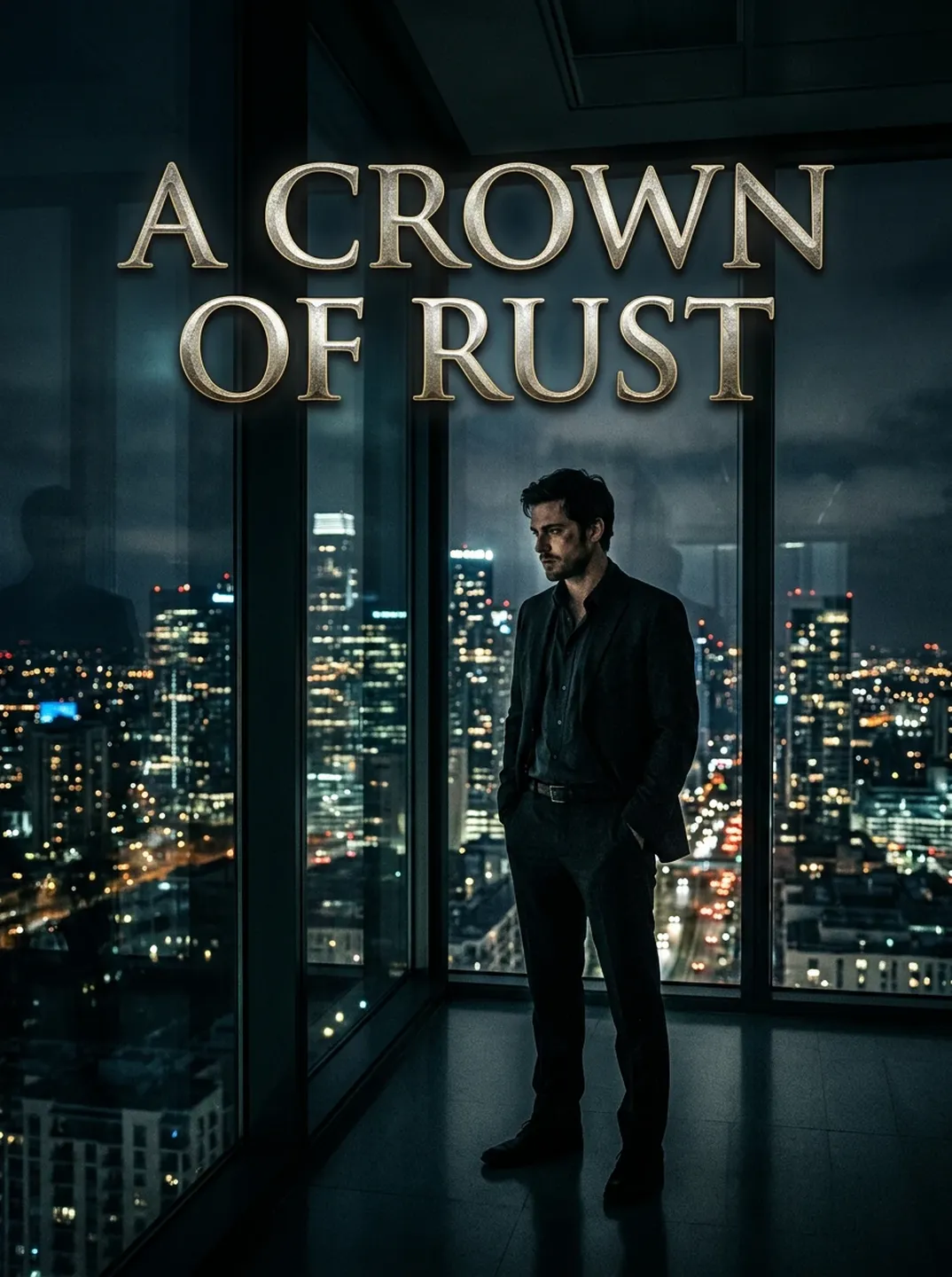
A Crown of Rust
Synopsis
When the patriarch of the powerful Sterling dynasty dies in disgrace, leaving behind a mountain of debt and a legacy of corruption, his estranged son Luc is summoned to inherit the ashes.
Thrown into a viper's nest of scheming relatives, ruthless corporate rivals, and shadowy enemies, Luc must fight to clear the family name before he's the next to fall. Armed with nothing but his wits and a mysterious flash drive left by his father, he has to untangle a web of embezzlement and betrayal that goes to the heart of the city.
In a world where loyalty is a liability and every handshake hides a knife, can one man rewrite a history written in blood and greed?
Chapter1
The bells of Valdris tolled thirteen times at sunset, a sour joke for a city that had once claimed it could count its heroes on one hand. From the cracked windows of the derelict North Gate watchtower, a lone gravedigger listened to the clangs ricochet across red-tiled roofs and thought: that’s one more ring than the old bastard deserved. Far below, processions of ordinary citizens poured into Lantern Square, waving cheap paper cups of barley beer as if the very act of swallowing could rinse the taste of the past decade from their mouths. Someone had strung a bedsheet between two marble lions at the parliament steps, spray-painting it with sloppy black letters: ONE LESS TYRANT. The paint was still wet; it dripped like blood onto the flagstones, forming small anarchic ponds that children stomped through, laughing.
Duke Alexander Sterling—general, treasurer, and, in his final years, the city-state’s unofficial jailer—had died at 3:17 a.m. in the same gilded bed he once boasted had survived three dynasties. The official report blamed a ruptured ventricle, but gossip along the riverfront insisted his heart had simply been out-voted by every soul it had ever betrayed. The treasury vaults stood empty, stripped by shell companies whose paper trails ended in smoke and offshore sunrise. Pensioners who once saluted the Duke’s portrait now toasted his demise with bitter tea, clinking chipped porcelain so hard it cracked. By noon, the city’s printers had sold out of black ink; by dusk, every lamppost wore a noose of celebratory garlands.
Inside the Sterling mausoleum on Slate Hill, the air tasted of wet stone and camphor. A caretaker, half-drunk on contraband rum, wrestled a marble lid into place, sealing the sarcophagus with the same enthusiasm a baker shows a burnt loaf. He didn’t bother polishing the nameplate; why shine a relic everyone wanted to forget? Outside, fireworks left sulfur ghosts above the skyline, and somewhere a brass band struck up a jaunty march, the tuba’s oompah so out of tune it sounded like a funeral dirge played backward.
Across the Atlantic, Luc Sterling woke to the vibration of his phone dancing across a dorm-room desk cluttered with ramen packets and blueprints for micro-grid inverters. The headline glared like a traffic flare: DISGRACED DUKE DEAD—SON TO INHERIT ASHES AND INFAMY. For a moment he stared at the screen, thumbs hovering as if the device itself might bite. Twenty-four years old, two semesters shy of a doctorate in sustainable engineering, he had spent the previous night pitching angel investors on a start-up that could drop solar prices through the floor. The last thing he expected was to become a headline himself.
He packed in haste, cramming T-shirts, patent drafts, and a single succulent into a carry-on that still smelled like California fog. At Heathrow, the gate attendant scanned his passport, raised an eyebrow at the surname, and offered condolences so wooden they could have been IKEA flat-packed. Luc nodded, unsure whether courtesy or contempt lay beneath the courtesy. The plane lifted through rainclouds, London shrinking to a circuit board of wet streets. He pressed his forehead against the window and practiced breathing the way his Oxford roommate once taught him—four beats in, seven beats out—yet every exhale tasted of iron, as if the cabin air itself oxidized on contact with his name.
Valdris greeted him with a sunrise the color of nicotine. From the airplane window the city looked like a broken crown: ramparts cracked, river sludge-brown, cathedral dome patched with mismatched copper. The immigration kiosk flickered when he typed Sterling; the officer studied him as though weighing whether bloodlines could be quarantined like livestock disease. Luc managed a polite smile, collected his stamped passport, and stepped into arrivals where the smell of burnt espresso and floor disinfectant almost masked something harsher—resentment, maybe, or the collective sigh of a people who had run out of villains to blame.
Outside, paparazzi hid behind pillars like crows waiting for roadkill. Flashes popped. Questions flew: Did your father leave you the key to the missing millions?” Will you sell the ducal palace to pay restitution?” Luc kept walking, jaw aching from clenching, until he spotted a lone figure holding a cardboard square with his name misspelled in red Sharpie: LUC STERLING. The driver, a wiry woman in her fifties wearing a chauffeur’s cap two sizes too large, introduced herself as Mara, former gatekeeper of the Sterling estate. She didn’t offer condolences; instead she jerked her thumb toward a battered electric hearse whose paint job had faded to the hue of old teeth.
Hop in, Luck,” she said, accent thick as river silt. City’s teeth are sharper than usual today.”
Luc climbed into the back, instinctively reaching for seatbelt that wasn’t there. As the hearse glided past graffiti-slashed walls, he noticed every mural depicted his father with fangs, with blood-soaked medals, with pockets vomiting gold coins into skeletal hands. At a red light, a boy no older than ten pressed his face against the glass, spat, and drew a crude dollar sign on the window before sprinting off. Mara accelerated without comment, tires splashing through puddles that reflected a sky the color of dishwater.
They crossed Ironbridge, where steel girders sang under the weight of morning traffic. Luc the Duke humming martial anthems while baiting hooks with expensive trout flies. Even then the man had seemed carved from something harder than flesh—an oak tree pretending to be human, roots sunk too deep in centuries of entitlement. Now rust streaked the bridge’s joints like dried tears, and Luc wondered whether the metal mourned or merely corroded under the same toxic air that had blackened his family name.
The hearse wound uphill through narrow lanes where laundry lines crisscrossed overhead like surrender flags. Finally it stopped before wrought-iron gates whose lions had been chiseled blind sometime in the last month—eyes gouged smooth, muzzles gaping in silent roar. Mara cut the motor. Home,” she muttered, though the word landed like a joke with no punchline. Weeds had colonized the gravel driveway; ivy strangled marble nymphs that once danced around a dry fountain. On the mansion’s front door someone had slapped a sticker depicting the Duke’s face inside a toilet bowl. Luc peeled it off slowly, adhesive stripping varnish, revealing older gouges where perhaps a family crest used to hang.
Inside, dust motes drifted through shafts of pale light, each speck a tiny galaxy of forgotten grandeur. Sheets covered furniture like shrouds. The air tasted of cedar and abandonment. Mara cleared her throat. Creditors came through yesterday,” she said. Took the good silver. Left the shame—said it was too heavy.” She handed him a ring of keys heavy as a manacle. Master Luc, I kept the power on, but the city council wants the palace sold by winter. They’ll turn it into a museum of fiscal treachery, I hear.”
He wandered through echoing halls, footsteps loud as accusations. In the library, half the shelves stood empty, books auctioned or burned for warmth by former staff. A single volume lay open on a lectern: a treatise on battlefield ethics his father had annotated in red ink. Luc glanced at a margin note—Victory excuses nothing—and felt something twist behind his ribs. Upstairs, his childhood bedroom remained intact, model airplanes dangling from threads thick with dust. On the desk sat an unopened envelope addressed in his mother’s looping hand, postmarked the week she vanished years ago. He tucked it into his jacket pocket, unwilling to read her farewell in a house that already felt like a mausoleum.
Down in the study, he found the Duke’s wartime desk gutted, drawers yawning. Yet atop the leather blotter rested a single object: a flash drive shaped like a silver bullet. No note, no explanation. Luc’s reflection stared back at him from its polished surface—eyes red from jet lag, cheeks hollow with questions. He pocketed the drive, aware that touching it committed him to a narrative he had spent years avoiding. Outside, thunder rolled across the valley, and the first drops of rain struck the windows like random keystrokes of an invisible author typing his next impossible chapter.
Night fell early, bringing with it the smell of wet slate. Luc couldn’t bear to sleep in the master suite; instead he dragged a blanket to the solarium where glass panes rattled in their frames. Rain hammered overhead, a percussive lullaby of sorts. He dreamed of oxford quads bathed in May sunshine, of pitching investors under jacaranda blooms, of a life unburdened by heraldry. Yet every dream sequence fractured into the same graffiti: ONE LESS TYRANT. He woke gasping, heart racing as if trying to escape his chest. Somewhere in the dark house a clock chimed three times—one fewer than the bells had honored his father’s death, he noted with grim humor.
At dawn, Mara brought bitter coffee and yesterday’s newspaper. The headline announced a city-wide referendum: whether to demolish the Sterling palace or preserve it as a cautionary ruin.” Below the fold, a smaller article speculated about the missing millions, hinting that the Duke’s heir might know more than he admitted. Luc stared at the black-and-white photo of himself in academic robes, looking like a prisoner in mortarboard stripes. He felt the flash drive pressing against his hip through the thin fabric of his jeans, a cold reminder that inheritances come in many forms—some wrought of gold, others of guilt.
He walked out onto the cracked terrace as sunrise bled across ruined gardens. Somewhere below, a single white rose had survived the neglect, petals trembling in the breeze like a flag of reluctant surrender. Luc knelt, thumb brushing a thorn, drawing a bead of blood that tasted of iron and obligation. In that moment he understood the city hadn’t just buried a duke; it had planted his successor in the same grave of expectation. Whether he chose to sprout into something greener—or let the weeds choke him—would depend on what secrets hummed inside that silver bullet, and on whether a son could decode a father’s sins without inheriting their weight.
Behind him, the mansion’s shadow stretched long and skeletal across the hillside, pointing toward Valdris like an accusation. Far below, the river kept sliding toward the sea, indifferent to dynasties and disgrace alike. Luc straightened, wiped the blood on his cuff, and turned back toward the dark interior, aware that every step forward was also a step deeper into the ruins—both of stone and of story—where answers, if they existed at all, waited beneath layers of dust older than his brief, carefully planned life.
The first hint of dawn was still a bruise behind the skyline when Luc Sterling stepped onto the balcony of the penthouse that no longer felt like his. Below, the city’s antique streetlamps flickered off one by one, surrendering to a morning that smelled of wet limestone and diesel. He told himself it was only the chill that raised gooseflesh on his forearms, but the tightening in his chest had nothing to do with temperature. Three nights ago the Sterling name had been a key that opened every door; this morning it was a match held too close to the curtains.
Inside, the television murmured with the volume turned low, looping yesterday’s parliamentary hearing. A committee chairman recited figures that sounded like nonsense poetry: forty-three shell companies, twelve zero-knowledge exchanges, one empty cold wallet registered to an address that traced back to a defunct art gallery in the old port. Each number was another brick removed from the foundation. Luc closed the French doors, muting the droning voice, but the words followed him anyway, echoing in the marble foyer where ancestral portraits glared down with cracked-varnish disapproval.
The elevator chimed. He expected the lawyer again, or perhaps the chief risk officer ready with another folder of doom. Instead, his mother’s two sisters arrived in formation: Aunt Selene Whitney wearing dove-gray cashmere like armor, and Aunt Dahlia Cavendish-Hill in the green velvet cloak she reserved for estate funerals. They swept in trailing the scents of Earl Grey and old money, heels clicking a funeral march across the parquet.
Darling boy,” Selene began, kissing the air beside both his cheeks, the vultures are circling, and you’re still feeding them carrion.”
Dahlia got straight to the point. Withdraw from the council ballot by noon. Endorse Whitney interests publicly, and we’ll guarantee the Sterling shipping licenses remain intact. You’ll keep one ship, maybe two. Enough to start over somewhere warm.”
Luc poured coffee he didn’t want. You mean surrender the seat so your husbands can carve up our share of the port authority.”
Cooperation,” Selene corrected, is survival.”
He almost laughed. Survival looked like a gilded cage in someone else’s parlor. Before he could answer, the intercom buzzed again. Mrs. Cheng, the self-made logistics empress who had arrived in the city with one suitcase and a head for algorithms, strode in without waiting for permission. Her bodyguard remained outside, a silent silhouette against the corridor light.
Children,” she greeted the aunts with a smile sharp enough to cut glass. She turned to Luc. My offer is simpler. Step aside, support Cheng Holdings in the special election, and I’ll buy your family debt at forty cents on the dollar. You walk away bruised but breathing.”
Selene’s lips thinned. You will not bargain with this boy as if he’s liquidating a warehouse.”
Isn’t he?” Mrs. Cheng replied. The Sterlings are a distressed asset. I’m merely first in line.”
Luc felt the room tilt. Three predators, each measuring the weakest point in the other’s armor, and all of them pretending concern for the wounded cub in their midst. He set his cup down so hard the saucer cracked. Nobody’s feeding on Sterling carrion today. The council seat isn’t for sale.”
Aunt Dahlia sighed as though he’d confirmed a terminal diagnosis. Selene gathered her handbag. Mrs. Cheng merely nodded, already calculating the next angle. They left in the same gust of perfume and calculation that had delivered them, and silence folded back over the penthouse like a shroud.
His phone vibrated before their elevator reached the lobby. Isla’s name flashed, then Mia’s in rapid succession. He let the calls ring out, but a fresh message pinged: *We’re coming up.* He barely had time to steel himself before the two girls burst through the door Isla had keyed open with an old birthday code she pretended to have forgotten.
Isla wore paint on her fingers and fatigue under her eyes, the aftermath of pulling an all-nighter at the museum archives. Mia arrived in neon leggings, phone already recording. We have four thousand live viewers,” she announced. Say hi, Luc.”
He angled away from the lens. Turn it off.”
Not until you listen.” Mia plopped onto the suede ottoman, thumbs flying across the screen. Comments streamed upward like sparks. *Sell everything. Run. Take the money and ghost.* Isla snapped the phone shut with surprising authority.
Ignore the circus,” she told her sister, then faced Luc. We’ve drafted an exit plan. Liquidate the penthouse, the summer house, the vineyard. We transfer liquid assets to a New York trust before any court freezes them. You enroll in Columbia’s MBA, I finish my degree at NYU, Mia finishes high school there. Clean slate.”
Luc rubbed the back of his neck where tension had lodged like a knot of steel cable. And leave the city to the jackals?”
The jackals already own it,” Isla said gently. We just need to survive.”
Mia waved printed spreadsheets. Do you know how fast rumors travel? Offshore crypto wallets, Luc. They’re saying Dad funneled bribes through pixelated monkeys. By tomorrow they’ll claim we funded a coup. Reputation is dead, but cash still spends if we move now.”
He stared at the city beyond the glass. From this height the harbor looked like a sheet of hammered pewter, cranes lined along the quay like herons waiting for the tide to bring bodies. Generations of Sterlings had unloaded spices, silks, and steel on those docks, greased palms when necessary, donated to orphanages when convenient, kept the machine oiled and the family crest polished. All of it reduced to a headline: *Sterling patriarch accused of laundering millions via untraceable wallets.*
I won’t run,” he said, voice low. Dad’s either guilty or incompetent, but the mess is ours to face. If we bolt, the next generation inherits the stench. I’m not passing along rot.”
Mia’s eyes filled, angry tears she refused to let fall. You’d sacrifice us for a crest that’s already on fire?”
I’m trying to keep us from becoming ghosts.” He knelt in front of her, palms over hers. We stay, we account, we rebuild. Maybe not as kings, but at least as citizens who didn’t flee the wreckage.”
Isla studied him for a long moment. You’ll lose the seat by Friday. They’ll impeach you in absentia.”
Then I’ll stand in the chamber when they do it.”
A siren wailed twenty floors below, Doppler-shifting into the maze of narrow streets. Mia sniffed, ended her livestream, and posted a final caption: *Brother chooses crucifixion.* She pocketed the phone. If we stay, I’m staging a protest every day outside parliament. You’ll walk through picket lines of your own making.”
Luc managed a tired smile. Fair.”
Isla squeezed his shoulder. We’ll need lawyers, forensic accountants, maybe a criminal defense team. Our accounts are already hemorrhaging.”
I’ll call the firm,” he said. They can set up a war room here.”
The sisters departed an hour later, armed with promises of coffee runs and moral support. Luc locked the door behind them, though he knew locks meant nothing anymore; the family’s secrets were public domain now. He returned to the balcony. Sunlight had finally spilled over the horizon, gilding rooftops, turning glass towers into pillars of flame. The city looked momentarily triumphant, a kingdom of possibility rather than a coliseum of scandal.
He thought of his father’s last voicemail, the frantic edge beneath the usual patrician calm: *Trust the system, son. It’s all legal if you file the right forms.* Legal, maybe. Ethical, doubtful. Survivable, uncertain. Luc breathed in the morning, tasted copper on his tongue, and made a silent wager with the skyline: he would not be the Sterling who ran. He would stay, bleed if necessary, and plant whatever flag could be fashioned from the rubble. Below, traffic thickened, ferries sounded their bass notes, and somewhere in the maze a reporter was already drafting tomorrow’s headline. He turned back inside, rolled up his sleeves, and began drafting a statement that might as well have been his own epitaph.
The Harvard Club’s library smelled of leather that had outlived three wars and a century of cigar smoke. Luc Sterling swirled the last amber half-inch of his untouched single-malt while his uncle William—tailored in a linen suit that somehow looked rumpled anyway—lectured the air between them.
You’re bleeding reputation faster than we can pour whisky,” William said, refilling his own glass though the bartender had stepped away. Hire Serena Vega. She dragged Governor Ramirez out of a motel gutter and got him re-elected six months later. She can sell snow to a glacier.”
Luc’s fingers tightened around the crystal. A crisis manager? That screams guilt.”
No, nephew. It screams survival.” William’s grin never reached his eyes. Re-branding is just storytelling with a budget. Let Serena write you a hero’s arc.”
Across the room, a grandfather clock tolled nine times, each chime echoing like a judge’s gavel. Luc pictured the Sterling name—carved above council chambers, engraved on hospital wings, now splashed across gossip sites beside words like embezzlement and patriarch. His grandfather Alexander had built that name; tonight Luc felt it cracking under his own shoes.
William slid a business card across the mahogany. Thick stock, matte black, only a silver @ symbol and ten digits. She doesn’t do meetings. She listens to silence and answers with lightning. Call.”
Luc pocketed the card, tasting peat and regret.
––––––––
At dawn the next day Serena Vega stepped out of a charcoal Suburban wearing sunglasses the color of bullet casings. Reporters ring-walked the sidewalk outside Sterling Tower, but she parted them the way a prow cleaves fog: shoulders squared, heels clicking like typewriter keys. Luc waited in the marble lobby, unsure whether to offer coffee or surrender.
She removed the sunglasses, eyes the temperature of January rain. You’re trending below airline food and above toenail fungus,” she said by way of hello. We fix that before lunch.”
No handshake. She snapped open a tablet, typed seventy words, and posted. The tweet was a single sentence: *Meet Luc Sterling—the whistle-blower heir who refused to stay silent.* Attached: encrypted files proving Alexander had moved charitable endowments into personal shell companies, timestamps showing Luc had triggered the internal audit the night before the story broke.
The internet convulsed. Within minutes #ProdigalSon outranked #SterlingScandal. Comment threads pivoted from pitchfork emojis to surprised applause. Cable anchors who had spent yesterday comparing the family to cancer now asked, Has Luc Sterling just redefined legacy?”
Serena watched the metrics climb, lips curled in the faintest smirk. Narrative judo,” she said. Use their momentum, throw them across the room.”
Luc felt the floor tilt. Those documents were sealed.”
They still are,” she replied, already moving toward the elevator. Leaking proves you’re not hiding. Transparency is the only perfume that covers scandal stench.”
––––––––
Two days later the Sterling Foundation boardroom felt more like a tribunal. Mahogany panels absorbed sound so thoroughly every breath seemed amplified. Council elders sat along one side, twelve men and women whose average age rivaled redwood forests, robes of office stitched with the silver griffin that once symbolized unshakable trust. Across the walnut table: Luc, alone, water glass trembling in small seismic waves.
At the head, Chairwoman Evelyn Hartgrave tapped her gavel—an heirloom carved from a single whale vertebra—and announced the purpose: Motion to revoke hereditary voting rights of the Sterling line, effective immediately.” Her voice carried no anger, only the finality of a coffin lid.
Serena stood behind Luc, arms folded, dressed like a closing argument. She leaned forward until her breath stirred his hair. You speak first. No notes. No lawyers. Under oath, under God, under their skin. Own the story before they own you.”
Luc rose. Twelve pairs of eyes pinned him to silence. He thought of Alexander—still in intensive care, still wielding scandal like shrapnel even while unconscious. He thought of his father, who had died believing the family name immortal. He thought of his own reflection in the phone screen at 3 a.m., searching for someone he could still respect.
He pressed the witness-bible closer to the microphone, the leather cover squeaking like an old saddle. My name is Luc Sterling,” he began, voice cracking, then steadying. And I am here to bury my grandfather, not to praise him.”
A ripple crossed the elders’ faces—surprise that he would swing the first shovel.
He detailed the night he discovered the dummy accounts: alone in the archives, fluorescent lights humming like hornets, pages trembling in his hands. He spoke of the nausea that followed, the sprint to the restroom where he vomited expensive scotch and cheap loyalty. He admitted benefiting from trust funds now tainted, promised to place every inherited share into restitution escrow. He did not ask for forgiveness; he asked for time—time to rebuild what one Sterling had shattered, even if the council stripped the name from the charter.
When he finished, the silence felt different—less a verdict, more a held breath.
Chairwoman Hartgrave lifted the gavel, paused, then set it down without striking. Cross-examination,” she said instead.
Question after question followed, sharp as scalpels. Luc answered each before Serena could object, before his own counsel could clear a throat. Yes, he had loved Alexander. No, he had not loved the greed. Yes, he would testify in criminal court if called. No, he would not fight the council’s decision—only implore them to let him remain as a steward, not a sovereign.
After forty minutes, Evelyn called recess. The elders filed into a private antechamber, robes rustling like dry leaves. Luc lowered himself into the chair, suddenly aware of sweat turning his shirt into tissue paper.
Serena poured him water, ice cubes singing against crystal. You held the line,” she said.
I told the truth,” he whispered.
Same thing, if you do it loud enough.”
Through the tall windows, late-afternoon sun painted the skyline gold, but Luc saw only the gavel waiting to fall. He pictured the Sterling crest being sliced from banners, the griffin replaced by blank white fabric. The image should have brought relief; instead it felt like watching his own coffin lowered into wet earth.
Serena checked her phone, eyes narrowing at whatever new storm brewed on the screen. Whatever they decide,” she murmured, the story’s yours now. Don’t let anyone rewrite the next chapter.”
The door handle turned; the elders returned. Luc straightened, heart hammering so hard he wondered if the microphones were picking it up. Chairwoman Hartgrave’s expression gave nothing away as she reached again for the gavel.
He inhaled the scent of old wood and older power, ready for whichever direction the blow would swing.
Latest Chapters
The January wind off Lake Michigan funneled between the brick canyons of downtown Chicago, flinging
Laura’s fingers drummed against the laminated library card like it was a snare drum. The security
The radiator in the Brooklyn walk-up clanged like a cracked bell every ninety seconds, a rhythm Alex
The marble floor of the Athenaeum’s restricted wing was always cold, but that morning it felt like a