
Synopsis
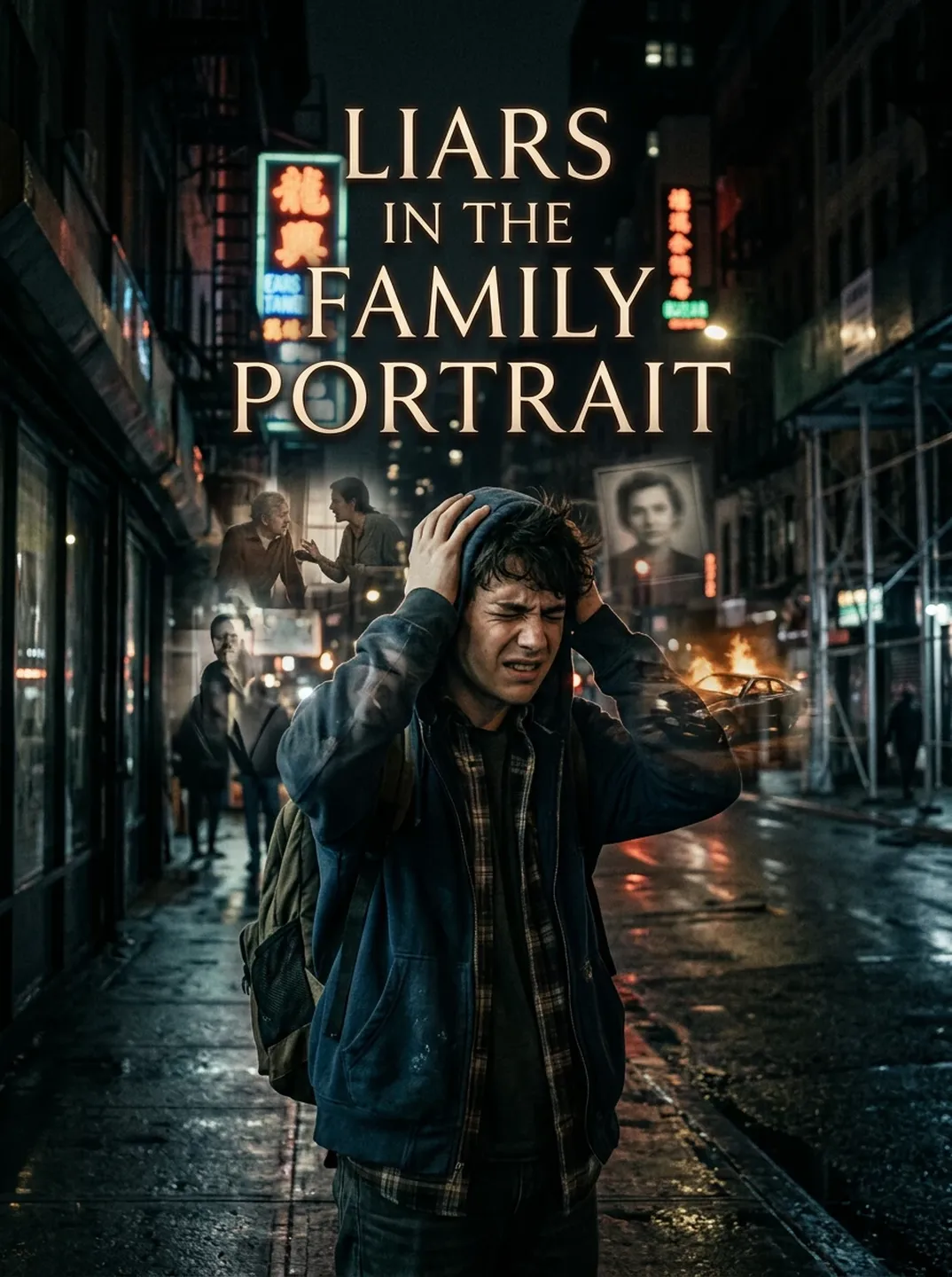
n the worst day of his life, high school nobody Johnny Mercer gets a strange inheritance: the final, terrifying memories of a murdered man.
A professional hit, a dark secret, and a psychic link he can't control have just made him the only witness to a perfect crime. As he pieces together the chilling visions, he doesn't realize the killers are already hunting for loose ends.
And the ghost in his head is screaming that he's next.
Chapter1
The cafeteria smelled of burnt pizza and over-steamed broccoli, but Johnny didn’t taste any of it. He was halfway through a rubbery chicken nugget when the memory hit like a ricochet: a stranger sprinting through wet alleys, the crack of gunfire, the dull thud of a body hitting asphalt. The images flashed so fast he nearly choked. That morning he’d shrugged the nightmare off as random static; now, at table nine by the vending machines, the dream re-assembled itself in HD. His plastic fork clattered to the tray. Across from him, Maya kept talking about prom committees, her voice distant, as if piped through a long metal tube. Johnny’s pulse drummed in his ears louder than the lunchroom roar. He counted heartbeats—one-Mississippi, two-Mississippi—until the bell rang.
The sodium streetlights along the Detroit riverfront flickered like dying fireflies, their orange halos smeared across the frost that crawled over every windshield and chain-link fence. A man without a hat, without a scarf, without even a name that mattered anymore, felt the night bite through his thin coat while the echo of paws—no, boots—kept perfect time behind him. Whoever followed ran neither fast nor slow; the rhythm said herding. He was livestock now.
He cut left off Atwater, boots skidding on black ice, and the brick warehouse rose out of the dark like a mausoleum built for giants. Broken windows stared down, mouths of jagged glass. The footsteps behind him paused—one heartbeat, two—then resumed, closer. A single metallic cough ripped the air. The man felt the wind of the bullet kiss the rim of his ear before it smacked the warehouse wall, spraying brick-dust across his cheek. No warning, no shouted demand; just the shot, intimate as a dentist’s drill.
Survival answered before thought. He launched himself at a rusted fire escape, shoulder hitting the ladder hard enough to tear fabric and skin. Hand over hand, boots scraping, he climbed. The second bullet arrived while he was still mid-air, punching through the corrugated panel beside his head and ringing the metal like a church bell. He hauled himself through a second-story window, glass teeth catching his sleeve, and then the floor was gone and he was falling—fifteen feet of cold air—before slamming into concrete littered with shattered pallets. Pain bloomed white-hot in his right forearm; something warm ran down to his wrist and dripped off his fingers. He did not look. Looking wasted seconds.
Outside, the river murmured, carrying the distant horn of a freighter. Inside, dust drifted in moon shafts. The man rolled to his knees, tasted iron, and pushed upright. A single thought beat against his skull: Belle Isle . Trees there, shadows, places to vanish. He sprinted for a buckled roll-up door, kicked it until the corroded latch surrendered, and burst into the night again.
Frost-covered weeds snapped beneath his stride. Each footfall printed a small red comma in the silver crust. The cold tried to freeze the blood even as it left him, turning the drops into glass beads that cracked under the next step. Behind, the warehouse door groaned. His pursuer stepped through without hurry, a tall silhouette in a matte-black parka, hood framing a face the color of old snow. The rifle slung beneath the parka looked absurdly short, almost polite, like something a banker might carry if banks hunted men for sport.
The man crossed the rail spur and leapt a low guardrail, landing on the service road that ringed the island bridge. Headlights of a lone passing car blinded him momentarily; the driver never slowed. Detroit had learned to ignore midnight gunfire the way sailors ignore gulls. He ran on, breath carving frost in the air, right arm pressed to his ribs to slow the bleeding. The bridge’s pedestrian walkway stretched ahead, lampposts flickering in Morse code. Halfway across he risked a glance back. The contractor was already on the bridge, walking the centerline, rifle lowered but ready. No shouts, no threats. Predators save breath.
At the island end, the man vaulted the gate meant to block cars after sunset and plunged into the woods. Trail signs whipped past: Nature Center 0.3 mi , Yacht Club 0.8 mi . He ignored them, crashing straight into underbrush. Bare branches clawed his face; a thorn drew fire across his cheek. Blood smell filled his nose, metallic and sweet, until he could taste it on the back of his tongue. Somewhere an owl asked who, who, who, and the question felt like mockery.
The second bullet found him between heartbeats. He felt the impact first as pressure, then as a red-hot spike driven through muscle, scraping bone. Momentum carried him three more strides before his left leg buckled. He hit the ground shoulder-first, sliding through last year’s leaves frozen into tiny blades. Breath refused to come. The world shrank to a single wet rattling sound inside his chest. When he rolled onto his back, moonlight poured between pine trunks and pooled on his face, cold and bright as operating-theater lamps.
Footsteps approached, deliberate, crunching frost. The contractor emerged into the clearing, parka whispering. Moonlight caught the rifle’s suppressor, a dull gray cylinder that looked too small to end worlds. The man tried to push upright, but his limbs had become foreign luggage. Blood soaked the back of his coat, warm for a moment before the wind turned it to ice.
The contractor knelt, knees popping, and studied the prey the way a carpenter studies a warped plank. No words. Instead he reached into a pocket and produced a small laminated card, which he tucked into the man’s breast pocket—an afterthought, like slipping a tip to a doorman. Then he pressed the muzzle to the base of the skull, just above the topmost vertebra. The steel felt colder than the night, a circle of absolute zero.
Somewhere on the river, the freighter sounded its horn again, long and mournful, carrying up the channel to Lake Saint Clair. The man heard it distantly, as if through several floors of water. He thought of nothing grand—no life flashing, no beloved faces—only the smell of wet leaves and motor oil and the way frost glittered like miniature galaxies on the contractor’s sleeve. A final pop, no louder than a champagne cork, ended the breathing. The body slumped sideways, one cheek resting among frozen leaves that would thaw in the morning sun and fold the imprint of a stranger’s face into the soil.
The contractor rose, wiped a fleck of blood from his parka with a paper towel already stained maroon, and walked back toward the bridge. Behind him, Belle Isle kept its secrets: the rusted swing set groaning in the wind, the abandoned aquarium glass green with algae, the nature paths where lovers would jog at dawn, never knowing a nameless man had borrowed their sanctuary for the final act of someone else’s story.
The first gray light slipped between the crooked blinds and painted stripes across Johnny Mercer’s face like prison bars. He was still swimming up from a dream about drowning when Aunt Lisa’s voice cracked the stairwell: “Bus in twenty!”
The words struck like a snapped towel. He jackknifed upright, heart hammering, the worn mattress springs singing under him. Downstairs, bacon hissed in its own fat; the smell crawled upstairs, equal parts promise and warning.
He crossed the tiny room in three strides, yanked yesterday’s jeans off the floor, and sniffed the cuff—passable. The JanSport he’d bought for four bucks at Blessed Sacrament Thrift waited by the door, zipper busted, one strap mended with duct tape the color of dried blood. He shoved the calc worksheet inside, the paper still damp from last night’s drool.
Aunt Lisa didn’t cook often; when she did, it meant either apology or new punishment incoming. Johnny couldn’t tell which scared him more. He clattered down the narrow staircase, fingers skimming the peeling banister. The kitchen clock glared 6:46. Fourteen minutes to the corner.
She stood at the stove in her supermarket polo, hair twisted up with a ballpoint pen. Without turning she said, “Eat.” One syllable, no safety pin in it. A paper plate slid across the Formica: croissant, egg, bacon, cheese. Factory food, but hot. He folded it like a taco and bit. Steam scalded the roof of his mouth; he welcomed the pain because it was simple.
“Tray’s in the sink when you’re done,” she added. Translation: don’t leave it for me. He chewed twice, swallowed, then wrapped the rest in a napkin. The belt that lived on the back of the pantry door caught his eye—black leather, nickel buckle, the single word JUSTICE etched into the tongue. He’d traced that word with a fingertip while waiting for the sting, counting ceiling cracks.
“Thanks,” he muttered, already moving. The screen door banged behind him.
Outside, Clover Street smelled of wet asphalt and early lilacs. Row houses leaned like old drunks, power lines sagging between them. Johnny’s sneakers slapped the sidewalk; the sound echoed off aluminum siding, a second runner keeping pace.
At 6:59 he reached the stop. The yellow bus exhaled diesel, door wheezing open. Mr. Kopek, beard like steel wool, didn’t wait for the treadles to finish before growling, “Tomorrow, be on the curb, kid.” Johnny dipped his head, the standard half-apology, and shuffled down the aisle.
He chose the last seat on the left, the vinyl split so the foam poked out like guts. Rainbows of Sharpie obscenities surrounded him. He pulled the worksheet from his bag, smoothed it on his knee. The problems looked back: limits, asymptotes, a single smear where his forehead had hit the page at 2 a.m. He bit off another hunk of croissant and let the numbers pull him under.
The bus lurched through Brooktown’s grid: bodegas, nail salons, a pawnshop neon that never quite spelled OPEN. At each stop the bodies changed—more hoodies, more earbuds, more eyes like locked gates—but the smell stayed the same: hormones and burnt coffee. Johnny finished number seventeen as the brakes screamed Roosevelt High.
Concrete walls, slit windows, a flagpole bent last winter when seniors tried to raise a keg instead of colors. The building crouched over the parking lot like a judge. Johnny stepped off the bus and felt gravity double.
Inside, fluorescent lights buzzed louder than the students. Lockers clanged; a freshman couple argued in whispers. Johnny spun his own lock—27-11-42—shouldered the door aside, and traded the JanSport for a battered calc textbook. The strap gave another inch.
First period, Mr. Aldridge droned about continuity. Johnny copied the definition but heard Aunt Lisa: B-minus is a gateway drug. His pencil snapped. He borrowed a pen from Jessica Morales, who didn’t look up from her phone. The screen showed a countdown: 21 days 07 hrs 33 min to SAT make-up. He imagined the belt swinging like a pendulum, each second a notch tighter around his ribs.
Between classes he drifted, shoulders in, backpack straps cutting circulation. Teachers threw formulas, dates, metaphors; none stuck. By lunch the rage had thinned to a sour film on his tongue. He bought chocolate milk, drank half, poured the rest into a trash can and watched it swirl like oil.
Study hall, last block, Mrs. Dunlevy’s room. Johnny slumped into a desk at the rear, cheek against the cool laminate. The ceiling tiles were arranged in the pattern of islands he’d never visit. He traced them with unfocused eyes, sailing from atoll to atoll.
A voice, not his own, drifted across the water: Remember the woods.
He jolted, but no one was speaking; headsets glowed all around. The phrase sank into him like a hook. He tried to exhale it, but the breath wouldn’t come.
The half-dream rose without permission: pine trunks slick with night rain, a flashlight beam wobbling, something heavy dragged through leaves. A smell—iron and moss—flooded his mouth. Johnny’s fingers tightened on the desk edge; the metal groove cut crescents into his palms.
“Mercer.” Mrs. Dunlevy tapped his shoulder. “Hall pass if you need air.”
He shook his head, mumbled, “I’m good,” and pretended to read. The words blurred. The island woods receded, but he felt them crawling, vines under pavement, roots cracking foundations, coming for dues he didn’t remember owing.
The bell rang like a starter pistol. Chairs scraped, backpacks zipped, voices layered into white noise. Johnny stayed seated until the room emptied, then shouldered the JanSport and walked the fluorescent tunnel toward the buses.
Outside, clouds had lowered, the color of old dishwater. He found his window seat; rain began to freckle the glass. As the bus pulled away, Johnny pressed his forehead to the cool pane and watched the high school shrink. Somewhere behind those walls, a nameless man was already dead, though Johnny wouldn’t know it until the debt knocked on his door.
For now, he counted streetlights, multiplying their wattage by distance, anything to keep the numbers louder than the belt, louder than the woods. But subtraction stalked him: twenty-one days, one unpaid blood note, zero idea that the first installment would be due before the leaves finished turning.
The night air above the harbor tasted of diesel and rust. From a catwalk bolted to the underside of an abandoned grain elevator, a man known only as Shooter eased the bolt of his rifle forward until it locked with a muted click. The sound was swallowed by the hollow drumming of waves against barnacled pylons below. He spoke to himself, the way a carpenter speaks to warped timber, voice low and final.
“No misses this time.”
The words fogged the cold steel of the railing before vanishing. Somewhere in the maze of shipping containers and sodium lamps, a target moved toward an appointment neither of them had chosen. Shooter didn’t know the man’s real name, only the code phrase that would arrive in his earpiece—“Blue Lantern”—and the silhouette he had studied in grainy photographs. Beyond that, the shadow employer remained a blank space, a voice distorted by software that sounded like wind scraping across dry leaves. The money had appeared in an offshore account; the rifle, already zeroed, had been waiting in a guitar case beneath a park bench. Instructions were always concise, but tonight they ended with an unfamiliar aftertaste: the client’s impatience. “No extensions,” the voice had warned. “No excuses.”
Shooter adjusted the parallax dial until the corrugated wall of Warehouse 19 snapped into focus. A single bulb glowed above a rolling door, painting a cone of amber across cracked asphalt. Inside that cone, a stray cat licked something unidentifiable. Shooter’s pulse steadied; the cat’s ears flicked once, twice, then it slipped away, leaving the stage empty. He exhaled half a breath and held the rest, feeling the rifle become an extension of his skeleton. The shot would travel 312 meters, crossing air thick with salt and freight dust. He had calculated humidity, spin drift, even the minute contraction of the brass casing in the chamber. The only variable left was the man who still believed schedules were a courtesy rather than a cage.
Half a mile south, Johnny Santos sprinted across the parking lot of the 24-hour laundromat, one hand clamping a take-out cup of coffee that sloshed over his knuckles. The other hand wrestled with the collar of a leather jacket whose zipper had surrendered months ago. He was twenty-three minutes late—an improvement from last week’s thirty-one, but still the kind of habitual failure that carved grooves into a person’s future. The coffee had cost his last five dollars, yet he hadn’t taken a sip; he needed it as prop, proof he’d tried to stay awake, to arrive on time, to care.
Inside the laundromat, fluorescent lights hummed like dying insects. A lone woman folded baby clothes, her eyes flicking to the door each time it rattled. Johnny avoided her gaze, aiming for the rear aisle where the industrial dryers formed a canyon of vibrating metal. He ducked behind the last row, heart hammering not from exertion but from the familiar dread of disappointing people who didn’t give second chances. From the pocket of his jeans he produced a prepaid phone. The screen showed two missed calls and a text: “Move. Now.” No name, no number. The area code matched the city, but the words felt imported from somewhere colder.
Johnny’s thumb hovered. Lateness was a hairline fracture in the discipline he pretended to own, a fracture fate would exploit the way freezing water splits stone. He knew this, promised himself nightly he would change, set three alarms, drew arrows on his wrist in Sharpie to remind him of departure times. Yet somewhere between intention and action, the world blurred: a meme looped too long, a roommate’s borrowed charger that never materialized, the sudden certainty that if he arrived early he would simply wait, and waiting felt like drowning on dry land. So he rationalized—traffic, transit delays, the barista who had short-changed him—and each excuse felt true enough to repeat.
The burner vibrated again. A single word: “Roof.” Johnny swallowed cold coffee bitterness. He crumpled the cup, tossed it into an open dryer drum, and slipped out the emergency exit. The alley stank of sour mop water. Fire escapes zigzagged upward like broken piano keys. He climbed, fingers numbing on iron rungs, jacket flapping. At the third landing he paused, hearing the distant bark of a ship’s horn rolling across the harbor. Somewhere in that direction, a stranger balanced a rifle, waiting for a lantern to turn blue.
On the rooftop, wind whipped Johnny’s hair into his eyes. Shipping containers stretched below like multicolored bricks. A figure stood near the ledge, silhouette cut from neon and night. As Johnny approached, the figure extended a gloved hand holding a small metal case, the kind meant for precision instruments. No names were exchanged; they never were. Johnny’s job was transport—nothing more—yet each exchange felt heavier, as if the case contained compressed hours of someone else’s life. He took it, felt the chill of alloy through his palm, and tucked it inside his jacket. The figure pointed toward the harbor, then vanished down the opposite stairwell, footsteps swallowed by engine noise.
Johnny’s phone buzzed again: “Warehouse 19. Eight minutes.” He laughed once, a soundless exhale. Eight minutes was impossible on foot; already he mapped shortcuts—fence gaps, a plank across a drainage ditch, the pedestrian bridge that closed at midnight but never locked. He started running, knees high over ventilation shafts, sneakers skidding on gravel. The city below pulsed like circuitry. Somewhere, a blue bulb flickered on.
Shooter saw it first as a tremor of color in his peripheral vision, then as a solid glow above the rolling door. Blue Lantern. His finger settled onto the trigger, pressure gradual as dusk. A man stepped into the cone of light, hood up, hands buried. The stride matched the photographs: short, urgent, head angled forward as if arguing with gravity. Range: 309 meters. Wind: five knots, quartering left. Shooter’s world narrowed to a mill-dot reticle and the thin stretch of skin where jaw met ear. He began his squeeze.
Johnny vaulted a chain-link fence, coat snagging and tearing. He landed hard, ankle flaring, but kept moving. The case slapped against his ribs with each stride. He counted seconds, not breaths. Ahead, Warehouse 19 loomed, its bulb now an electric sapphire. He burst onto the street, arms pumping, and saw the silhouette of the delivery man—himself—framed in that azure halo. For an instant he felt the surreal doubling, observer and observed, as if his future self waited to receive the past.
The rifle coughed, suppressed report lost under the grinding gears of a passing truck. Shooter watched the figure falter, hand rising not to the entry wound but to the case inside the jacket, as if priority belonged to the payload. The body folded slowly, knees buckling first, then shoulder striking asphalt. Blue light washed across skin that would never again feel lateness, or coffee, or the chill of a metal case. Shooter chambered a second round out of habit, but the client’s requirement had been singular: one bullet, one confirmation. He eased back from the ledge, detached the suppressor, and began the methodical breakdown—bolt, scope, barrel—each piece nesting into foam cutouts. Below, sirens wailed in Doppler, growing closer yet still too late.
Johnny never felt the bullet. He experienced instead the abrupt absence of weight, as if the city itself had shrugged. The case slipped from loosened fingers and slid across the ground, coming to rest against the warehouse door. A dark line seeped from beneath his jacket, turning black under the lamp. His final thought was not of regret or fear but of schedules—how they had always seemed optional, elastic, a generous suggestion rather than the rails on which the world ran. Now the hour had arrived exactly on time, and he, perennially late, had kept the appointment after all.
On the catwalk, Shooter snapped the guitar case shut. He left the way he had come, descending rusted rungs to a skiff moored among shadows. The harbor swallowed his outline, and with it the knowledge that somewhere a voice modulated by software would confirm payment, then dissolve back into static. The city continued its low-frequency throb, indifferent to one more punctual soul.
Latest Chapters
The wind off the East River found every gap in Ed’s coat as he stepped onto the cobblestones of Wate
The first real frost of November glittered on the brownstone railings, turning the chipped black pai
The iron stairwell spiraled so tightly that Alex’s shoulder clipped the railing at every turn. He to
Alex’s boots clanged against the perforated steel of the spiral, each step a metallic heartbeat echo