
Synopsis
Every stormy night, a shadow appears outside my window. He’s my secret stalker, a predator who knows the thoughts I’ve never dared to speak.
My family thinks I’m losing my mind. My boyfriend thinks I’m a victim. They’re both wrong. I leave my window unlocked not as a cry for help, but as an invitation.
He is the most powerful man in Kingsport, the untouchable heir to a dark empire. He watches, he waits, and he plays a game where only we know the rules.
But as his family’s terrifying secrets begin to unravel, I have to ask: is he my protector, or the monster I should have run from?
In a game where the hunter wants to be caught, I am both the prey and the bait.
Chapter1
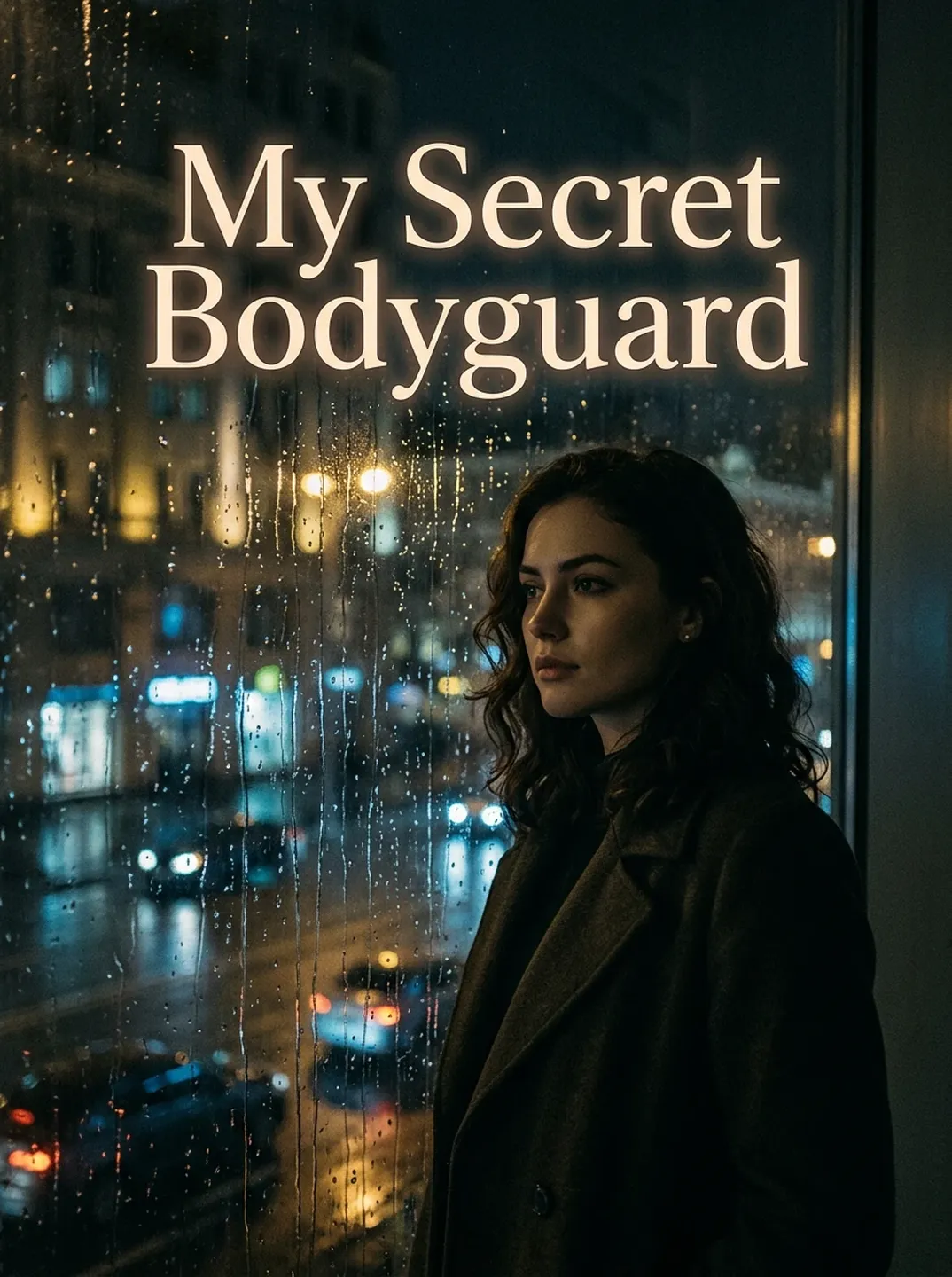
The storm glass above my desk trembles as another growl of thunder rolls across Hawthorne Hollow, a low, drawn-out note that makes the vintage bulbs flicker like nervous fireflies. I draw my knees tighter to my chest, wedging myself deeper into the velvet-cushioned window-seat that overlooks the back garden. Steam curls from the chipped ceramic mug beside me—chai, not latte, because Mara claims cinnamon keeps the night terrors away—and the oak-stitched notebook balanced on my lap smells of glue and rainy afternoons. I had been scribbling a line about the way raindrops race each other down glass, but the ink stalls when the horizon flashes silver, and suddenly the page feels pointless. I cap the pen, wedge it between the pages, and shove the diary toward the curtain as though hiding a secret.
Outside, Kingsport’s evening traffic is only a faint rustle beyond Cedar Bluff, the ridge that cradles our estate like a half-closed fist. From up here on the third floor, the world appears almost peaceful: slate rooftops glazed with storm-light, chimney pots exhaling pale ribbons, and the Raven River a dull pewter thread far beyond the treeline. Yet the forest at our back gate refuses to be tamed. Century-old firs stand shoulder-to-shoulder, their topmost spears disappearing into violet cloud. Each trunk is dark enough to swallow a silhouette whole.
I lean out, palms flat on the sill. Cool wind lifts the baby hairs at my temples, and the scent of wet bark drifts upward. Nothing stirs—no swaying branch, no night bird, no scurrying raccoon—yet every muscle in my neck cinches tighter, the way it does when you realize you’ve left the front door unlocked. My pulse taps once, twice, against my collarbone. He’s back. The knowledge arrives fully formed, colder than the wind.
It started three weeks ago: a shift in the atmosphere, a pressure change I felt in my teeth. Since then, the sensation visits nightly—an uninvited gaze sliding across my skin like silk soaked in ice water. I have never spotted the watcher; by the time I search the shadows, the impression fades, leaving only the metallic aftertaste of dread. Grant says it’s an overactive imagination, the product of too many true-crime podcasts and Mara’s forensic model kits scattered around the study. He recommends blackout curtains. Mara suggests magnesium supplements. Aunt Lydia, ever practical, offered to loan me the motion-sensor floodlights she uses to scare deer from her vineyard. None of them understand that light is useless when the threat wears darkness like a second skin.
Another thunder grumble. The wrought-iron gate below glints as if brushed by passing headlights, though the gravel driveway remains empty. Our Rover is parked around front; Grant drove it to the country club this morning for a board meeting about zoning permits, and the Lexus sits beneath its tarp in the garage, tires deflated since Mara’s last grocery run. No vehicles, no visitors, no delivery drivers—yet the gate quivers, a faint oscillation that could be wind or could be the ghost of someone’s retreating touch.
I count heartbeats: one, two, three, up to twenty. My skin prickles hotter with every number, as though the watcher’s stare is a magnifying glass and I am the ant beneath. I should close the sash, draw the drapes, retreat into the halo of my bedside lamp. Instead, I lean farther out, until the gutter presses a cold line under my ribs. “Who’s there?” The words leave my throat on a cracked whisper, swallowed instantly by the wind. No answer—only the wet hush of leaves rubbing together, conspiratorial.
Lightning spiderwebs across the sky, illuminating the garden for one stark second. In that instant I see them: footprints, fresh and black, cutting a straight line from the gate to the base of the copper beech. My stomach tilts. The prints hadn’t been there this afternoon when I’d watered Mara’s hydrangeas; I would have noticed the bruised grass and the soil disturbance. Now they exist, as though the storm itself conjured an intruder.
The darkness returns, thicker than before. I fumble for my phone on the window-seat cushion, thumb swiping to activate the flashlight, but the screen stays black—battery drained from an afternoon of looping Phoebe Nova tracks while I wrote. Useless. I drop it, and hear it clatter against the baseboard. My breath fogs the glass; I wipe it with my sleeve, leaving a crescent of clarity. Below, the footprints have already filled with rainwater, glossy little graves that reflect the next lightning flicker. They end at the beech, but the tree’s massive trunk could hide a man twice my size.
I imagine him pressed against the far side, cheek to bark, listening to my frantic breathing the way hunters listen for deer steps. Jude Whitaker, a voice in my head supplies—not fact, just the name that always surfaces when the sensation becomes unbearable. Julian “Jude” Whitaker, heir to the Whitaker Family’s closed-door empire, rumored to be in Kingsport for reasons no newspaper has explained. I met him once at Hartwell College’s donor gala: black suit, storm-gray eyes, smile that arrived late and left early. He had watched me across the ballroom with the same weight I feel now, as if he were memorizing the length of my bones. We never spoke. I told myself I’d imagined the interest, yet here is that gaze again, distilled and weaponized.
Rain begins—fat drops that splatter against the sill and soak the hem of my hoodie. I should call out, wake Grant, trigger the alarm, but my voice stalls, a bird trapped in a chimney. Instead, I raise my hand, fingers trembling, and press them to the cold pane. A ridiculous gesture—an unconscious invitation. Come forward, show yourself, end this suspense. For a heartbeat nothing happens; then the wind shifts, carrying the faint scent of cedar and something sharper, metallic, like the tang that lingers after a bullet is fired.
A shape peels away from the beech: tall, hooded, darkness cut from darker darkness. He steps into the open, boots silent on the sodden lawn. Lightning flashes again, and for one breathless frame I see his face—shadow mask pulled high, only the glint of eyes visible, reflecting light like wet stone. He lifts a gloved hand. Not a wave; more an acknowledgment that the line between watcher and watched has officially dissolved. My own hand is still against the glass. Rainwater courses down the outer pane, distorting him into a watercolor phantom. When the light fades, he is already retreating, backward, unhurried, until the forest folds him into itself.
The footprints remain, filling, overflowing, erased by the same storm that revealed them. My knees buckle; I sink onto the window-seat, hoodie clinging cold to my spine. Somewhere downstairs a door slams—Mara returning from book club, probably shaking out her umbrella, humming off-key. Normal sounds, safe sounds, yet they feel like part of a TV show I’m no longer cast in. I draw the curtains with shaking fingers, blocking the garden, the ridge, the night. The fabric is thick velvet, indigo dyed to match the walls, but it may as well be tissue; I can still feel him looking through wood and plaster, through flesh, straight into the marrow where fear breeds.
I retrieve the notebook, flip to a fresh page, and write the date in jagged strokes. Then, because words are the only bullets I own, I inventory what I know: 1. He returns when storms gather. 2. He wants me to know he’s there. 3. He is not afraid of being seen. The pen trembles, leaving ink blots like tiny bruises. I stare at them until they blur, until the chandelier above my desk flickers back to life and the mansion’s ancient bones sigh around me.
Tomorrow I will ask Aunt Lydia for those floodlights. Tomorrow I will charge my phone, clear the memory, install a motion-tracking app. Tomorrow I will tell Grant we need security cameras angled at the forest, not just the driveway. Tonight, I pull the duvet from my bed, drag it to the window-seat, and cocoon myself in goose-down that smells of lavender dryer sheets. Rain drums the roof; thunder retreats, a predator who has marked prey and is content to wait. My heartbeat slows, but the image of gloved fingers lifted in greeting stays seared behind my eyelids.
I close the oak-stitched notebook, press it to my chest like armor, and whisper into the empty room, “Next time, I’ll be the one watching.” The vow tastes of copper and adrenaline, and for the first time in weeks the dread inside me shifts, revealing a splinter of something sharp and eager. Outside, the storm rolls on, erasing footprints, planting seeds of its own.
The whole thing began on the last night of October, three weeks after Mara, Grant, and I dragged our sunburned selves off the Valencia charter and back into Kingsport’s permanent drizzle. I remember the hour—2:07 a.m.—because the glowing stove clock was the only light in the kitchen when I hauled my suitcase toward the stairs. Jet lag had sanded my nerves raw; every raindrop on the skylight sounded like a fingernail tapping glass. I was kneeling to unzip the bag when the feeling struck—an itch between the shoulder blades that said *someone is watching.
The back wall of our house is mostly window, a row of panes that faces the cedar bluff and the Raven River beyond. At that hour the glass turns into a mirror, but a corner of the porch bulb still burns, so when I lifted my head I saw him: tall, hooded, standing so still the rain seemed to pass straight through him. My heart stuttered once, then sprinted. We stared at each other for what the stove clock later swore was sixty-three seconds, though it felt like the length of a commercial flight. I couldn’t see his face—just the black oval where it should have been—but I swear he smiled, a crooked seam of white that appeared and vanished. Then he pivoted, melting into the tree line the way a drop of ink dissolves in water. The motion sensors clicked off, the porch went dark, and the whole scene might have been a dream if the glass hadn’t still carried the ghost of his outline.
First contact.
Tonight the same porch bulb flickers like it’s trying to die but can’t quite manage the effort. I sit at my desk, chin on the sill, scanning the bluff the way a lifeguard scans for riptides. Nothing moves except the wind combing through the cedars and the first cold needles of November rain. I should feel safe; instead I’m restless, the way you get when the roller-coaster pauses at the crest and you both dread and crave the plunge. Bored, I slide the sash up. The latch stays open. He’ll come. He always does.
I know how deranged that sounds. Normal girls bar the window, call the cops, maybe cry. I leave invitations. Part of me hopes he’ll step close enough for me to memorize the thread count of his hoodie; the rest of me hopes he never materializes again, because if he does I’ll have to admit I’m not the victim here—I’m the lure.
Weird kids grow into weird adults, but we start small. When I was seven, Mara gave up buying me Maple Lane dolls after I beheaded every one and arranged the heads on a paper plate like a miniature Stonehenge. The pink Starlight Mansion Aunt Lydia mailed from Crystal Cove became a forensic diorama: I painted the plastic walls gunmetal gray, strung orange barrier tape across the balcony, and positioned a Lego coroner on the roof. My parents tried redirecting the obsession—violin lessons, soccer camp, even a therapist who specialized in “creative play.” I played all right: I built crime-scene shoebox floats for the homecoming parade until the principal suggested I be “excused” from art class.
The rain thickens, drumming on the gutter like impatient fingers. I leave the desk and pace, floorboards creaking under my socks. My phone glows 1:11 a.m. SnapFrame is a graveyard—everyone at Hartwell College is either cramming or passed out. I scroll anyway, thumbing past LoopClip reposts of Phoebe Nova’s latest mascara-streaked selfie, then drop the screen face-down. The reflection in the black glass shows my bedroom: fairy lights off, vintage bulbs off, only the desk lamp lit. Behind me the window yawns open like a mouth waiting for communion.
I tell myself I’ll close it at the count of ten. One Mississippi, two Mississippi… At eight the bulb outside gutters out completely, plunging the yard into bruise-colored dark. Nine Mississippi. Ten. I don’t move.
A shape detaches from the cedars.
He’s earlier than usual, or maybe the storm has accelerated the timetable. Hood up, shoulders squared, he stands at the edge of the gravel path where our lawn starts to slope toward the river. No flashlight, no phone glow—just the faint sheen of rain on nylon. My pulse slams against my eardrums so hard I taste metal. I count heartbeats instead of seconds: one, two, twenty. He doesn’t advance. I begin to wonder if he’s real or a cardboard cutout propped by some cosmic prankster, but then lightning stitches the sky and for an instant the hood tilts back. I still can’t see a face—only the glint of eyes, pale as struck matches.
Lightning dies. Thunder follows, a slow file cabinet rolling overhead. When my vision clears he’s closer, one foot on the bottom porch step, hand on the rail. The sensors should fire, flood him with sterile white, but the bulb is dead so the darkness keeps custody. He waits, rain streaming off his sleeves. I realize he’s letting me look, offering a shape for my memory to carve like a printmaker gouging lines into wood.
My voice doesn’t shake when I speak, though my knees do. “You’re early.”
The hood tilts. He’s listening.
“Or am I late?” I add. The joke falls flat, swallowed by the storm.
He lifts something from his pocket—no rush, no threat—then sets it on the porch rail. A rectangle, small enough to fit a palm. Even in the dark I know it’s the oak-stitched notebook I lost on the Valencia trip, the one I filled with half-legible theories about the Raven River killer. I’d torn out the last five pages before the flight, stuffed them in my jacket, certain I’d finish the profile at home. The notebook vanished somewhere between the airport carousel and the Rover’s trunk.
Now it’s back, edges warped from salt air, elastic band intact. He’s had it all along.
My throat closes. “You read it.”
A nod, slight enough to be rain ripple.
“Then you know I’m not afraid of you.”
His shoulders lift—laugh or shrug, impossible to tell. He taps the cover twice, a metronome beats, then retreats. One step, two, melting again into the cedars. The sensors stay dark; the porch stays empty. Only the notebook remains, anchored under the weight of rain.
I should bolt downstairs, snatch it, sprint back inside. Instead I stand there tasting ozone and my own reckless heartbeat. The window frame vibrates under my fingertips; somewhere in the wall a loose screw rattles like dice. I draw the sash higher so the sill presses against my ribs. Cold air rushes in, carrying pine sap and river mud.
He’s gone, but the space he occupied keeps glowing in my mind the way a flashlight leaves a green after-image when you shut your eyes. I whisper into the wet darkness, “Tomorrow.” A promise or a threat, I’m not sure which.
Behind me the desk lamp flickers, catching on the corner of the forensic diorama I never dismantled. Tiny orange tape, Lego coroner, Starlight Mansion painted the color of old blood. I stare at the miniature balcony and imagine a hooded figurine the size of a thumbnail standing there, watching a plastic girl through a plastic window. The symmetry makes me smile so wide my cheeks hurt.
Outside, the rain keeps counting for me—one Mississippi, two Mississippi—while the notebook waits on the rail like an unlit fuse.
Grant, the man who color-codes his toolboxes and labels every charger in the house, decided my giggling fits needed a professional.
He clicked “Book Now” on a child psychologist whose office smelled like cinnamon disinfectant and broken dreams.
I walked in wearing my best funeral-black hoodie, the one with the bleach stain shaped like a noose.
Dr. Patel—tiny, twitchy, laminated smile—asked me to draw my “safe place.”
I drew the Raven River at midnight, complete with floating footwear and a body outline that looked suspiciously like my fifth-grade teacher.
She tried to steer me toward DSI profiling cards: “When you see a shadow, do you feel A) curious, B) frightened, C)—”
I snatched the card, licked the edge, and told her the shadow had a name, a tax ID, and probably a favorite podcast.
Her pen froze mid-scribble; I laughed so hard I popped a staple in my cheek.
Session over. Grant got a polite email recommending “structured outdoor activities.”
He bought me a kayak. I painted crime-scene numbers on the hull and named it Habeas Corpus.
Fast-forward: I’m twenty, diploma rolled like a club in my backpack, still addicted to the smell of formaldehyde-flavored curiosity.
Hartwell College graduated me magna cum laude for a thesis on “Crowdsourced Corpse Location: Ethics & Emoji.”
Mara cried at commencement; Grant checked the stadium exits for snipers.
They don’t know I’ve already updated my résumé on the dark-web job board that uses skulls instead of stars.
If Mara hears I’ve collected a secret admirer who leaves muddy boot prints shaped like question marks, she’ll weld my windows shut and install a satellite just to watch me blink.
Grant will do worse: he’ll call Jude.
Julian “Jude” Whitaker built Kingsport’s waterfront the way other people build sandwiches—layer by layer, with things that squish and things that crunch.
City permits? Mere suggestions. Unions? Dinner guests.
Whitaker favors are traded in back rooms that smell of diesel and lilies.
If Jude decides my midnight friend is “an inconvenience,” the guy will take an unscheduled swim with lead laces.
I picture the Raven River swallowing him the way it swallowed the factory whistle in ’98—quiet, permanent, no bubbles.
So I swallow the story instead.
I fold it into a tiny square and tuck it behind my wisdom tooth where the tongue can worry it raw.
My own grim fairy tale: Girl watches Boy watch Girl.
No happily-ever-after requested.
The storm tonight sounds like a train derailing into a cathedral.
I stand at the dormer window, forehead soldered to the glass, and breath blooming ghosts.
Lightning stitches the ridge—Cedar Bluff—like a cardiogram, and for one surgical second the night peels open.
He’s there.
Black hoodie soaked to patent leather, combat boots two sizes too large, as if he borrowed them from a giant who never came back.
His phone screen glows ember-orange, a cigarette tip without the smoke.
He raises one hand, palm forward, fingers slightly bent.
Not a wave—waves are for friends and parades.
This is a contract: I see you; you see me; the rest can rot.
Then the dark stitches itself shut, and he steps backward into the weather like he owns the copyright on storms.
I count Mississippis until the next flash.
One-Mississippi: my pulse trips.
Two-Mississippi: the oak-stitched notebook under my mattress feels heavier, page 47 dedicated entirely to him—height estimates, boot-tread tracings, the time he scratched his elbow and I tasted copper.
Three-Mississippi: thunder slams the house; Grant’s vintage bulbs flicker like they’re gossiping.
Four-Mississippi: I exhale, and the glass fogs, erasing my reflection so only his remains.
Downstairs, Mara hums something from the old country, off-key enough to bend spoons.
Grant’s power drill whines—he’s installing hurricane bars tomorrow “just in case.”
They think the danger is outside.
They always do.
I slide the window up two inches. Rain barges in, cold needles on my forearms.
I whisper, “You better bring a better story tomorrow night.”
The wind answers by slapping a leaf against the screen—maple, five lobes, edges serrated like a child’s safety scissors.
I peel it off, tuck it into the notebook.
Evidence, souvenir, bookmark—depends who’s asking.
My phone buzzes: SnapFrame notification, username @SilentSteps.
No message, just a looped clip of Cedar Bluff at 3:12 a.m., filmed from below, looking up at my window.
The loop ends the instant lightning reveals me, ghost-pale, mouth open.
I watch it seventeen times, counting the frames between flash and fade.
On the eighteenth loop the clip glitches: for two frames the screen shows only my room, no storm, no me—like I’ve already been erased.
I snap the phone facedown, heart sprinting hurdles.
When I look outside again, the ridge is empty, the rain already smoothing his footprints into folklore.
But the contract lingers, inked in rainwater and static.
Tomorrow I’ll buy a secondhand raincoat the color of drowned streetlights.
I’ll leave it on the stump behind the toolshed, hood up, sleeves filled with nothing but invitation.
If he wears it, I’ll know we’re translating the same language.
If he doesn’t, I’ll still measure the mud for prints, still log the interval between thunder and his next appearance.
Either way, the story stays mine.
Grant can inventory every hammer in Kingsport; Mara can satellite-track my menstrual cycle; Jude can turn the Raven River into a chessboard.
They’ll never inventory the space between two heartbeats when the lightning writes his silhouette across my retina.
That slice of time is password-protected, retina-scanned, encrypted in a format no DSI profiler can unzip.
I close the window, lock it, then immediately unlock it.
The metal latch tastes like storm and pennies.
Somewhere a car alarm gives up the ghost.
I crawl back into bed, notebook under pillow, phone under palm, ears tuned to the frequency of boots on wet gravel.
Sleep tiptoes around me but never quite pounces.
I rehearse tomorrow’s headlines: “Local Graduate Missing, Last Seen Arguing with Weather.”
By dawn I’ve composed three versions, each more flattering than the last.
When the sky finally bruises into morning, the storm moves inland, leaving the world rinsed and guilty.
Grant will measure the rainfall to the millimeter; Mara will brew tea strong enough to etch porcelain; I will check the stump.
And the Raven River will keep its counsel, as it always does, current pulling every secret toward the sea where even Jude’s “uncles” can’t subpoena the tide.
But tonight—tonight the lightning will write again, and I’ll be at the window, forehead cool, breath steady, ready to read the next chapter of our beautifully unfinished crime.
Latest Chapters
“You should dump Connor… it’s not rocket science.” Alina’s voice ricocheted off the subway-tiled
The Whitaker mansion’s west terrace overlooked the Raven River, but no one admired the view. Jude
The glass wall of the Whitaker Tower boardroom reflected Jude’s silhouette—steel-blue tie knotted li
The Kingsport fog still clung to the harbor when Derek Voss stepped off the curb on Harbor Street, h