
Synopsis
Olivia was broken when she first walked into Dr. Marcus Webb's office—anxious, traumatized, desperate for help.
He was everything a therapist should be: patient, understanding, the first person who truly saw her. When their sessions turned into something more, she thought she'd found salvation.
But the memories he helped her "recover" never happened.
The person she became was someone he designed.
And she wasn't his first creation.
When Olivia discovers the truth, she decides to fight back—using every manipulation technique he taught her. She will unmake her maker.
But in learning to destroy a monster, what do you become?
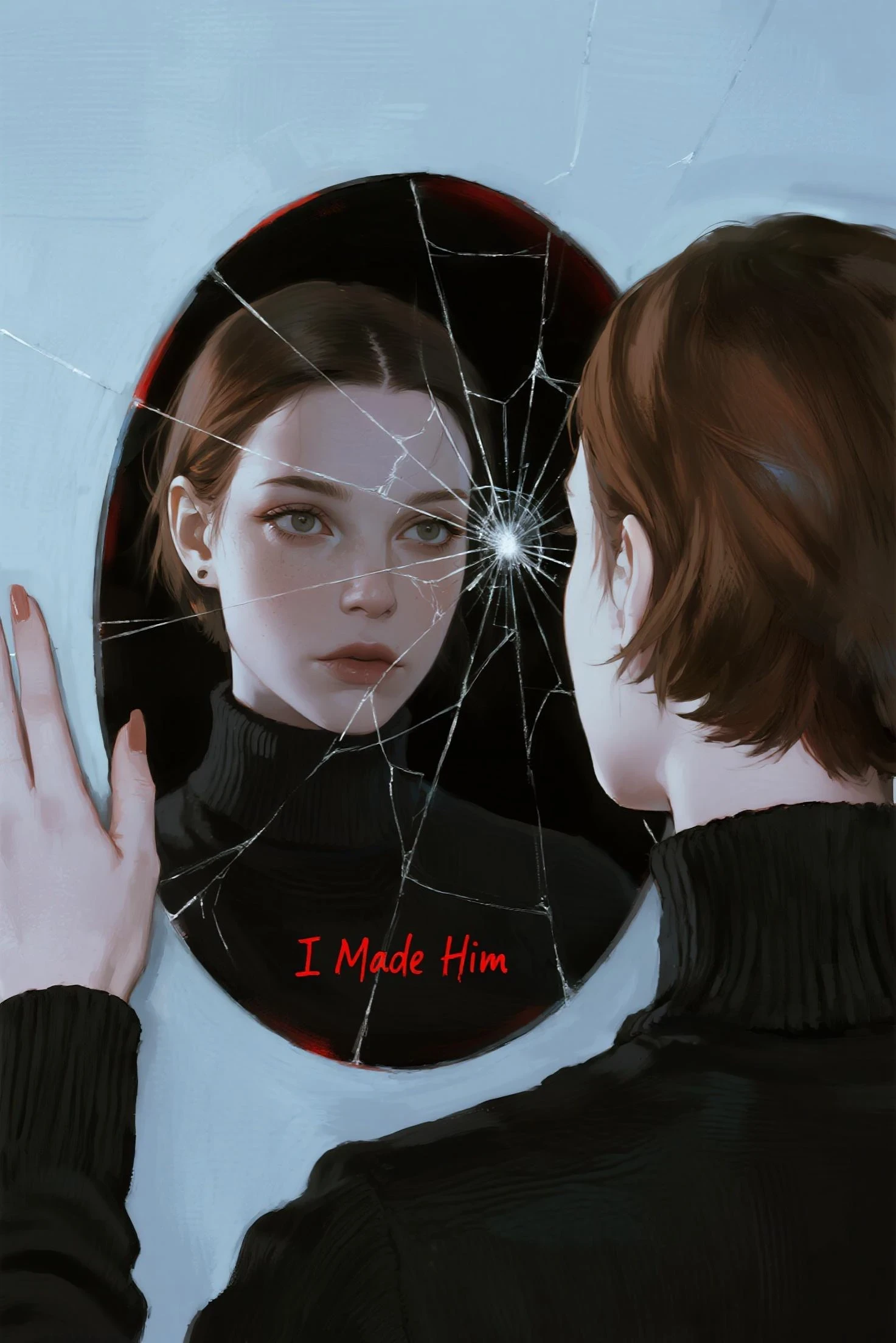
"I made him," she whispers to the mirror. "And he made me."
A revenge story with no heroes—only survivors and the wreckage they leave behind.
Chapter1
The clock on the microwave glared a neon green 3:14 AM when the nightmare finally spat me back into the waking world. My sheets were tangled around my legs like damp restraints, the fabric clinging to the cold sweat that coated my skin. I sat up abruptly, gasping for air that felt too thick to breathe, my heart hammering a frantic, unsteady rhythm against my ribs. The shadows in my small Brooklyn apartment seemed to stretch and contort, mimicking the vague, terrifying shapes from the dream I could never fully remember but could always feel. As an editor, my days were spent organizing narratives, finding logic in chaos, and structuring the thoughts of others. Yet, my own mind was a manuscript I could neither read nor revise. The anxiety was a physical weight, a constant pressure behind my eyes and a tightness in my throat that made every interaction feel like walking across a fragile pane of glass. I was twenty-eight, holding down a respectable job at a mid-sized publishing house, successfully convincing my colleagues that I was merely highly strung and intensely focused. They didn't see the evenings spent staring blankly at the wall, paralyzed by the conviction that I was fundamentally broken, that the unnamed trauma rotting in my history made me inherently unlovable and defective.
The facade cracked just three days later during an editorial meeting, the fluorescent lights of the conference room suddenly buzzing with an unbearable intensity. My vision tunneled, the voices of my coworkers distorting into a garbled static, and I had to excuse myself, practically running to the restroom where I locked myself in a stall and waited for the floor to stop tilting.
That evening, the air in the small corner cafe was thick with the smell of roasted beans and damp wool, the rain outside streaking the windows in blurry, chaotic lines. My friend Chloe watched me from across the small wooden table, her expression a mix of deep concern and growing frustration. I was systematically tearing a paper napkin into microscopic shreds, unable to meet her gaze.
"You can't keep doing this, Liv," Chloe said, her voice low but carrying a sharp edge that cut through the background hum of the espresso machine. "You bolted from a budget meeting today. You look exhausted. You're barely holding it together."
"I just needed some air. It was stuffy," I muttered, the lie tasting stale on my tongue. "I'm fine, really. Just a lot of tight deadlines this month."
"Stop it. Just stop," she leaned forward, resting her hand over my restless fingers, halting the destruction of the napkin. "You need professional help. This isn't just stress, and you know it. It's affecting your job, your health... everything."
I pulled my hand away defensively, wrapping my fingers around the warm porcelain of my mug. The thought of sitting in a sterile room, offering up my ugliest, most fragmented pieces to a stranger with a notepad, made my stomach twist violently. "I don't want to talk to some doctor who's going to analyze my posture and prescribe me pills. I don't want to explain why I'm like this when I don't even know myself."
"You don't have to figure it out alone," Chloe insisted, pulling her phone from her pocket and tapping the screen deliberately. "I have a recommendation. Dr. Marcus Webb. He has a private practice on the Upper West Side. A colleague of mine went to him after a really awful divorce, and she swears he changed her life. He specializes in deep-rooted trauma, cognitive restructuring. He's not just a pill-pusher."
"Chloe, I don't..."
"Just look at the website," she pushed the phone across the table. "Just look. You're too smart to let this destroy you. You're exhausted, Liv. Let someone help you carry it for a while."
I looked down at the bright screen, the exhaustion she mentioned suddenly settling deep into my bones, a heavy, sinking fatigue that overrode my resistance. I was so remarkably tired of fighting my own mind. "Fine," I whispered, the word barely audible over the clinking of dishes. "I'll call him tomorrow."
Dr. Marcus Webb’s clinic did not smell of antiseptic or stale waiting room magazines. When I arrived the following Tuesday, shedding my wet coat in the foyer, I was enveloped by the scent of old paper, leather, and a faint hint of cedar. The waiting area felt more like a private library in an upscale townhouse, with low, warm lighting casting soft pools across the rich mahogany floorboards. There was no glass partition, no receptionist demanding insurance cards. A heavy oak door opened quietly, and a man stood in the frame.
He was in his early forties, dressed in a well-tailored navy sweater and gray trousers, projecting an effortless authority tempered by an immense calm. His dark hair was lightly silvered at the temples, and his eyes—a deep, observant amber—held a warmth that immediately disarmed the defensive posture I had assumed the moment I walked in.
"Olivia," he said, his voice a rich, resonant baritone that seemed to lower the ambient tension in the room. He offered a warm, reassuring smile. "I'm Marcus. Please, come in."
His office was expansive but intimate, lined with overflowing bookshelves and anchored by a large Persian rug. He didn't direct me to a rigid couch; instead, he gestured toward two comfortable armchairs facing each other by a large bay window overlooking the street. I took a seat, perching rigidly on the edge, my hands clasped tightly in my lap, waiting for the interrogation to begin.
Marcus sat opposite me, leaning back relaxed, not holding a pen or a clipboard. He simply looked at me, his gaze unhurried and attentive.
"The traffic coming across town is usually quite brutal at this hour," he began smoothly, his tone conversational. "Did you take the subway, or brave the rain in a cab?"
I blinked, momentarily thrown by the mundane opening. "Um, the subway. It wasn't too bad today."
"Good. It's a terrible day to be stuck above ground," he smiled slightly, adjusting his position. "Chloe mentioned you work in publishing. What kind of manuscripts usually cross your desk?"
For the next twenty minutes, there was no mention of trauma, no probing questions about my panic attacks or my fractured sleep. Marcus simply talked to me. He asked about the structural editing process, shared a brief, amusing anecdote about a notoriously difficult author he had once met, and asked about the books I read when I wasn't working. His questions were intelligent, his listening active and genuinely interested. I found my shoulders slowly dropping, the tight knot in my chest loosening fractionally. He was treating me like an interesting, capable professional, not a broken patient waiting to be fixed. The conversation flowed easily, the silence between our sentences feeling comfortable rather than fraught with expectation.
As the clock on the mantle ticked softly, signaling the approaching end of the hour, the atmosphere in the room shifted. It wasn't abrupt, but a subtle deepening of focus. Marcus leaned forward slightly, resting his elbows on his knees, his amber eyes locking onto mine with an intensity that held me completely still.
"Olivia," he said, his voice dropping slightly in pitch, wrapping around the space between us. "You are clearly a very intelligent, highly functional woman. You manage a demanding career and you present yourself flawlessly to the world."
I swallowed hard, the sudden shift making my pulse quicken, entirely unsure of where he was leading.
"But I can see you've carried a lot," he continued, his tone suffused with a gentle, undeniable certainty. "The tension in your jaw, the way you guard your breathing... you've been fighting a very quietly exhausting war inside your own head. You have been alone with this for a very long time, hasn't it been incredibly heavy?"
The words struck a hidden nerve with devastating precision. The careful barricades I maintained every single day shattered instantly. The exhaustion, the fear, the chronic sense of defectiveness welled up in my throat. My eyes burned, and before I could turn my head away or apologize for the sudden lack of control, a hot tear slipped down my cheek, followed quickly by another. I wasn't sobbing, but the tears flowed silently, a physical release of years of compressed pressure.
Marcus didn't recoil or shift awkwardly. He simply reached over to the small table between us, picked up a soft linen handkerchief, and extended his hand, offering it to me.
"I can help you, Olivia," he said softly, his eyes steady, anchoring me in the quiet room. "You don't have to carry this alone anymore. I will understand you."
I took the handkerchief, my trembling fingers brushing against his warm knuckles, and looked back into his calm, unblinking eyes.
Latest Chapters
The fluorescent lights in the seminar room hummed with a frequency that most people entir
The drive to the Oakridge facility took exactly forty-seven minutes. I calculated the tim
The transition periods following catastrophic events are rarely characterized by sudden n
The human brain is a remarkably fragile storage device. It does not record objective real