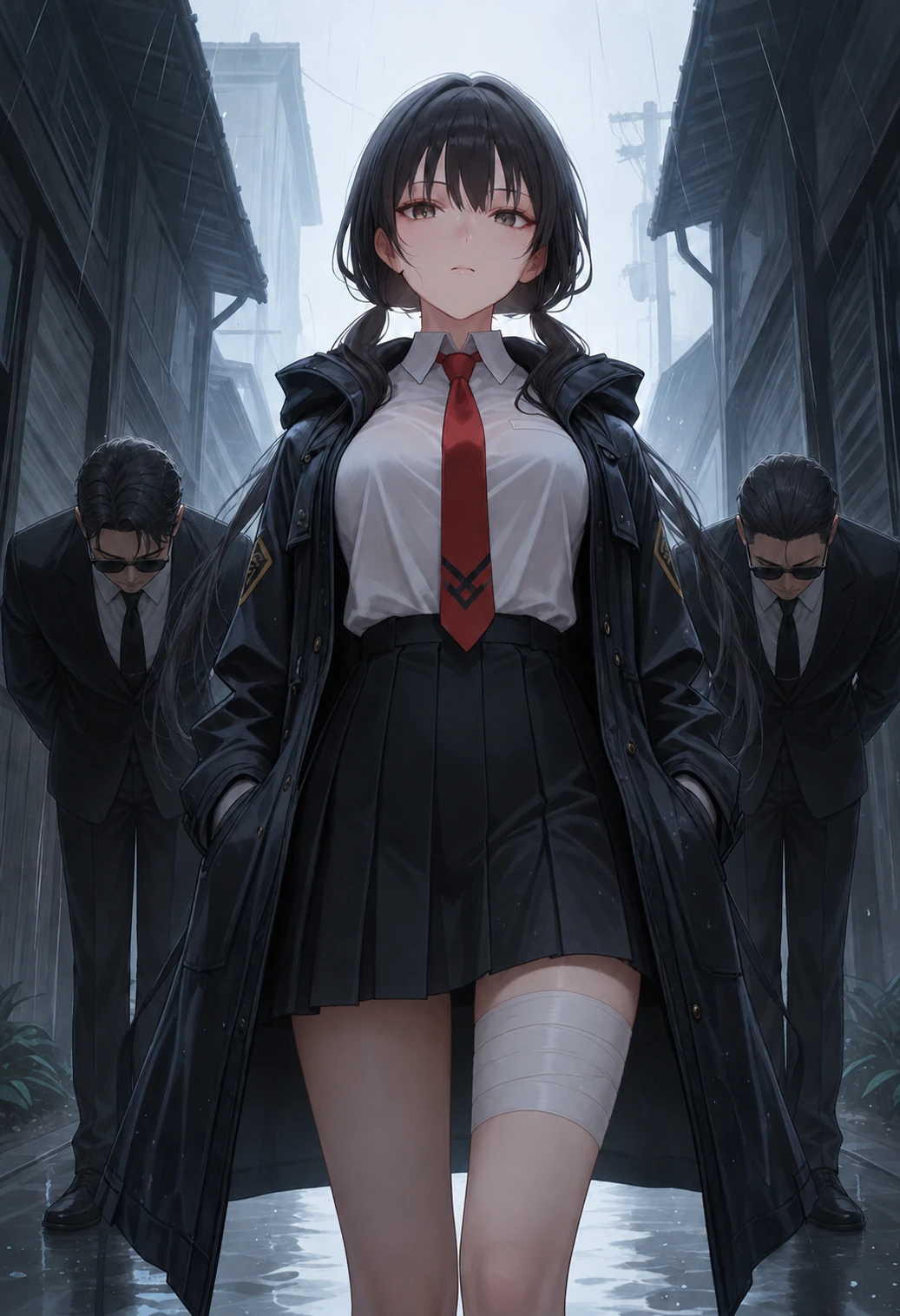


Elías’s
Synopsis
Elías pressed his eye to the crack between two warped planks and watched the single bulb that still worked on Pier 19 .
Chapter1
The office clock crawled past seven-thirty, its cheap plastic hands louder than the rain ticking against the windows.
Mara flicked the power button again. The copier answered with the same wet cough, then silence.
“Give it a minute,” Leo said, though he didn’t believe it either.
“It’s had eight hours of minutes.” She opened the side panel; warm toner smell puffed out like bad coffee.
“Hold this,” she added, passing him a flashlight small enough for a key-ring.
Their fingers brushed—just plastic and skin, nothing special—yet he felt the contact the way you feel a single raindrop on bare forearm: first cool, then warmer than the air.
He steadied the light while she corouched, skirt hem grazing the carpet.
“See the red lever?”
“Yeah, it’s smiling at me like it knows we’re stuck.”
“Pull it till it clicks twice.”
He pulled; the machine clacked, then sighed.
Paper lurched halfway out and died again.
Mara exhaled through her teeth. “We’re going to be here till midnight.”
“Could leave it for the cleaners.”
“And let Mrs. Lim think we’re useless? No chance.”
She tugged the half-sheet; it ripped, leaving a white tongue curled inside.
Leo passed her a letter-opener.
“Since when are you MacGyver?” she muttered.
“Since my dad owned a repair shop and I was the free labour.”
She glanced up, hair fallen across one eye. “You never said.”
“Never came up.” He shrugged. “People assume I only push spreadsheets.”
“Spreadsheet guys don’t know torque ratios on Phillips screws.”
“Now you sound impressed.”
“I sound tired.” But her mouth bent, almost a smile.
They worked in tandem: she levered, he illuminated.
Outside, thunder rolled over the river; lights flickered, steadied.
The corridor beyond the glass wall was dark except for the green exit sign, a single neon word: OUT.
Mara noticed it and laughed under her breath.
“What?” he asked.
“Feels like the building’s giving us a hint.”
“Exit stage left, chased by toner fumes?”
“Exactly.”
The torn sheet slid free.
She straightened, palm on the small of her back. “Okay, reload paper tray.”
He obeyed, counting reams by feel rather than voice.
Silence stretched, comfortable as an old sweater.
Rain softened to a hush; the room smelled of wet dust and warm electronics.
“Why are you still here anyway?” she asked.
“Same reason you are: unfinished quota.”
“That’s not an answer.”
He closed the tray. “I guess I like the quiet after everyone leaves. No emails pinging.”
She nodded. “Me too. It’s the only time this place feels…honest.”
“Honest how?”
“No pretending to be busy. Just the hum of things that can’t fake it.”
He looked at her then, really looked: the small ink smudge on her jaw, the way her earrings were different lengths because one had lost its back and she’d bent the wire to keep it in. Details he’d stored without meaning to.
The copier beeped, ready.
She pressed START.
Pages spilled, warm and clean.
Victory lasted three seconds before the machine screeched, lights flashing red again.
“Unbelievable.” She kicked the base, not hard, just enough to rock it.
“Hey, violence voids the warranty.”
“It’s already suicidal.”
He laughed, and after a beat she did too, the sound looser than anything daylight ever heard from her.
They stared at the blinking error code.
He rubbed the back of his neck. “We could print the rest tomorrow.”
“Client wants binders by eight a.m.”
“Then we’re hostage to a possessed appliance.”
She leaned against the table, arms folded. “Tell me something, Leo.”
“Like what?”
“Anything. Distract me while I think.”
He considered. “When I was ten, my dad paid me five bucks per repaired vacuum. I bought comic books with the money.”
“Which hero?”
“Green Lantern. Ordinary guy, ridiculous ring.”
She smiled sideways. “You still like ordinary things?”
“Apparently I like fixing broken stuff.”
“People or printers?”
“Printers are simpler.”
“And people?”
He met her eyes. “People take longer.”
The room felt smaller, as if the walls had inched in while they talked.
She looked away first, brushing the ink on her jaw and smearing it worse.
“You’ve got—” He gestured.
“Where?”
He stepped closer, licked his thumb, wiped the smudge before thinking.
Her breath caught; his did too.
The touch was casual, fatherly, and yet it wasn’t.
He dropped his hand. “Sorry, habit. My kid sister always had marker on her face.”
“It’s okay.” Her voice came softer. “Thanks.”
Copier lights blinked, forgotten.
Rain started again, harder, drumming like impatient fingers.
He became aware of her perfume—something like cut grass and lemon—and the fact he’d never stood this close without a desk between them.
She pushed off the table. “Let’s try one more thing.”
“What?”
“Unplug it, count to thirty, plug back in. Classic reboot.”
“Worth a shot.”
He knelt; the power brick was under the stand, cord tangled with dust bunnies.
He yanked; the plug popped, skittering across the carpet.
She crouched opposite, counting aloud. “One Mississippi, two Mississippi…”
At fifteen their eyes locked over the machine’s grey shell.
At twenty-two she slowed, drawing the numbers out like honey.
At thirty neither moved.
“You stopped,” he said.
“So did you.”
He swallowed. “Mara—”
“Don’t say it if it’s just the rain talking.”
“It’s not the rain.”
She bit her lip. “Then what?”
He exhaled. “The truth? I stay late because you stay late. I like how you hum when you highlight rows. I like that you steal pens and always return them without ink, like some honourable thief. I like that you kick copiers but apologise to them right after. And I have no idea what to do with any of that.”
Her shoulders rose and fell once, quick.
“Say something,” he whispered.
“I’m thinking.”
“Out loud would help.”
She stood, walked around the machine, stopped inches away.
“I stay because you hum off-key to the elevator music. Because you pretend not to see when I rehearse presentations in the mirror. Because you once left a note on my desk that just said ‘Good luck today’ and no one ever does that after kindergarten.”
She took a breath that trembled. “So maybe we’re both idiots.”
He lifted a hand, paused. “May I?”
She answered by stepping forward.
He cupped her elbow, thumb brushing the cotton sleeve.
She tilted her face; he bent, slow enough for either to retreat.
Neither did.
Their lips met—soft, ink-flavoured, uncertain for two heartbeats, then surer.
The copier beeped once, as if clearing its throat, but neither moved to acknowledge it.
When they parted, foreheads still touching, she whispered, “Printer’s still broken.”
“Let it stay broken.”
She laughed against his mouth.
After a moment she drew back, eyes bright. “We should probably—”
“Yeah.”
But they didn’t.
He tucked a strand of hair behind her ear; she let him.
Outside, thunder moved off, dragging rain like a skirt over the rooftops.
Inside, the green exit sign kept glowing, patient as a chaperone.
He picked up the plug. “Count again?”
She shook her head. “I think we fixed what we could tonight.”
“And the rest?”
“We’ll see.”
The words hung, honest and unfinished, while the broken machine blinked its red Morse against their backs and the city kept breathing beyond the glass.
Latest Chapters
The trail ended at a wall of green.
Maya’s map, laminated and crisp that morning, now dr
The rain had stopped but the city still dripped. Every corrugated roof they passed shed a cold me
## Main Character Profiles:
Protagonist 1:
- Name: Elí
The rain had thinned to a cold mist that clung to the back alley bricks like wet paper. Elías wal