
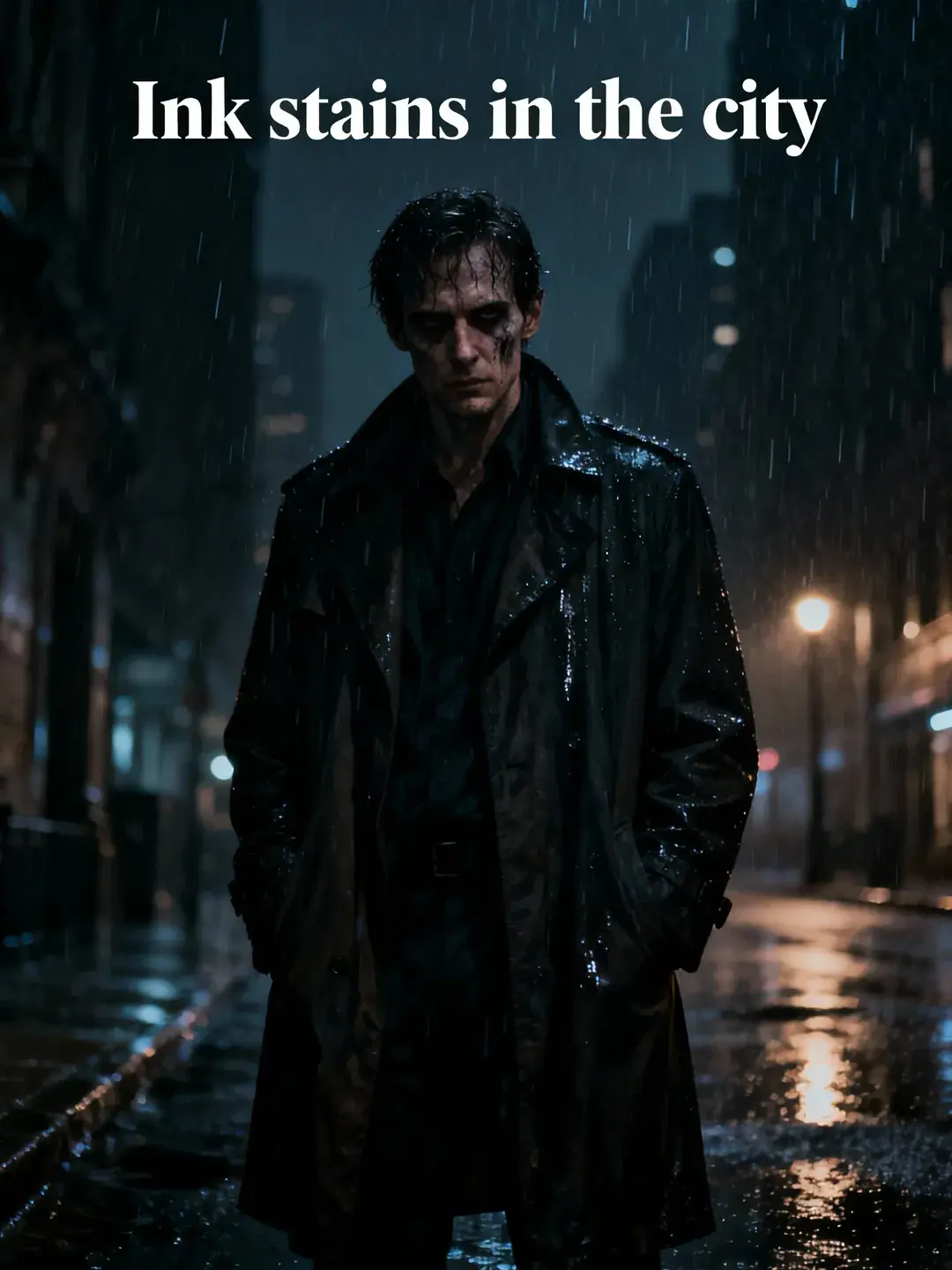
Ink stains in the city
Synopsis
A memory-bleeding detective races to halt a parasitic blankness that rewrites murder victims’ fates, knowing the final edit will erase the only proof his sister ever existed.
Chapter1
The canal at three in the morning smells of rusted iron and yesterday’s fish. Iago Voss hears the knock once, soft as a rat’s shoulder brushing wood. He opens the door with the chain still on, peer-hole gap showing only fog the color of dirty cotton. When he unhooks the chain the fog rolls in and parks itself at his ankles like a drunk. On the step sits a brown-paper bundle tied with butcher’s twine. The paper is slick; blood has crawled halfway up the fibers and dried in burgundy fans. He crouches, knees clicking, and pokes the knot. The twine is damp, the blood not yet black. Someone walked here, bled here, left it no more than an hour ago.
He lifts the package by opposite corners and carries it inside because that is what he does: collect what the night discards. The flat is one room and a alcove, bare boards, one chair, one table, one bulb. He lays the bundle on the table, unfolds the paper slow as a card-sharp. Inside: a coil of silver thread bright enough to scratch the eye, and a single page torn from a desk calendar, tomorrow’s date, the paper cheap enough to see wood pulp through the ink. Across the boxed numeral someone has printed his name in block letters that tilt like tombstones: IAGO. The pencil strokes are thick, pressed hard, the work of a child copying a threat an adult dictated.
He fetches the tweezers he keeps taped under the table lip, clamps the thread, lifts. The coil is light, fine as spider silk, yet when it swings the light it throws is cold enough to sting. He should bag it, label it, store it with the rest of the impossible evidence. Instead he lets the tweezers rest on the table and, without thinking, wipes the sweat from his palm against his trouser leg and touches the thread with the pad of his index finger.
The room tilts. Floorboards flip. He is standing in an alley narrower than his outstretched arms, rain needling his scalp. Brick walls sweat algae; dumpsters leak coffee grounds and something sweeter, fouler. At his feet lies a corpse, female, young, clothes plastered to skin like wet paper to glass. Her face flickers: stranger, then Luma, then stranger again, the two images swapping faster than a card-sharp’s shuffle. Luma’s eyes open, the left one blood-filled, the right one gray with rain. Her lips part. “You let me die twice.” The voice is water over gravel, not his sister’s, yet it wears her name like a borrowed coat.
The alley snaps shut. He is back in his flat, hand still extended, silver thread coiled on the tweezers like a sleeping viper. His knees bang the floor before he knows he has fallen. The bulb overhead buzzes, filament ticking as it cools. He counts four ticks, five, six, enough to prove time has started again.
He crawls to the shelf where the reel-to-reel waits, a Wollensak T-1500 he bought from a radio deejay who’d pawned it for drink. The machine is heavier than faith; its Bakelite corners have chipped like old teeth. He yanks the plug from the wall because the motor takes a moment to wake and he needs that moment now. Threading the tape is harder with shaking hands; the brown acetate keeps slipping its sprockets. He tightens the tension arm, hits RECORD, and speaks into the chrome microphone the size of a child’s fist.
“Vision onset zero-three-one-seven. Trigger: silver ligature, origin unknown. Alley dimensions approx—” He stops, swallows. Approximations are lies; precision is the only rope he owns. “Alley width three meters, length unseen. Surface: pitted asphalt, standing water one centimeter. Corpse female, age twenty to twenty-five, facial morphing between unknown subject and Luma Voss, deceased family, DOB—” The words clog; he cannot remember her birthday, only that she was twelve when she stepped into a mirror and never stepped back. The tape keeps eating his silence. He forces breath in. “Message received: ‘You let me die twice.’ End vision, zero-three-twenty-one.”
He leans back, lets the microphone dangle. The spool turns steady, comforting, like watching a mill wheel that has no choice but spin. Then the feed arm jerks, once, twice. The tape folds, buckles, jams. He smells hot plastic before he hears the crunch. He kills power, flips the lid, peers. The tape has chewed itself exactly where the sister-image sat clearest in his dictation: a clean gap, brown dust, no magnetized stripe left. The machine has performed surgery on his memory and left no scar he can show a court.
He sits on the floorboards, back against the table leg, and listens to the canal gurgle beneath the shut window. Somewhere a barge thumps against stone; the sound is dull, final. He ought to feel rage; instead he feels audited, account balanced by an accountant who never sleeps. The first mechanical proof something is stealing her from him, and the proof has been amputated before it could be filed.
Dawn finds him still there, knees stiff, bulb burned out. Gray light leaks through the cracked pane and paints the room the color of old newspaper. He stands, joints creaking louder than the stairs ever did, and fetches the tin box he keeps under the loose board. Inside: one cracked music-box cylinder, brass teeth missing every third note, and a length of red ribbon Luma once wore as a belt. He pins the silver thread beside the cylinder with the same nail that holds the ribbon. The wall is scarred soft pine; the nail goes in easy, as if the house expects new ghosts.
He whispers to the empty room because there is no one left to lie to. “I will keep her in the city’s memory. You write her out, I write her back. Every page you tear I’ll tape. Every name you erase I’ll shout.” The promise sounds thin, but thin is enough to sew skin if you double the stitch.
He puts on the black coat that smells of last winter’s rain, pockets the thread, and leaves the flat without locking the door. If something wants in, a lock will only slow the inevitable. Outside, the fog has thickened to soup; the canal has vanished, though he still hears water slap brick. He walks south because the vision alley had dumpsters stenciled with a faded mermaid logo he once saw on a warehouse by the old fish market. He has never seen that alley in daylight, yet he already mourns it the way men mourn wars they have not fought, losses they have not earned. Every step erases a footprint behind him; the city is editing him back, page by page, but for now the thread in his pocket hums like a trapped bee, and he follows the hum into the gray that has no name and no tomorrow yet.
The canal at three in the morning smells of rusted iron and yesterday’s fish. Iago Voss hears the knock once, soft as a rat’s shoulder brushing wood. He opens the door with the chain still on, peer-hole gap showing only fog the color of dirty cotton. When he unhooks the chain the fog rolls in and parks itself at his ankles like a drunk. On the step sits a brown-paper bundle tied with butcher’s twine. The paper is slick; blood has crawled halfway up the fibers and dried in burgundy fans. He crouches, knees clicking, and pokes the knot. The twine is damp, the blood not yet black. Someone walked here, bled here, left it no more than an hour ago.
He lifts the package by opposite corners and carries it inside because that is what he does: collect what the night discards. The flat is one room and a alcove, bare boards, one chair, one table, one bulb. He lays the bundle on the table, unfolds the paper slow as a card-sharp. Inside: a coil of silver thread bright enough to scratch the eye, and a single page torn from a desk calendar, tomorrow’s date, the paper cheap enough to see wood pulp through the ink. Across the boxed numeral someone has printed his name in block letters that tilt like tombstones: IAGO. The pencil strokes are thick, pressed hard, the work of a child copying a threat an adult dictated.
He fetches the tweezers he keeps taped under the table lip, clamps the thread, lifts. The coil is light, fine as spider silk, yet when it swings the light it throws is cold enough to sting. He should bag it, label it, store it with the rest of the impossible evidence. Instead he lets the tweezers rest on the table and, without thinking, wipes the sweat from his palm against his trouser leg and touches the thread with the pad of his index finger.
The room tilts. Floorboards flip. He is standing in an alley narrower than his outstretched arms, rain needling his scalp. Brick walls sweat algae; dumpsters leak coffee grounds and something sweeter, fouler. At his feet lies a corpse, female, young, clothes plastered to skin like wet paper to glass. Her face flickers: stranger, then Luma, then stranger again, the two images swapping faster than a card-sharp’s shuffle. Luma’s eyes open, the left one blood-filled, the right one gray with rain. Her lips part. “You let me die twice.” The voice is water over gravel, not his sister’s, yet it wears her name like a borrowed coat.
The alley snaps shut. He is back in his flat, hand still extended, silver thread coiled on the tweezers like a sleeping viper. His knees bang the floor before he knows he has fallen. The bulb overhead buzzes, filament ticking as it cools. He counts four ticks, five, six, enough to prove time has started again.
He crawls to the shelf where the reel-to-reel waits, a Wollensak T-1500 he bought from a radio deejay who’d pawned it for drink. The machine is heavier than faith; its Bakelite corners have chipped like old teeth. He yanks the plug from the wall because the motor takes a moment to wake and he needs that moment now. Threading the tape is harder with shaking hands; the brown acetate keeps slipping its sprockets. He tightens the tension arm, hits RECORD, and speaks into the chrome microphone the size of a child’s fist.
“Vision onset zero-three-one-seven. Trigger: silver ligature, origin unknown. Alley dimensions approx—” He stops, swallows. Approximations are lies; precision is the only rope he owns. “Alley width three meters, length unseen. Surface: pitted asphalt, standing water one centimeter. Corpse female, age twenty to twenty-five, facial morphing between unknown subject and Luma Voss, deceased family, DOB—” The words clog; he cannot remember her birthday, only that she was twelve when she stepped into a mirror and never stepped back. The tape keeps eating his silence. He forces breath in. “Message received: ‘You let me die twice.’ End vision, zero-three-twenty-one.”
He leans back, lets the microphone dangle. The spool turns steady, comforting, like watching a mill wheel that has no choice but spin. Then the feed arm jerks, once, twice. The tape folds, buckles, jams. He smells hot plastic before he hears the crunch. He kills power, flips the lid, peers. The tape has chewed itself exactly where the sister-image sat clearest in his dictation: a clean gap, brown dust, no magnetized stripe left. The machine has performed surgery on his memory and left no scar he can show a court.
He sits on the floorboards, back against the table leg, and listens to the canal gurgle beneath the shut window. Somewhere a barge thumps against stone; the sound is dull, final. He ought to feel rage; instead he feels audited, account balanced by an accountant who never sleeps. The first mechanical proof something is stealing her from him, and the proof has been amputated before it could be filed.
Dawn finds him still there, knees stiff, bulb burned out. Gray light leaks through the cracked pane and paints the room the color of old newspaper. He stands, joints creaking louder than the stairs ever did, and fetches the tin box he keeps under the loose board. Inside: one cracked music-box cylinder, brass teeth missing every third note, and a length of red ribbon Luma once wore as a belt. He pins the silver thread beside the cylinder with the same nail that holds the ribbon. The wall is scarred soft pine; the nail goes in easy, as if the house expects new ghosts.
He whispers to the empty room because there is no one left to lie to. “I will keep her in the city’s memory. You write her out, I write her back. Every page you tear I’ll tape. Every name you erase I’ll shout.” The promise sounds thin, but thin is enough to sew skin if you double the stitch.
He puts on the black coat that smells of last winter’s rain, pockets the thread, and leaves the flat without locking the door. If something wants in, a lock will only slow the inevitable. Outside, the fog has thickened to soup; the canal has vanished, though he still hears water slap brick. He walks south because the vision alley had dumpsters stenciled with a faded mermaid logo he once saw on a warehouse by the old fish market. He has never seen that alley in daylight, yet he already mourns it the way men mourn wars they have not fought, losses they have not earned. Every step erases a footprint behind him; the city is editing him back, page by page, but for now the thread in his pocket hums like a trapped bee, and he follows the hum into the gray that has no name and no tomorrow yet.
Latest Chapters
Dawn came up the color of dishwater. Iago sat on the doorstep with his knees apart, the s
The nave of the abandoned scriptorium smelled of cold iron and mouse droppings. Moonlight came th
The canal-runner’s gossip always cost you something: a cigarette, a favor, or the memory
The lock turned with a sound like a chicken bone snapping.
Midnight in the hold