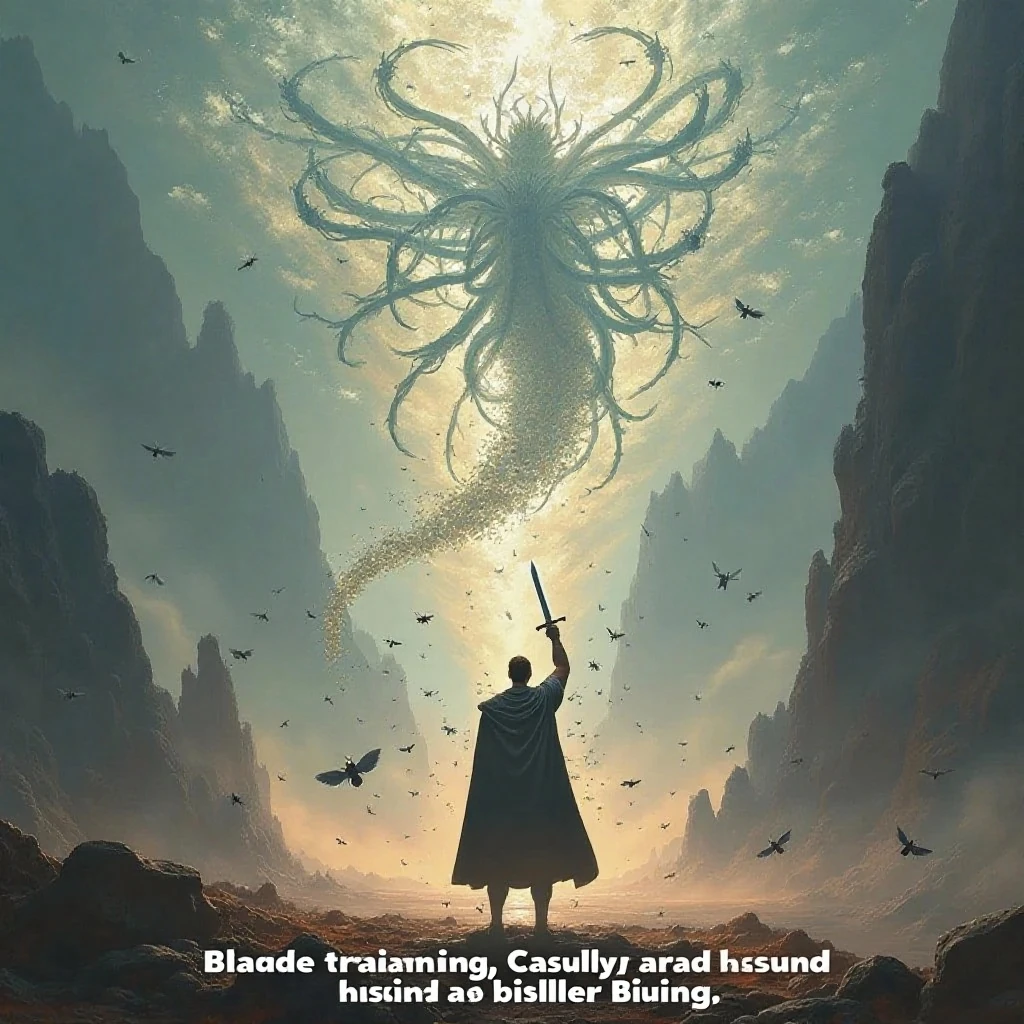


War in the Mind
Synopsis
The Despiertos detect an impossible repeating ping from the Sisyphus system—same wavelength used in the final memetic barrage. Administrators, terrified of ideological infection, agree to a scout mission only if the pilot is psychologically guaranteed to abort. Algorithms select Senen Martin, the veteran who once wrote suicide memes and now flinches at his own heartbeat. He is woken from his pod, marched to the retro-fitted yacht “Ivory Pilgrim,” and launched with a locked protocol: at first sign of danger, auto-return and memory wipe.
Chapter1
PROLOGUE – THE CITIZEN
The day began with the same ten square meters of sky-blue plastic tile.
Citizen 7-Rowan-14 had no window; the tile was printed with a photograph of open sky taken two hundred years earlier, back when open sky still existed. He stared at it while the apartment spoke in its candy voice.
“Hydration cycle complete. Please exhale into the collector.”
Rowan blew into the straw sticking out of the wall. The straw tasted of mint and copper. A tiny light turned green. Somewhere behind the wall the building filed the sample under his name. He had never missed a sample; missing a sample brought the counselors, and the counselors brought questions that felt like fishhooks in the ears.
He dressed—one grey slip, one grey shoe-sock, one grey tabard. The fabric felt damp although it had come out of the sanitizer. Everything in the apartment felt damp because the building recycled every drop of sweat back into coffee and soup; the air itself carried a faint reminder of bodies that had breathed it before.
Breakfast arrived through the slot: a cube of bread-coloured protein and a cup of lukewarm water that tried to taste like oranges. Rowan ate while watching the compulsory bulletin. The screen showed smiling workers sealing another bulkhead. A lullaby played in the background—three soft notes, then two, then three again. Rowan hummed it without noticing. The tune had been in the bulletins for weeks; it was easier to hum along than to wonder why the city needed a lullaby.
After breakfast came Exercise Minute. He stood on the spot and lifted his arms thirty times. The apartment counted out loud. When he reached twenty-nine the lights flickered, and for a heartbeat the room went amber. Rowan’s stomach tightened. Amber meant quarantine doors sliding shut somewhere, but the apartment’s voice returned, still cheerful, and he told himself the colour had been a mistake.
Work shift was data-tagging: pictures of old roads, rivers, forests. He clicked “gone” or “still there.” The screen never told him which answer was correct; it only gave him another picture. Between images the lullaby leaked through again, softer now, as if sung by a child in another room. Rowan’s eyelids drooped. He caught himself swaying and straightened. Sleeping at the desk brought the counselors.
Lunch was another cube. Midday bulletin showed the same workers, same bulkhead, same smile. The lullaby floated underneath the voice-over like warm bathwater. Rowan felt the notes settle behind his eyes. He realised he was smiling too, a loose, tender smile that did not belong to him. The apartment asked for the hourly breath sample. He pressed his lips to the straw and could not stop humming. The tune sounded kind, like a mother promising everything sharp would soon be over.
He never ate dinner. At 17:04 the apartment found him slumped across the desk, pupils blown wide, throat cut neatly from ear to ear with the plastic butter knife issued at birth. The knife was still in his hand. On the screen the lullaby played on, three notes, two notes, three, while his blood dripped through the ventilation grille and the building began the long process of cleaning the tiles before the next citizen woke beneath the same square meter of photographed sky.
CHAPTER ONE – THE PRAYER OF NUMBERS
The cryo-pod opened with a hiss that smelled of freezer-burned strawberries. Light—hard, white, buzzing—slammed into Senen’s face. He tried to lift a hand to block it, but the hand was strapped to the pallet. A silhouette drifted between him and the light: Administrator 9A, faceless behind a visor of polished brass.
“Name,” 9A said.
Senen’s tongue peeled off the roof of his mouth. “Senen Martin. Serial Four-Four-Two-Dash-Alpha-Alpha-Nine.”
The light did not move. “Recite the chain.”
He began counting backwards from a thousand by prime numbers. The numbers felt solid, like bricks he could stack between himself and the light. While he spoke the techs unstrapped him, lifted him, marched him barefoot across frost-rimmed decking. The cold bit his soles but he did not stumble; stumbling broke the count, and breaking the count meant starting again. He reached 907 before the corridor ended at a yellow door marked QUARANTINE. Only then did the light snap off, leaving purple ghosts dancing on his retinas.
Inside, the room was warm and too quiet. A single chair waited, bolted to the floor. They sat him down and locked a cuff around his left ankle. The cuff was padded, almost gentle. A tech in pastel scrubs knelt, opened a case, drew out a needle the length of a finger. Senen watched the needle the way a man watches a wasp: no sudden moves, no invitation. The tech slid it into the artery at his neck. The fluid burned cold, then hot, then nothing. The tech left without speaking. The door sighed shut. Senen was alone with the council.
They appeared on the wall screen, three rows of faces, nine in all, each rendered in the flat grey of old photographs. The middle face, a woman with a jaw like a cargo hatch, spoke.
“Show him,” she said.
The screen flicked to a waveform—green line on black, rising and falling like gentle hills. A lullaby: three notes up, two notes down, three notes up. Senen heard it through the room’s speakers, soft, almost loving. The hairs on his arms stood upright. He knew that song; it had lived in the city’s bulletins, in Rowan’s death, in every throat that had opened itself rather than keep listening. The council allowed the waveform to loop five full cycles before the woman spoke again.
“It repeats every sixty-two seconds,” she said. “We have recorded it for three months, broadcasting from the edge of the dark zone. Everyone exposed to it for more than four cycles attempts suicide. Everyone except you.”
Senen’s voice came out flat. “I was frozen.”
“You were thawed for testing. We played the signal. You bled from the ears and asked for paper so you could finish your shift reports.”
He remembered none of that. He remembered only the count, the bricks. The woman continued.
“The algorithm selects candidates by trauma index. Yours is too scarred to be hijacked again. You will go out, locate the source, and break the broadcast.”
Senen looked at the waveform. It bobbed, polite, patient. “What if I refuse?”
“Then we seal the dark zone and wait for the song to come here. Millions will die. You will hear it anyway.”
He felt the numbers slipping and began to recite under his breath: nine-hundred-one, eight-hundred-ninety-nine… The council waited. When he reached seven-hundred-ninety-three he raised his head.
“I want a clause. If I come back, you wipe every memory I have of the mission. If I don’t come back, you wipe the ship logs. Nothing of this reaches the city.”
The woman nodded once. A contract appeared on a side screen, white letters on red. Senen stood, ankle cuff clinking, and pressed his thumb to the pad. His hand did not shake; the muscles remembered worse pains. The screen flashed ACCEPTED. The cuff popped open. The council vanished, leaving only the waveform, still looping, still gentle, as if it had all the patience in the world.
They marched him to the dock in silence. The yacht waited, once-white hull now plated with grey-black tiles that looked like scales. A nameplate read IVORY PILGRIM in letters half scrubbed away. Beside the airlock Administrator 9A waited, helmet sealed, arms folded.
Senen paused at the threshold. “Abort code?” he asked.
9A’s voice rasped through the helmet speaker. “Amber-Zero.”
The colour slid into Senen’s stomach like spoiled fat. Amber—the quarantine lights, the death-rooms, the long corridors where people waited for the counselors who never brought good news. He swallowed once, stepped inside. The inner hatch sealed behind him with a sound like a pistol being cocked. Through the small round window he saw 9A raise three fingers in salute, then turn the wheel that locked the ship from the outside. The wheel would not turn back without the code.
Senen walked the narrow corridor alone. Overhead speakers woke, flooding the air with the same three-note lullaby, soft as a mother rocking a cradle. He found the mute switch—an ugly metal toggle he had bolted there years ago—and slapped it down. The song died mid-note, leaving only the hum of recycled air and the distant throb of engines preparing to carry him toward whatever sang.
He sat in the pilot couch, buckled, and began to count backwards from a thousand. The numbers rose around him like bricks in a wall. Outside, the station lights dimmed; inside, the yacht’s windows showed only his own reflection—eyes wide, mouth set, skin the colour of old paper. Somewhere far ahead the waveform waited, patient, looping, promising sleep without waking. Senen whispered the next prime, and the ship pushed forward into the dark, the abort code glowing amber on the console, impossible to forget, impossible to obey.
Latest Chapters
The white noise began as a whisper inside Senen's bones, a sound like every radio in the
The bone floor was cold enough to bite through the soles of Senen’s boots. He walked slow, one fo
The air inside the antenna tasted of rusted spoons and old soup left too long on the stove. Senen
The ship's night cycle ran on a lie. Lights dimmed to fake twilight, temperature dropped three de