

Purple Prose: How to Spot It and Revise Without Going Flat | SeaBell
When a beta reader circles a paragraph and writes "purple" in the margin, the label can feel frustratingly vague. Does it mean the vocabulary is too formal, the metaphors are fighting each other, the scene has slowed down, or the reader simply prefers plainer fiction?
Purple prose is writing whose ornamentation interferes with the passage's job. It can hide the image, exaggerate an emotion, slow the scene, or pull the reader's attention toward the writer's performance instead of the story. Lyrical or elaborate prose is not automatically purple. The useful question is what the language makes the reader notice, miss, or work too hard to decode.
🧭 What is purple prose?
Purple prose is normally a critical label rather than a neutral style category. It is a contextual judgment: a paragraph can be a purple patch even when the rest of a novel is controlled.
In one sentence: purple prose is ornamentation that overwhelms clarity, scene movement, emotional accuracy, or narrative focus.
The term is commonly associated with the "purple patch" in Horace's Ars Poetica, an image of a showy passage that does not fit the work around it. That mismatch remains a useful lesson for modern writers: a passage can be vivid and still be wrong for the scene around it.
⚖️ Purple prose is not the same as lyrical prose
Lyrical prose uses rhythm, sound, and imagery deliberately. Ornate or flowery prose may use dense description and decorative language without necessarily failing. Purple prose is usually a judgment about the result: the decoration has begun to obstruct the passage.
| Label | Usual tone | What it does |
|---|---|---|
| Lyrical or poetic prose | Neutral | Uses rhythm, image, and sound as part of the voice |
| Ornate or flowery prose | Neutral or mixed | Uses dense, decorative, or elevated language |
| Purple prose | Usually critical | Gives ornament more weight than the passage can carry |
Context matters. A slow description may be right when a character first sees a city they thought was impossible. The same description may be a problem in the middle of a chase, when the reader needs to track a door, a threat, and the character's next decision. Genre and reader expectation affect the judgment, but they do not excuse a confused image or a sentence that no longer sounds like the point-of-view character.
Prose does not have to disappear behind the story. It has to direct attention on purpose. A heightened sentence often works because the surrounding sentences are quieter, giving the unusual rhythm somewhere to land.
🔍 Six signs a passage may have turned purple
Each symptom is a reason to inspect a paragraph, not an order to delete every unusual word. Read each sign as a question about reader effect.
The image becomes harder to see
Several metaphors can make a physical scene less concrete. If a room is described as a cathedral, a ship, and a wound in the same paragraph, the reader has to keep changing mental pictures. Abstract language can create the same problem when the reader must decode the sentence before understanding what happened.
Ask: can the reader picture one coherent thing, or are the comparisons competing for control?
Every detail receives the same emphasis
Purple passages often give equal attention to dust, curtains, a character's hand, the weather, and the event that changes the scene. Nothing is technically absent, but the important detail has no visual or emotional priority.
Ask: is the description spending its energy on the event that matters, or on surfaces that do not alter the scene?
Modifiers repeat instead of sharpen
An adjective should add information, not repeat the noun. An adverb should change how an action is understood, not announce the same meaning again. Emotional writing can also repeat itself when a character is described as devastated, shattered, heartbroken, and inconsolable before anything new happens.
Ask: if one modifier disappears, does the reader lose information or only a second label for the same idea?
Vocabulary sounds impressive but inaccurate
A thesaurus substitution can make a sentence less precise. A writer may choose "perambulate" when "walk" is the more natural word for the action, and a narrator may use a technical word the character has no reason to know. A complicated dialogue tag can also draw attention away from the speech.
Ask: is this the most accurate word for the action, the narrator, and the character's knowledge?
The prose slows the scene at the wrong moment
Dense description can stall a scene that needs an immediate decision. A brief transition can also become so elaborate that it draws more attention than the conflict around it. Slowness is not automatically bad; the issue is whether the delay creates pressure, atmosphere, or understanding.
Ask: does the sentence density match what the scene needs to do now?
The sentence does not belong to the point of view
A character notices what their experience, attention, and emotional state bring into focus. A sudden elevated passage may sound like an author stepping forward to announce that a moment is important. Comparisons can also come from outside the narrator's world.
Ask: would this character notice the detail, make this comparison, and phrase it this way at this moment?
✨ When heightened prose works
Keep heightened language when it earns its place. It may reveal how a point-of-view character understands the world, carry an emotion the character cannot state directly, or slow the scene at a threshold, revelation, or moment of awe. A recurring image can also create thematic continuity when it stays controlled and connected to the story.
Strong emotion does not always need more verbal intensity. In grief scenes, a second cup left beside the sink or an unfinished movement can carry more pressure than several sentences naming the loss. The absence of explanation lets the object and the interrupted action do some of the work.
The useful question is what would disappear if the sentence were simplified. If the answer is a meaningful rhythm, a character-specific perception, or an image that shapes the scene, keep that value and remove only the parts that compete with it.
✍️ How to revise purple prose without making it bland
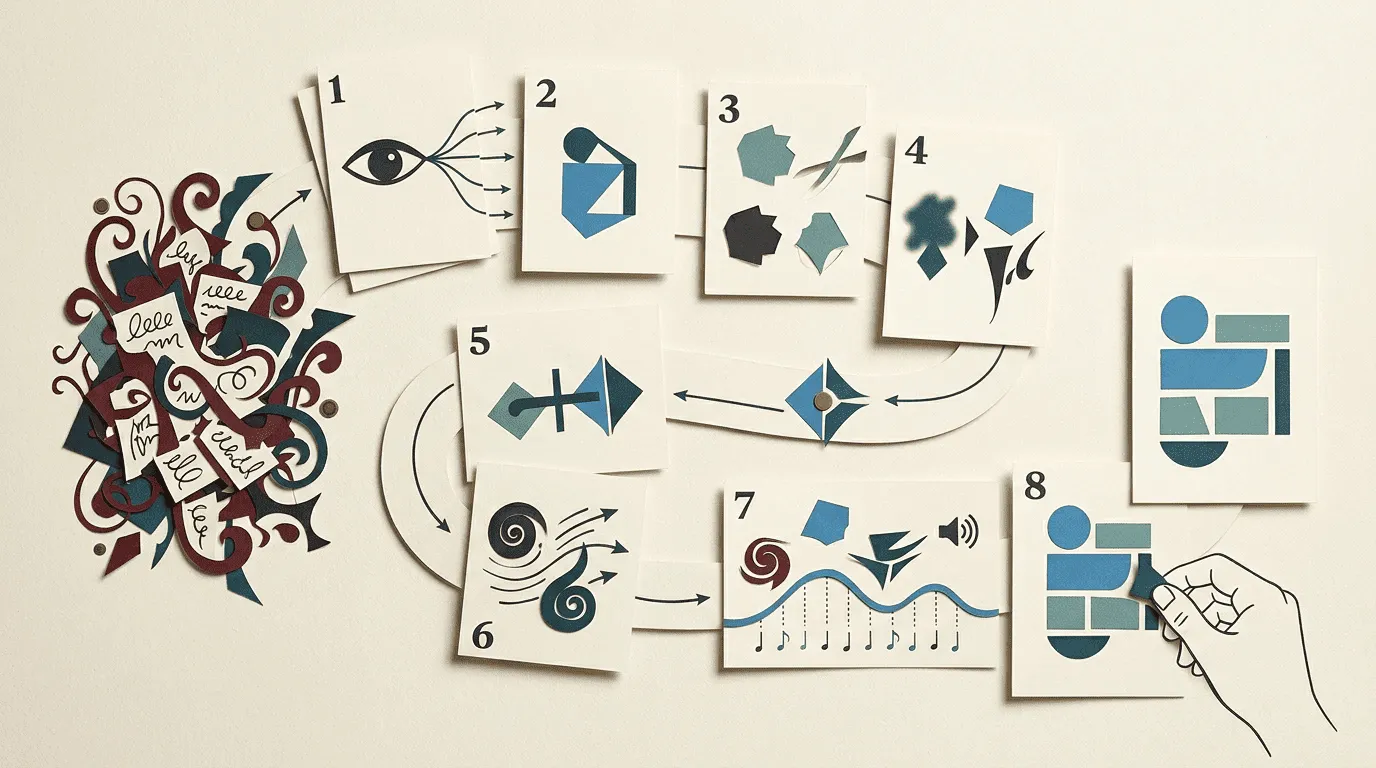
Revision works better as a sequence of choices than as a hunt for forbidden words. The arrival scene below illustrates the process; the later examples show how the same approach works in different kinds of prose.
Mara enters an unfamiliar house. The scene should make the reader feel her distrust before she opens the study door. Here is the short paragraph before the edit:
The corridor, a lightless throat of the house, held its breath around Mara as she proceeded toward the door. Its walls wore a thousand blistered memories, while the brass knob waited like a small, sealed mouth beneath the watchful darkness. She advanced through the oppressive silence, her hand suspended in the cathedral of hesitation, though the study beyond might contain the letter she had come to find.
1. State the intended reader effect
Write the effect before touching the language: "Mara distrusts the room, but she still has to open the study door." That sentence gives the edit a target. It also tells us that the doorknob and Mara's hesitation matter more than a general description of darkness.
2. Circle the concrete image, action, or emotional turn
Circle the doorknob and the suspended hand. Together, they form the visible point of pressure. The line "the brass knob waited like a small, sealed mouth" has a usable image, but the passage needs to decide whether that image helps Mara's distrust or competes with it.
3. Cut repetition before personality
The opening repeats darkness and stillness through "lightless," "held its breath," "oppressive silence," and "watchful darkness." Remove those duplicates first. The next version keeps Mara's suspicion but makes the physical route easier to see:
The corridor was dark. Mara proceeded toward the study door. The walls were covered in blistered paint, and the brass knob waited ahead of her.
4. Replace prestige vocabulary with accurate vocabulary
The previous step removed repeated darkness and stillness signals. Here, replace the remaining "proceeded" with "moved" to keep Mara's movement immediate and wary. This changes the register without forcing the whole scene into flat, generic language:
Before:
The corridor was dark. Mara proceeded toward the study door. The walls were covered in blistered paint, and the brass knob waited ahead of her.
Replacing "proceeded" with "moved" keeps the action grounded in Mara's immediate experience.
After:
The corridor was dark. Mara moved toward the study door. The walls were covered in blistered paint, and the brass knob waited ahead of her.
5. Keep one coherent metaphor
The original shifts from a throat to the image of held breath, then to memories, a mouth, a cathedral, and hesitation. Keep the image that supports Mara's distrust: the paint is blistered like old skin. Cut the throat, mouth, and cathedral images so the wall remains a single unsettling surface:
The corridor was dark. Mara moved toward the study door. The paint on the walls had blistered like old skin. The brass knob waited ahead of her.
The paint remains the only metaphorical surface, while the knob stays a concrete object.
6. Restore action, dialogue, or causal movement
The original postpones the scene's next beat until the final clause. Let Mara reach for the knob so the distrust leads to a visible next beat instead of stopping the scene:
The corridor was dark. Mara moved toward the study door. The paint on the walls had blistered like old skin. She reached for the brass knob.
The description now presses against a visible action instead of postponing it.
7. Read aloud for rhythm and emphasis
Read the four sentences aloud. The repeated short openings make the edit clear, but they also place equal weight on every beat. Combine the setting and movement to reduce the repetition, then check whether the shorter version still preserves Mara's hesitation:
The corridor was dark, its paint blistered like old skin. Mara moved toward the study door and reached for the brass knob.
Combining the setting and movement gives the paragraph a smoother rhythm, but it also removes the hesitation that the next step restores.
8. Run the loss test
Compare the two-sentence version from Step 7 with the intended effect. An overly plain edit would read: "Mara walked down the hall and opened the door." It restores movement but loses the room's pressure and her distrust. Put one brief hesitation back without restoring the competing images:
The corridor was dark, its paint blistered like old skin. Mara moved toward the study door, then let her hand hover over the brass knob.
This version keeps the concrete action, one unsettling image, and Mara's hesitation. The same sequence can work for a scene centered on grief or discovery, but the details you preserve will change with the scene's purpose.
🧪 Purple prose examples and revisions
Each example below treats a different problem, so none is meant to establish a universal sentence length or a banned vocabulary list.
Example 1: Description that obscures a simple action
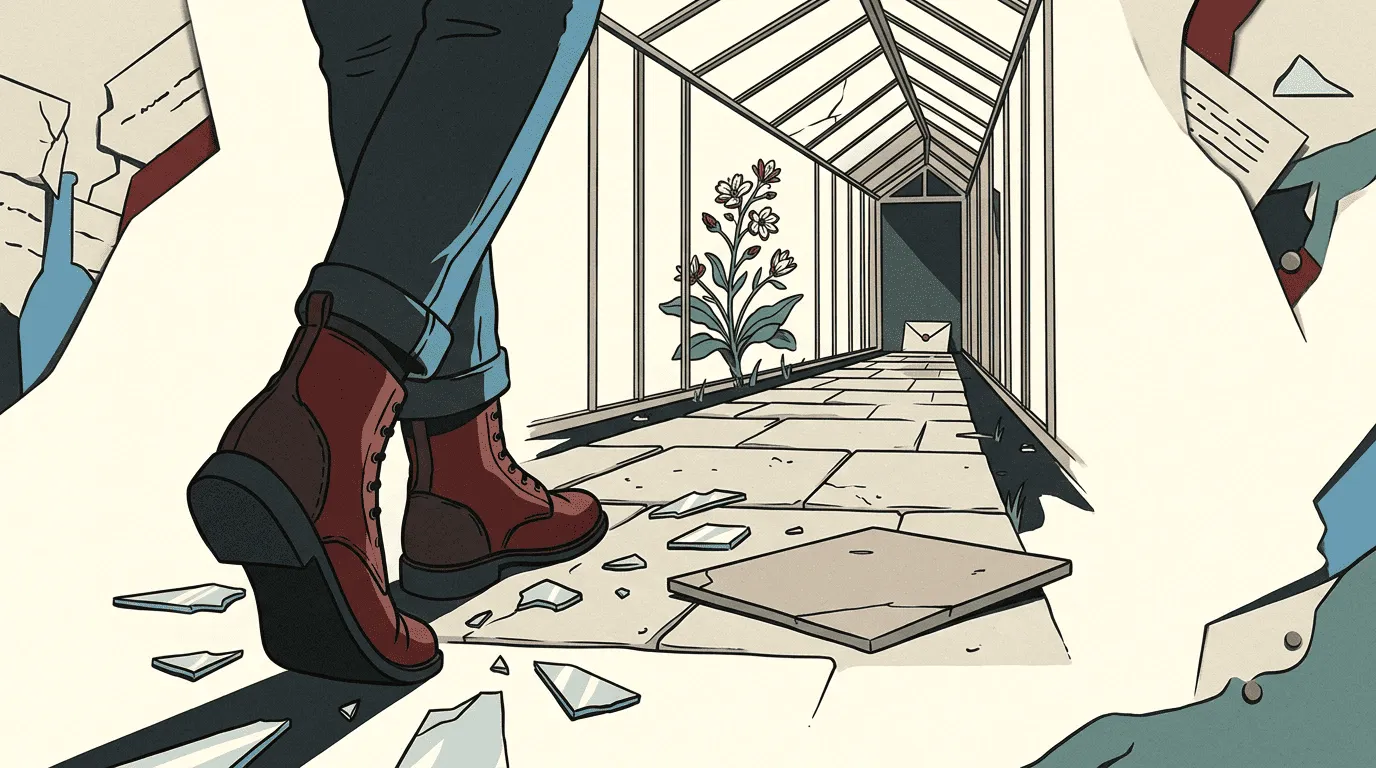
Scenario: Mara enters an abandoned greenhouse to retrieve a letter hidden beneath a loose tile.
Original:
The greenhouse exhaled its ancient, chlorophyll-stained breath around Mara, its shattered panes glittering like the teeth of a long-dead palace while vines, those green serpents of neglect, cascaded from the rafters in a luxuriant conspiracy. Beneath the cathedral of leaves, the letter waited in its secret sepulcher, a pale promise calling her through the humid mausoleum of yesterday.
Problem: The passage offers several competing images and delays the physical objective. The greenhouse becomes breath, palace, serpents, cathedral, sepulcher, and mausoleum before Mara has taken a meaningful step. The setting is loud, but the reader cannot easily track what she needs to do.
Revision choices: Keep the broken glass because it makes the floor dangerous and complicates Mara's route. Keep one detail from Mara's immediate perception: broken glass flashes beneath her boots whenever she shifts her weight, forcing her to watch her footing as she searches. Remove the image chain, name the loose tile, and let Mara's action move the scene.
Revised:
Broken glass flashed under Mara's boots whenever she shifted her weight. Vines had swallowed the benches and spread across the path toward the back wall. She found the loose tile with her boot, knelt, and pulled the letter from beneath it.
The greenhouse remains neglected and tense, while the broken glass makes Mara's route dangerous. The reader can see the route, understand the obstacle, and watch Mara retrieve the letter in the same paragraph.
Example 2: Grief that explains itself too many times
Scenario: Daniel notices that his late partner's second cup is still beside the sink.
Original:
The second cup remained beside the sink, a heartbreaking monument to the devastating, soul-crushing absence that had hollowed Daniel's entire existence. Its cold ceramic silence screamed of the love they had lost, the future that had been stolen, and the unbearable grief that now consumed every fragile chamber of his broken heart.
Problem: The cup is a strong concrete object, but the passage surrounds it with several labels for grief. "Heartbreaking," "devastating," "soul-crushing," and "unbearable" all explain the emotion without adding a new event. The metaphor of silence screaming also competes with the physical stillness of the cup.
Revision choices: Keep the cup, add one sensory detail, and give Daniel a small unfinished action. Do not name the grief repeatedly; let the interruption show it.
Revised:
Daniel reached for the second cup, then stopped. A brown ring marked the counter beneath it. He rinsed his own mug and left the other where it was.
The cup, the shared habit, and Daniel's decision to leave the second cup where it is carry the loss without naming it repeatedly.
Example 3: Lush prose that should not be flattened
Scenario: A botanist sees an impossible forest for the first time.
Original:
The trees rose in impossible whorls, their cambium folded into silver spirals like the cathedral ribs of some drowned beast, while fernlike leaves unfurled in vascular fans, each one a green flame, a paper wing, and a breathing map of a country that had never existed. The forest was beautiful beyond beauty, a jewel-box of botanical miracles that made the air itself seem to bloom.
Problem: This passage is lush, but its botanical vocabulary fits the botanist's point of view. The main issue is not density alone. The final sequence adds several comparisons after the image is already clear, and "beautiful beyond beauty" does not tell the reader what the botanist actually sees.
Revision choices: Keep "cambium," "whorls," and "vascular" because they reflect what the botanist would notice. Keep the silver spiral as the governing image. Remove the unrelated jewel-box and country comparisons, then give the botanist a precise observation.
Revised:
The trees rose in impossible whorls, their cambium folded into silver spirals. Fernlike leaves opened along the trunks in vascular fans. The pattern repeated from root to crown. It matched no growth pattern the botanist recognized. For the first time, they could not name what they were seeing.
The botanical point of view and sense of wonder remain, while the single image system makes the forest's strangeness easier to see.
💬 What to do when readers disagree
When one reader calls a passage purple, ask them to point out where the reading problem begins. Did they lose the image, stop understanding the action, feel that the emotion was being repeated, or notice a voice that did not fit the character? Naming the location and the reader effect gives you something to revise; a label alone does not.
Then separate a concrete obstruction from a taste preference. Some readers prefer transparent prose, while others want the language to be visible and musical. Neither preference settles the question by itself. Look for repeated patterns among readers who resemble your intended audience, and compare the passage with the novel's established point of view, genre, and rhythm.
If the problem is real, revise that obstruction and retest the passage. Do not rewrite the whole novel's voice because one reader dislikes an unusual sentence. Do not dismiss useful criticism as "subjective" when several readers independently stumble in the same place.
🤖 How AI-assisted writers can avoid generic purple prose
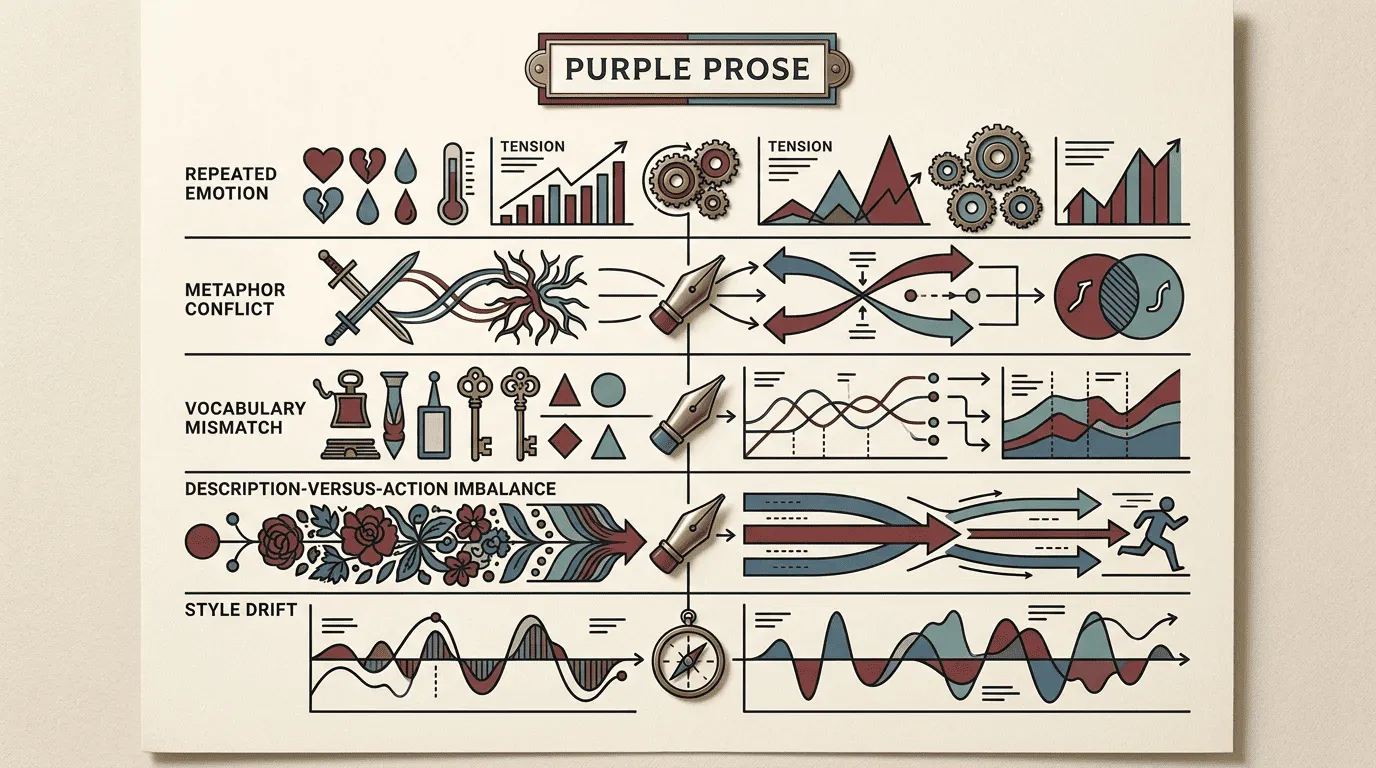
AI-assisted drafts can produce several symptoms that writers loosely call purple prose: repeated emotional language, several competing metaphors in one passage, elevated words that do not fit the character, description that replaces action or dialogue, and style drift between chapters. A vague request such as "make this more vivid" does not specify the scene's purpose, the narrator's knowledge, the vocabulary range, or how many image systems the passage can carry.
| Output symptom | Better diagnosis | Revision instruction |
|---|---|---|
| Repeated emotional language | Semantic duplication | Keep one concrete sign of the emotion |
| Several competing metaphors in one passage | Metaphor conflict | Choose one image system and cut the rest |
| Elevated words that do not fit the character | Point-of-view (POV) or vocabulary mismatch | Restate what the character knows and notices |
| Description replaces dialogue or action | Scene-balance problem | Name the next beat and the pace it needs |
| Style changes across chapters | Context or style drift | Compare the passage with the style established in the surrounding chapters |
Name the POV character, scene goal, desired pace, one image system, and the concrete detail that must remain. Ask for one revision at a time instead of "make it better." Then inspect the result with the same reader-effect checks used for human-written prose, including the loss test. If the output has become shorter but the character's attention or the scene's turn has vanished, the edit solved the wrong problem.
These symptoms do not show that a particular model setting causes purple prose; changing a setting is not a substitute for editing. Look at the result, identify the specific reader problem, and revise with the scene's purpose in mind.
📚 Keep style decisions close to the draft
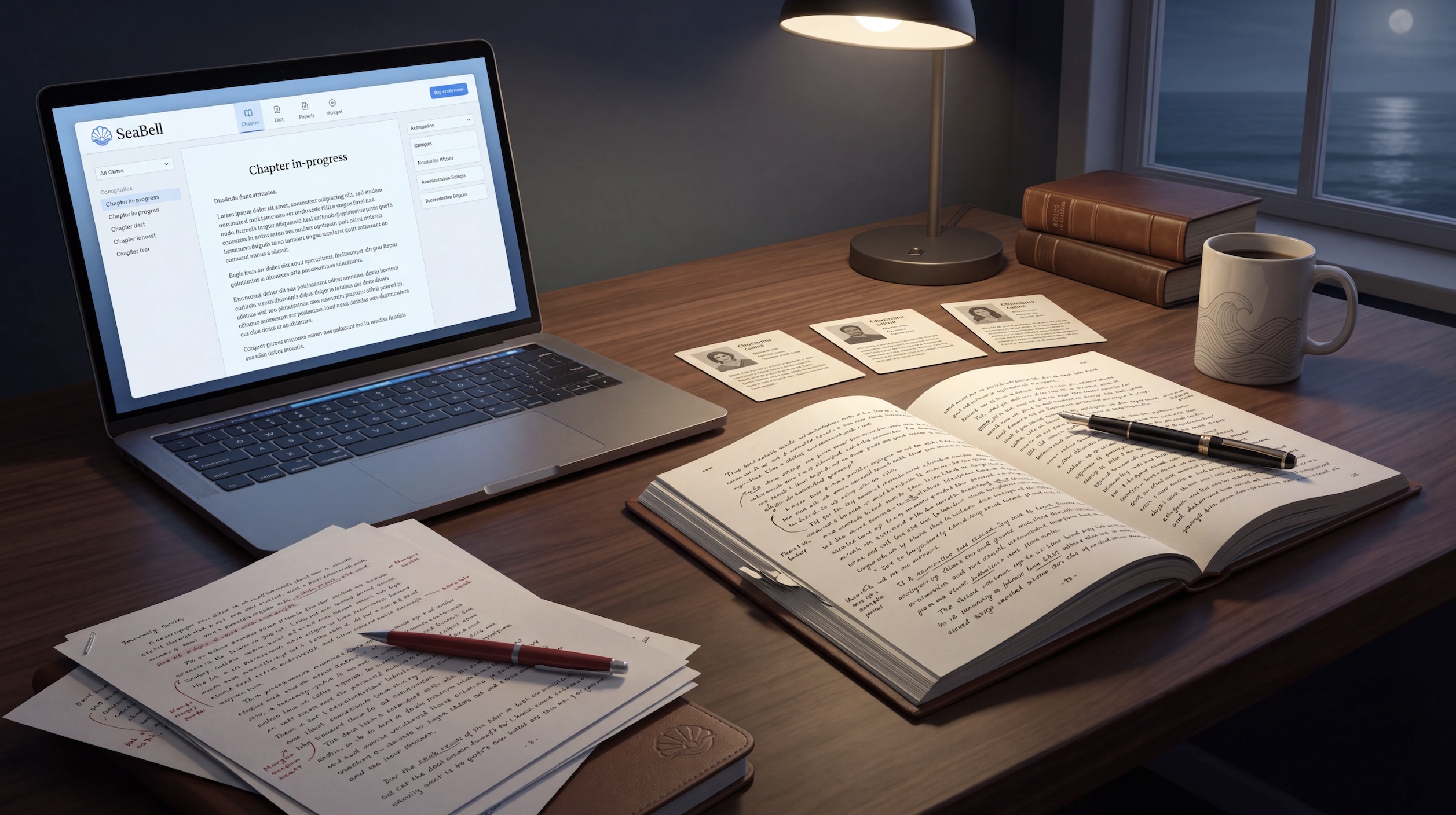
Keep the scene goal, point of view, character knowledge, and surrounding chapter visible while you edit. That context tells you whether an unusual image belongs to the voice or is only decorative. In a long project, those decisions often end up scattered across prompts, notebooks, and separate planning files.
For a short, one-off passage or a quick rewrite, an existing document is usually enough. A dedicated workspace becomes more useful when long-form context, character information, and decisions that affect several chapters are scattered across separate notes. SeaBell supports long-form fiction workflows by keeping story context, planning notes, and chapter drafts close together. It does not decide whether a line is purple; that judgment still belongs to you.
Before revising, write the passage's intended effect in one sentence beside the chapter. That gives you something concrete to protect when a later paragraph raises the same question.
✅ A final purple prose checklist
Before keeping or cutting a line, ask:
- Can I picture one coherent image?
- Is the most important detail receiving the most attention?
- Does every modifier add information?
- Is this vocabulary accurate for the point of view?
- Does the sentence density fit the scene's pace?
- Does the metaphor serve meaning rather than display?
- What becomes clearer if I cut this phrase?
- What valuable voice, rhythm, or atmosphere disappears?
The final question is the loss test: it tells you whether a clean sentence has also removed the character's way of seeing.
For a long draft, keep the relevant context close to the chapter. Start with one scene goal and one style decision, then run the loss test before accepting the edit.
❓ FAQ
What is purple prose?
Purple prose is language whose ornamentation interferes with a passage's clarity, movement, emotional accuracy, or focus. It is usually a critical label, not a fixed number of adjectives. Lyrical or ornate writing can remain effective when its imagery, rhythm, and vocabulary serve the point of view and scene.
What is an example of purple prose?
A paragraph that describes an abandoned greenhouse as a palace, a cathedral, and a mausoleum, with vines like green serpents, before the character finds a hidden letter is likely purple because the competing metaphors obscure the simple action. Keeping one setting effect and the physical objective makes the scene easier to follow without making it plain.
Is purple prose always bad?
No. The term usually identifies a failed effect, not a permanent ban on heightened language. A lush sentence may work when it belongs to the narrator, creates a deliberate pause, or carries a coherent image. It becomes a revision problem when the decoration pulls attention away from what the scene needs the reader to notice.
What is the difference between purple prose and flowery language?
"Flowery" can be a neutral description of decorative or elaborate language. "Purple prose" usually criticizes the result, especially when the language obscures meaning, repeats emotion, breaks the point of view, or slows the scene without purpose.
How do I avoid purple prose?
Start with the intended reader effect, identify the central image or action, cut repetition, choose accurate vocabulary, keep one coherent metaphor, restore movement, read aloud, and run a loss test. Preserve any rhythm, atmosphere, or character-specific perception that contributes to the passage.
Why is it called purple prose?
The term is commonly associated with the "purple patch" in Horace's Ars Poetica, an image of a showy passage that does not fit the work around it. For modern writers, the lesson is simple: vivid language still has to belong to the scene around it.
Can AI writing tools create purple prose?
AI-assisted drafts can contain repetition, conflicting metaphors, vocabulary mismatch, description imbalance, or style drift, especially when a request asks for vivid or emotional writing without specifying context. The writer still needs to identify the exact symptom and revise it with the character's point of view and the scene's purpose in mind.
Related Posts
Light Novel Writing Style: Write Fast, Addictive Fiction
Learn how to write in a light novel style with close narration, fast pacing, stronger dialogue, chapter hooks, and a practical AI-assisted workflow.
Scene Card Template for Novel Writers | SeaBell
Copy a scene card template for fiction writing, see a filled example, and turn your scene plan into a focused AI drafting brief