

Dark Romance Books: Darkness, Spice, and Boundaries | SeaBell
Two books can both be sold as dark romance and still give you very different nights of reading. One may follow a devoted couple through a violent criminal world with almost no on-page heat. Another may be explicit early but emotionally softer than the label suggests.
That is why a plain list of dark romance books can be less helpful than it looks. The question is: what kind of darkness do you want, how much spice do you want with it, and where are your hard boundaries?
Use this guide as a reader selector before you open a recommendation page, tag page, or book detail page. It will help you separate darkness from spice, read subtype promises more carefully, build a short boundary card, and decide whether you want a standalone, a series, a happily-ever-after (HEA) ending, a happy-for-now (HFN) ending, or something closer to thriller territory. Once those choices are clear, browsing stops feeling like a random scroll through other people’s extremes.
🕯 What “Dark Romance” Actually Means
Dark romance is a romance subgenre where the story’s intensity comes from darker material: the world around the couple, the couple’s own dynamic, taboo pressure, danger, psychological tension, violence, or an atmosphere of dread. The label is subjective because readers do not use “dark” to mean one single thing.
When people call a book dark, they may mean the setting, relationship, premise, tone, or explicit content. A mafia plot, a gothic house, a coercive relationship, and a violent dystopia can sit near the same shelf while asking very different things from the reader.
A dark romance guide also needs to respect the romance part of the label. Many readers still expect some form of emotional payoff, HEA, or HFN. Some edge cases feel closer to thriller, horror, or tragedy with romantic elements. That does not make them automatically bad books, but it does change the promise you are signing up for.
Fictional interest does not equal real-life endorsement. The useful question is whether a book’s premise, relationship structure, warnings, and ending match the experience you actually want.
Dark Setting vs. Dark Relationship
A story about a loving couple surviving a brutal dystopia may have a dark setting but a comparatively stable relationship. The danger comes from the world around them: institutions, survival pressure, war, monsters, or social collapse.
A story set in a polished modern city may look less dark on the surface, yet become much darker if the relationship includes stalking, manipulation, captivity, revenge, or pressure that crosses consent. In that case, the setting is not the issue; the relationship dynamic is.
A reader who wants danger around the couple may not want danger inside the couple. Before choosing a title, ask where its darkness comes from.
🌶 Darkness Is Not the Same as Spice
Spice describes how explicit the sexual content is. Darkness describes the nature and intensity of the plot, relationship material, power imbalance, danger, or psychological pressure. They can overlap, but one does not prove the other.
A spicy book can be emotionally light, consensual, funny, or low-conflict. A low-spice book can still be deeply dark if the plot includes violence, obsession, coercion, fear, or moral collapse. If a recommendation only says “five-spice” or “very spicy,” it has not told you whether the book contains the kind of darkness you want—or the kind you do not want.
Before treating a title as a match, separate the two axes:
| Lower Spice | Higher Spice | |
|---|---|---|
| Lower Relationship Darkness | Gothic tension or restrained romance in a dangerous world | Explicit romance with mostly consensual dynamics |
| Higher Relationship Darkness | Psychological obsession, stalking, coercion, violence, or captivity with limited explicit content | Explicit content plus coercive, violent, taboo, or extreme relationship dynamics |
The matrix is not a moral rating. It is a cleaner way to ask what you are actually looking for: a dangerous world, a dangerous relationship, high explicitness, or some combination of those things.
A common mismatch happens when “dark and spicy” really means only one of the two. Split the axes before choosing; neither one tells you whether the book is well written.
🧭 Choose Your Intensity and Boundary Line
Start with a few clear fields: the darkness you want, the relationship structure you want, your hard no list, and the kind of ending or commitment you are willing to accept.
Step 1: Name the Darkness You Want
Start with the source of darkness, not the marketing label. You can sort possible sources into three loose groups:
- Relationship darkness: stalking or obsession, captivity, coercion, dubious-consent (dubcon) or nonconsensual (noncon) themes, psychological manipulation, bullying, humiliation, revenge, or power imbalance
- World or plot darkness: violence or gore, criminal or mafia setting, dystopian survival pressure, horror elements, thriller stakes, danger around the couple
- Tone or taboo darkness: gothic isolation, dread, secrecy, forbidden relationship, taboo pressure, moral grey areas
“I want dark romance” can lead anywhere. “I want a gothic romance with secrets and obsession, but no captivity or graphic violence” gives you a useful search phrase for a recommendation thread or platform tag page.
Step 2: Name the Relationship Structure You Want
Relationship structure changes the entire reading experience. Check whether the story is:
- Monogamous
- M/M (male/male), F/F (female/female), or another pairing structure
- Why-choose / reverse harem
- Polyamorous
- Built around a love triangle
- Built around cheating-centered tension
- Centered on one couple across a series
- Following interconnected couples across separate books
No-cheating expectations belong on your boundary card, not only in the structure box. A book can be monogamous and still use cheating as conflict; another can be why-choose and still handle consent and emotional balance clearly. In dark romance, the structure often shapes jealousy, power dynamics, consent questions, and ending expectations, so name the structure before you browse.
Step 3: Name Hard Boundaries
If you are searching for dark romance books with trigger warnings, start by defining what a hard boundary means for you instead of treating every warning list as interchangeable.
A hard boundary is not the same as a preference. A preference is something you would rather have. A hard boundary is something you do not want to read, even if the book is popular or beautifully written.
A simple boundary card can include five fields:
- Want: the material you are actively seeking
- Okay with: material you can read if handled well
- Check first: material that depends on context
- Hard no: material you do not want in the book
- Ending requirement: HEA, HFN, no cliffhanger, or another requirement
For example:
| Boundary Field | Example Entry |
|---|---|
| Want | Gothic isolation, obsession, morally grey lead |
| Okay with | Violence off-page, criminal world, high angst |
| Check first | Captivity, humiliation, revenge plot |
| Hard no | Cheating, graphic gore, noncon |
| Ending requirement | HFN or HEA, no unresolved cliffhanger |
Example only — your card will look different.
Use the card while scanning. Read the synopsis, then check author or publisher warnings when they exist. If a hard no is still unclear after checking official information and relevant reader discussion, skip the title for now.
Keep the card short enough to use in the moment. Its job is not to make every choice risk-free; it is to keep your own filters close while browsing.
Step 4: Check the Ending and Commitment
Before you start a dark romance book, check the commitment you are making:
- Does it have an HEA or HFN?
- Is the ending tragic, ambiguous, or unresolved?
- Is it a standalone?
- Is it an interconnected standalone?
- Is it part of a series following the same couple?
- Does it end on a cliffhanger?
- Do later books continue the same emotional arc or shift to new characters?
Some readers are happy with a cliffhanger or ambiguous ending; others are not. A title can have the right trope and still be a poor match if its ending or series structure breaks your reading contract.
📚 Pick a Dark Romance Subtype
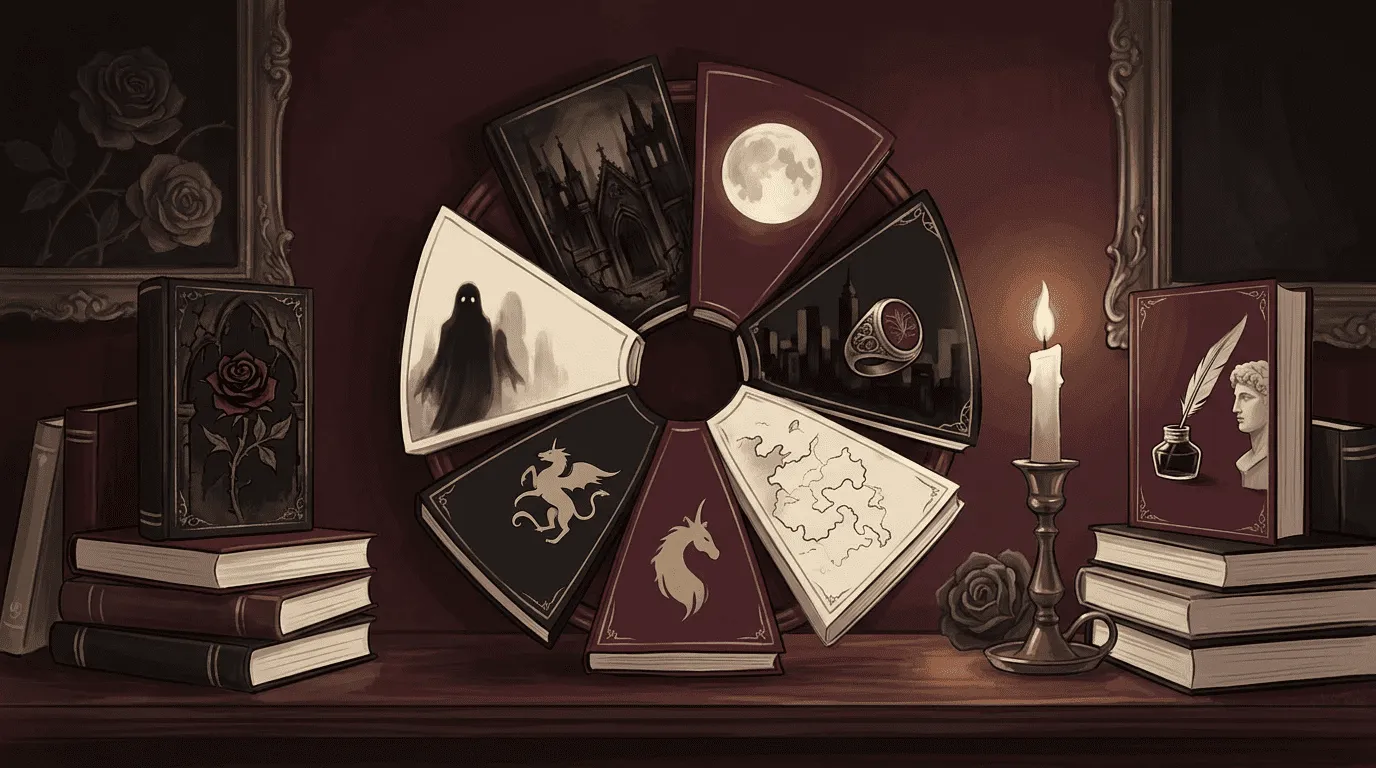
A subtype is a first clue, not a verdict. It gives you a faster way to read a synopsis: what kind of danger is being offered, and what kind of boundary question should you ask next?
| Subtype | Reader Promise | Fit / Boundary Question to Ask |
|---|---|---|
| Mafia | Criminal power, loyalty, danger, possession, family pressure | Do you want danger from the criminal world, from the relationship, or both? Check violence, coercion, captivity, family pressure, and cheating expectations. |
| Dark fantasy | Magic, monsters, courts, curses, high stakes | Are you here for world danger, a power-imbalanced romance, or a long fantasy arc? Check species or power imbalance, world violence, and series commitment. |
| Dystopian | Survival pressure, unequal systems, restricted autonomy | Do bleak systems make the romance more compelling for you, or do they drain the emotional payoff? Check institutional violence, agency, and ending promise. |
| Paranormal | Vampires, werewolves, supernatural bonds, predator/prey tension | Is the bond or creature type your main filter? Check mate bonds, transformation, species power, consent, and pack or clan rules. |
| Gothic | Atmosphere, secrets, isolation, obsession, dread | Do you want mood and psychological pressure more than explicit escalation? Check pacing, horror elements, ambiguity, and how much obsession sits inside the relationship. |
| Dark academia | Prestige, secrecy, intellectual rivalry, and obsession inside elite or campus settings | Is the appeal campus atmosphere, institutional secrecy, or psychological pressure? Check age, role and power dynamics, bullying, coercion, and whether the romance is central or a side thread. |
| Bully / college | Social power, rivalry, humiliation, revenge, status games | Is the appeal controlled power reversal, genuine growth, or harsh conflict? Check bullying severity, consent, the wider story context, and character development. |
| Taboo / forbidden | Transgression, secrecy, high emotional risk | What exactly is forbidden, and is that boundary one you want in fiction? Check the relationship, power imbalance, and legal or ethical context. |
| Why-choose / reverse harem | Multiple-partner relationship structure, group dynamics | Do you want group emotional balance or mainly possessive intensity? Check consent, jealousy, pairing structure, series length, and whether each bond has weight. |
Let the subtype point you toward questions, not replace them. A “mafia” book may draw most of its pressure from captivity; a “gothic” book may be a slow psychological mystery; a “paranormal” book may hinge on a mate-bond dynamic.
Paranormal readers should also narrow the creature or bond type. Vampire romance often brings immortality, hunger, danger, and predator imagery. Werewolf romance often brings pack rules, mate bonds, territorial conflict, and transformation. If the creature or bond type is already your main filter, move into a focused vampire romance books or werewolf romance books guide; if not, stay with the broader selector until you know what kind of darkness you want.
The strongest subtype choice usually comes from pairing the promise with a boundary question. “I want dark paranormal” is broad. “I want a werewolf bond story with high possessiveness, medium spice, no cheating, and a guaranteed HFN” is much easier to search for.
✅ Quick Picker: Describe the Book You Want
Before you browse, try to finish this sentence:
I want a ______ dark romance with ______ darkness, ______ spice, ______ relationship structure, no ______, a ______ ending, and ______ series commitment.
A finished version might look like this:
I want a gothic dark romance with moderate psychological darkness, low-to-medium spice, a monogamous relationship, no graphic gore, an HFN ending, and standalone commitment.
Or:
I want a paranormal dark romance with high relationship tension, higher spice, a fated-mate structure, no cheating, an HEA, and no major cliffhanger.
Use this quick picker when scanning a synopsis, recommendation thread, or platform tag page:
| Field | Scan Question | If the Page Does Not Say |
|---|---|---|
| Subtype | What promise is this making: mafia, gothic, paranormal, dark fantasy, dark academia, dystopian, bully, taboo, or something else? | Do not assume the cover or tag tells the whole story; read the synopsis for the actual conflict. |
| Darkness source | Is the intensity from the setting, relationship, violence, obsession, coercion, taboo, or horror atmosphere? | Treat “dark” as incomplete until the source is clear. |
| Darkness intensity | Does the page suggest mild, moderate, high, or extreme material? | Look for author warnings, official descriptions, and reader comments before choosing. |
| Spice level | Is the heat low, medium, high, or explicit? | Do not use spice level as a shortcut for darkness. |
| Relationship structure | Is it monogamous, MM/FF, why-choose, polyamory, love triangle, or another structure? | Verify before reading if structure changes your enjoyment. |
| Hard boundaries | Are your hard no items clearly absent, present, or unclear? | If a hard no is unclear, do not treat the recommendation as complete. |
| Ending | Does it promise HEA, HFN, tragedy, ambiguity, or a cliffhanger? | Check series information or official blurbs before committing. |
| Series commitment | Is it standalone, interconnected standalone, or a same-couple series? | Avoid starting blind if cliffhangers frustrate you. |
| Language | Is the story in English or another language you want to read? | Especially on mixed-language platforms, check the individual story page. |
A dark premise is not a quality score. Look for goals beyond obsession, agency inside the chosen premise, prose that can carry the weight, and escalation that creates a choice, cost, reversal, or consequence.
🔎 Dark Romance Books to Try by Reading Mood
Start with the mood you want, then check how much reading commitment it requires. The print books below cover dark comedy, obsession, and masked-stalker banter; the SeaBell stories range from short revenge fiction to a completed 115-chapter fantasy romance.
Popular Print Books
- Butcher & Blackbird by Brynne Weaver: Try this when you want dark romance with a comic streak rather than an entirely grim tone. The publisher describes it as a friends-to-lovers dark romantic comedy about rival murderers who target serial killers. Its paperback is the first of three books in the Ruinous Love Trilogy, so it suits readers who are open to a connected series.
- Haunting Adeline by H. D. Carlton: Choose this for an obsession-and-stalking premise. It opens the two-book Cat & Mouse Duet and ends on a cliffhanger. The publisher lists it as a New York Times and USA Today bestseller and directs readers to the author’s website for content warnings, which is worth doing before committing to the duet.
- Lights Out by Navessa Allen: Pick this for a masked-stalker setup mixed with banter and dark comedy. Zando identifies it as book one in the Into Darkness series, a #1 New York Times bestseller with more than three million copies sold, and warns that some themes and scenes may be disturbing. The publisher points readers to the content warnings at the beginning of the book.
Popular SeaBell Stories
- Too Late, Alpha: The Secret Heiress by RoseThorn: Choose this for a fast werewolf reversal built around a public betrayal and a hidden identity. It is rated 4.6/5 by 17 readers and shows 3.5 million on SeaBell’s popularity counter. It is ongoing at nine chapters rather than a finished read.
- Claimed by the Merman King by CrimsonDaoist: Choose this for a longer, completed dark-fantasy romance. A marine researcher is pulled into the hidden ocean kingdom of a ruthless merman king. The story runs 115 chapters and 119,300 words, with a 4.7/5 rating from six readers and about 265,000 on SeaBell’s popularity counter.
- Claimed by the Slayer by NovelNymph: Choose this for a shorter completed revenge story about a hunter who discovers that the werewolf she blamed for her family’s death may not be the real monster. It has 17 chapters, a 5.0/5 rating from three readers, and about 143,000 on SeaBell’s popularity counter. The score is high, but the sample is small.
- The Billionaire Bully Hired Me by Apex0032: Choose this for a contemporary power-imbalance story. An architecture graduate becomes a live-in tutor in the household of the billionaire who once derailed her future, where a family mystery complicates an unwanted attraction. It is ongoing at 15 chapters, with a 4.8/5 rating from five readers and about 104,000 on SeaBell’s popularity counter.
SeaBell ratings and availability: These figures reflect July 20, 2026 and may change. A high score based on three or five ratings is still a small sample. SeaBell does not show a universal content-warning field, so treat spice, ending, age suitability, and specific triggers as unknown unless the individual story explicitly states them.
For more online fiction, browse SeaBell’s Dark Romance shelf or continue through its online reading platform, using the selector above on each title rather than treating the tag as a complete boundary check.
❓ FAQ
What are dark romance books?
Dark romance books are romance stories shaped by darker plot material, relationship dynamics, atmosphere, taboo, psychological pressure, violence, or danger. The definition varies by reader, so the safest way to choose is to identify where the darkness comes from: the setting, the relationship, the premise, or the emotional tone.
Is dark romance the same as spicy romance?
No. Spice describes on-page sexual explicitness; darkness describes the intensity and nature of the plot or relationship material. A book can be spicy but not very dark, or dark with limited explicit content.
What is a good dark romance book for beginners?
There is no universal beginner title for every reader. A better beginner choice usually has moderate darkness, clear author or publisher warnings, a known HEA or HFN, and no conflict with your hard boundaries. If a recommendation sounds exciting but you cannot tell whether it includes your hard no items, it is not a beginner-friendly choice for you yet.
What should I check before reading a dark romance book?
Check the darkness source, spice level, relationship structure, content warnings when available, HEA/HFN status, standalone or series commitment, cliffhanger risk, and language. For intense material, also check the specific issue behind vague labels like “twisted,” “forbidden,” “dangerous,” or “unhinged,” because those words can hide very different reading experiences.
Do all dark romance books have a happy ending?
No. Many romance readers expect an HEA or HFN, but some dark-romance-adjacent stories lean closer to thriller, horror, tragedy, or ambiguity. Verify the individual title if the ending matters to you.
Are dark romance books suitable for young readers?
Do not assume suitability from the genre label or a platform tag. Many dark romance books include mature, explicit, violent, coercive, or psychologically intense material. Readers, parents, or guardians should check explicit sexual content, violence, coercive dynamics, maturity labels, author or publisher warnings, platform labels, and the individual book description before deciding.
Why do some readers enjoy dark romance?
Some readers enjoy dark romance because fiction lets them explore danger, taboo, high stakes, intense devotion, moral tension, or controlled fear at a distance. That distance matters: the appeal is often the contained story experience, not approval of harmful real-life dynamics. Reader motivations are not universal and should not be turned into gender, trauma, or therapy claims.
🖤 Final Takeaway
The best way to choose dark romance books is not to chase the darkest title or the longest recommendation list. Start by separating darkness from spice. Then choose your subtype, name your hard boundaries, check the relationship structure, and confirm the ending or series commitment.
Your final reading sentence should be clear enough to guide the search:
I want a [subtype] story with [darkness level], [spice level], [relationship structure], no [hard boundaries], a [HEA/HFN] ending, and [standalone/series] commitment.
Once you can say that, a tag page, recommendation thread, or online reading platform becomes much more useful. You are no longer asking the internet for “dark romance.” You are looking for the version of dark romance you actually want to read.
Related Posts

Vampire Romance Books: Dark, Spicy, Gothic Reading Guide
Choose vampire romance books by mood, trope, heat level, series format, Twilight-style restraint, online stories, and writing ideas.
Werewolf Romance Books to Read: Alpha, Luna & Fated Mate Picks
Find werewolf romance books with alpha tension, fated mates, rejected lunas, secret mate drama, and second-chance regret on SeaBell.