
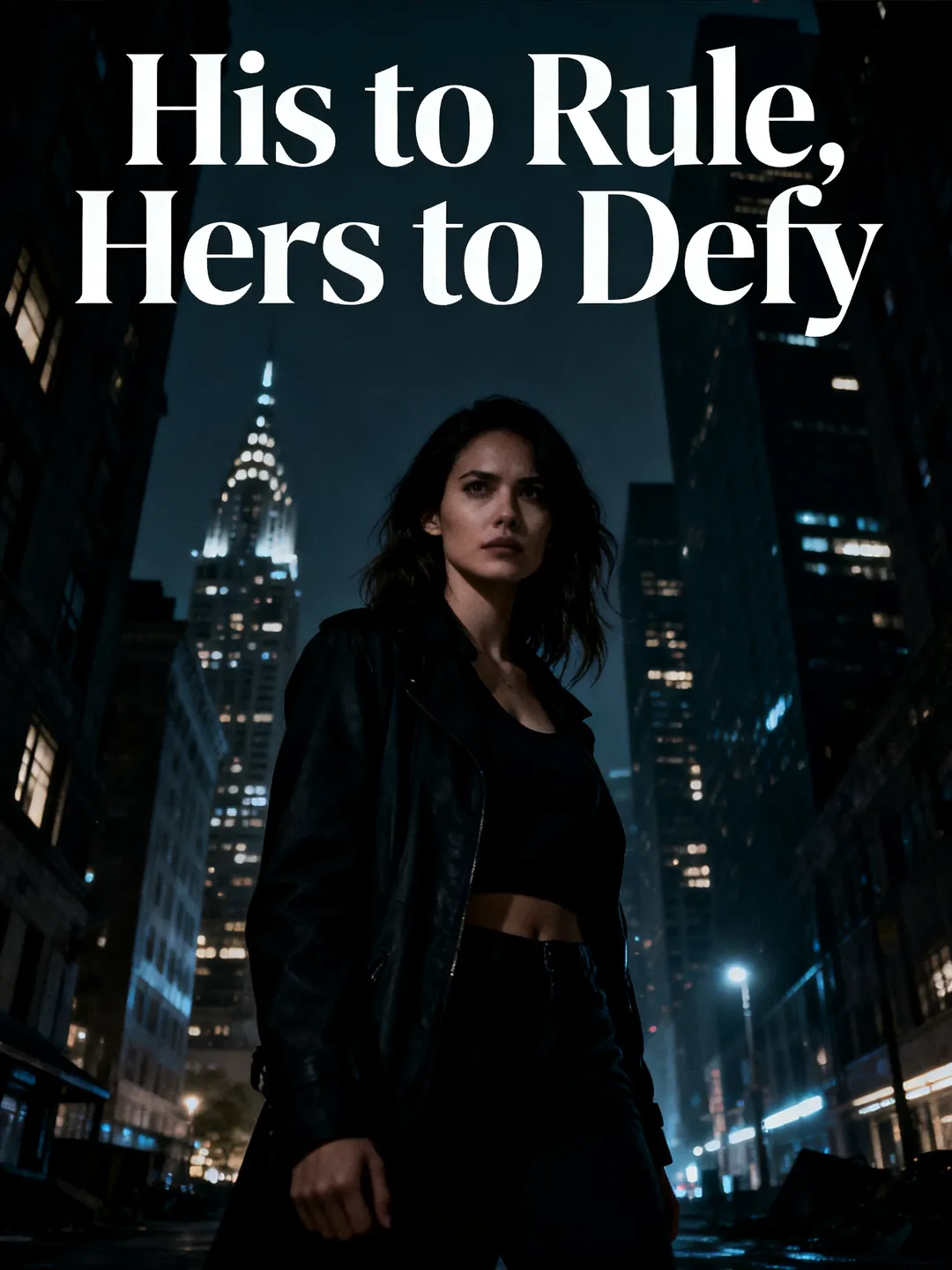
His to Rule, Hers to Defy
简介
I was a ghost in the city's underbelly, until I crashed into the secrets of its three kings.
They are the masters of Hawthorne Holdings—wolves in Milan blazers, weaving a web of power and desire. Overnight, I became their pawn, their captive prize.
They want to tame me, own me, and break me. But they don't know: when prey stares into the abyss, the abyss yearns to be conquered. In this deadly game of power and lust, to fall is to be reborn.
章节1
I always regret my life choices the morning after.
Two eight-hour shifts back-to-back at The Lantern Society in midtown Detroit rip my soul out through my sneakers. The soles are still sticky with last night’s gin fizz and the ghost of someone’s glitter lip-gloss; every step from the club to the bus, from the bus to the stairwell, from the stairwell to this sagging mattress feels like I’m peeling the floor off with me.
I press my palms into my eye sockets and rub until sparks fly—tiny supernovas that burst against the black of my skull. Just a little longer. The ceiling fan wobbles overhead, doing lazy CPR on the air, but the sauna-like heat of this third-floor walk-up keeps rising. My T-shirt—black cotton soaked gray—clings like guilt.
A soft notification chime chirps from somewhere under the duvet. Probably a dating-app match I’ll never answer. The phone’s lost in the bedding the same way I’m lost in the city: buried, vibrating, desperate to be found. I’m already calculating how soon I can crawl back into this bed without feeling like a total loser. If I fall asleep by four, I can still log six hours before the next shift and pretend that counts as a life.
Detroit summers with no real AC can turn a third-floor walk-up into a pizza oven. The sun outside is a bully; it pins the brick walls in a headlock until they sweat out the night’s sins. I yank the thick blackout curtains aside; 2 p.m. sunlight stabs me in the retinas. The window frame is painted shut, so I can’t even shove the sash up and beg the breeze for mercy.
Normally I’d be dead to the world right now, but thanks to last night’s tequila and my garbage decisions, my brain’s firing on every cylinder of shame. I keep replaying the moment I let that Wall-Street wannabe in the tailored Milan blazer buy me a third shot—how he laughed when I joked that bourbon was cheaper than therapy, how his laugh turned to a wet click in my ear when I leaned in too close. I told myself I’d quit drinking after the last time, the night I woke up on the fire escape with one shoe and no memory. Promises are just tattoos you give yourself: painful, permanent, and eventually faded.
Bad life choices. Maybe in another life I picked the college track instead of the nightlife graveyard shift. I picture the admission packet from Princeton Media that arrived two Aprils ago, the thick envelope I never opened because I was too busy counting tip money to see past tomorrow. The letter is probably still wedged behind the cracked baseboard where I stuffed it, a paper corpse of the girl I could have been.
I shove the bedroom door open and find Brielle—my roommate, partner-in-crime, and unofficial therapist—sprawled on the couch. She’s wearing my stolen vintage biker coat like a blanket, sleeves rolled to the elbow, the frayed lining glittering with last night’s confetti. One combat boot dangles off her foot, tapping the air to whatever song she’s humming through her split lip.
We’ve split this shoebox in Corktown for two years. She’s the only person who knows exactly how broken I am and still sticks around. Her own damage is quieter—like a watercolor bleeding at the edges—but it matches mine in the way two jagged puzzle pieces somehow lock.
“Morning, corpse,” she says without looking up from her phone. Her voice is smoke and honey.
“It’s afternoon,” I croak. My tongue feels coated in sawdust and regret.
“Technicality.” She pats the couch cushion. There’s a half-eaten slice of cold pizza on the coffee table, the cheese congealed into plastic. The remote’s lost between couch cushions the same way we lose nights—slipping deeper until only the corner of a leather strap or the glint of a stud gives us away.
I collapse beside her. The springs protest; the couch exhales a sigh that smells like old fries and sandalwood incense. Brielle doesn’t flinch when my head lands on her shoulder. She just keeps scrolling, thumb flicking like she’s shooing away reality one post at a time.
“You smell like a distillery,” she informs me.
“Distillery smells better.”
“True. Distilleries don’t make you want to die.” She taps my forehead with her phone. “How many shots did tall-and-venal pour down you?”
“Lost count after he mentioned his yacht.” I close my eyes. The room tilts, a slow carousel of regrets. “He said it’s docked in Lisbon. Who keeps a yacht in Lisbon?”
“People who want to sound like they have answers to questions nobody asked.” She shifts, biker coat creaking. “You didn’t…”
“No hook-up. Just booze. And maybe a little snow.” The admission slips out before I can cage it.
Brielle’s sigh is soft, but I feel it everywhere I’m bruised. “Claire, your heart’s already racing like a busted track. You keep shoveling powder on that fire, you’ll burn the rails.”
“I know.” The words taste like pennies.
She flicks to a new app—some meditation thing with ocean sounds—and holds the speaker between us. Fake waves crash against fake shores. It’s supposed to be soothing, but all I hear is the echo of last night’s bassline still throbbing in my bones.
“Listen,” she says, “I pulled the early shift at the café. You can crash here without the landlord breathing down your neck. I already told him you had food poisoning.”
“You’re an angel with a cracked halo.”
“Cracked halos let the light through better.” She stands, coat falling open to reveal yesterday’s sequin top, threads dangling like tiny silver scars. “There’s coconut water in the fridge and two aspirin on the sill. Try not to die before I get back.”
I watch her braid her hair in the cracked mirror by the door. The reflection shows three versions of her—one real, two ghosts—until she slings her messenger bag across her chest and blocks them out. “Text if you need bail,” she adds, then slips into the hallway, boots clomping a rhythm that fades like the last patron’s applause.
The apartment settles into its midday hush: radiator ticking, neighbor’s dog barking two floors down, somewhere a siren weaving through Corktown’s narrow arteries. I stretch my legs until my toes nudge the pizza box. A single slice stares up at me like a greasy eye. My stomach flips, but I force down a bite—carbs to soak up the poison, penance in pepperoni.
My phone buzzes again from under the duvet. I trudge back to the bedroom, floorboards groaning like old men at a bar. The screen blinks with a new message:
**Julian “Jett” Hawthorne sent you a badge.**
I blink. The name is familiar in the way déjà vu feels like a memory you borrowed from someone else. Jett—dark hair, leather cuffs, eyes the color of wet concrete—was at the club last night, leaning against the bar like he owned the city’s skyline. He’d bought a round for the bartenders, tipped in hundred-dollar petals. I’d avoided him the way you avoid staring at an eclipse: look too long and you go blind.
I tap the notification. A digital card unfolds:
**Hawthorne Holdings**
**Permanent Backstage Badge**
**The Lantern Society – Basement Level**
**Valid Indefinitely**
No message. Just the badge, glowing onscreen like a tiny neon promise. My pulse stutters. Basement level is staff-only, a maze of storage cages and circuit breakers I’ve only glimpsed when the manager shooed me away from the utility sink.
I should delete it. Pretend it never arrived. Instead I screenshot it and send it to Brielle:
**Me:** Explain this.
**Brielle (typing):** Either you’re promoted or kidnapped. 50/50.
**Me:** Not funny.
**Brielle:** Jett doesn’t hand out plastic unless he wants something. Be careful, rockstar.
I set the phone down, but the badge lingers on retina burn. The room feels suddenly smaller, the heat thicker. I imagine the basement—cool concrete, humming freezers, maybe a private lounge behind an unmarked door where the city’s shadows go to unwind. The thought is a cold coin sliding down my throat.
I shower until the water runs lukewarm, steam fogging the cracked mirror. My reflection is a stranger: cheekbones sharp enough to cut glass, eyes ringed with last night’s kohl, hair the color of spilled bourbon. I scrub until the glitter swirls down the drain, but the shame sticks like gum to a shoe.
Wrapped in a towel, I stand at the window. Down on the street, a midnight Navigator idles at the curb, engine purring like a big cat. Tinted windows reflect the sky, giving nothing back. I tell myself it’s coincidence—rich guys love their imported SUVs—but the timing prickles my skin.
My phone buzzes again. This time it’s a calendar invite:
**Tonight, 3 a.m. – Basement. Bring the badge.**
No sender name. Just a location pin dropped at The Lantern Society. My thumb hovers over decline, but something roots me. Maybe it’s the same recklessness that made me take the third shot. Maybe it’s the girl inside me who never opened the Princeton envelope, hungry for any door that opens, even one that leads underground.
I accept the invite. The screen flashes once, then the event vanishes, erased like a magician’s scarf. My heartbeat is a drumline in my chest.
I dress in black—jeans, tank, the biker coat Brielle left behind. The leather smells of her coconut shampoo and the sandalwood incense we burn to hide the mildew. I pocket the two aspirin, chase them with flat coconut water, and tuck the phone into my boot where the club pickpockets never think to reach.
Before I leave, I scrawl a note on the pizza box:
**B—Gone to earn rent or wind up in river. If second, delete my browser history. Love you more than caffeine.—C**
I tape the note to the fridge, then slip out, locking the door with the key that always sticks. The hallway smells of boiled hotdogs and someone’s laundry day. Each step down the stairs feels like descending into a darker shade of evening, even though the sun’s still high enough to scorch.
Outside, the Navigator is gone. In its place, heat ripples off the asphalt like transparent ghosts. I start walking toward midtown, the badge a phantom weight in my pocket, the city’s pulse syncing with mine.
Maybe this is another garbage decision. Maybe tonight I’ll finally outrun the shame, or drown it in whatever basement secrets Jett Hawthorne keeps behind fingerprint vaults and laser pylons. Either way, the sun’s already sinking behind the skyline, and I’ve never been good at standing still.
Just a little longer, I tell myself, and step into the current of the afternoon, the sidewalk hot enough to fry the regret right off my soles.
“Hey, babe. Welcome back to the land of the living,” Brielle drawls, blowing a perfect smoke ring toward the cracked plaster ceiling of our shoe-box apartment. The ring wobbles, thins, and finally dissolves above the sagging bulb that’s been flickering for weeks. She lounges on the windowsill like a cat that’s claimed the only sunny spot in Detroit, one boot heel drumming against the radiator that never heats.
Ash from her cigarette drifts down in slow motion, a gray snowflake that lands on the one nice thing I own—my classic biker coat draped over the back of a thrift-store chair. The ember burns a pin-hole through the leather before I can swipe it away. I wince; the coat used to be Pops’s, back when he still rode, back before the cancer turned his lungs into wet gravel. Now it smells equally of sandalwood, motor oil, and yesterday’s bourbon—my personal holy trinity.
“Gotta have my beauty sleep,” I croak, voice still half-buried under the pillow I crushed against my face all night. My tongue feels like it’s wearing a sweater. I sit up on the couch-bed, sheet tangled around my hips, and squint against the anemic sunrise pushing through nicotine-stained curtains.
Brielle winks, one of her giant fake lashes fluttering like a drunk butterfly trying to escape a jar. “Beauty? Honey, you passed beauty and crashed straight into ‘hot mess’ somewhere around hour three of your snore-atorio.” She taps the cigarette into a chipped ceramic mug painted with the logo of the dive bar we both slave at—The Rusted Lantern. The mug’s handle broke off last month; now it’s the official ashtray.
I flip her off, but my lips twitch. She’s the only person alive who can tease me today and live to talk about it. Today’s always my least favorite day of the year—Pops’s birthday. Were. Would-have-been. The grammar of grief is a foreign language I never master. If he’d lived, he’d be fifty-eight. Instead, he’s forever fifty-one, frozen in the photograph taped beside the microwave, him and me on his old Dyna, both of us grinning like tomorrow was a promise it turned out he couldn’t keep.
Brielle flicks a neon-red strand of hair over her shoulder—she re-dyes it every payday, color brighter than the neon OPEN sign downstairs—and heads for the door. Her backpack drags on one shoulder, stuffed with her bartending kit: bottle opener shaped like a shark, lucky Zippo, roll of singles for making change when the register jams. We both bartend at the same dive, pulling the same long, crap hours, so she gets it. She knows I’ll spend the day swallowing memories like broken glass unless I keep moving.
“Thanks,” I force out. The word tastes bitter, but it’s the closest I can get to telling her she’s the duct tape holding my cracked pieces together. She pauses, hand on the knob, and for a second the mask slips—no mascara, no smirk, just a twenty-seven-year-old woman who’s seen too many sunrise walks of shame. Then the smirk snaps back into place.
This time my smile is real as I wave her off. Hot coffee and a long shower are calling my name, promising to scrub the film of nightmares off my skin. Maybe I’ll even crank the water until it scalds, turn my back into lobster red, pretend the burn is from a day at the beach instead of the usual phantom chill that follows me everywhere.
“When you get there, we’ll sneak away and have a bathroom-vape break,” she grins, already halfway into the hallway that smells of boiled cabbage and someone else’s weed. The landlord swears the smell will dissipate once the weather turns; I swear he’s been saying that for three winters straight.
“I’ll be right behind you,” I call, just as a shadow darkens the doorway. The hallway bulb pops, plunging the narrow corridor into sudden dusk. My smile drops like a stone into a well. Brielle’s cigarette hangs mid-air, forgotten, a gray comma punctuating the silence.
My heart skips—then double-times it, drum solo against my ribs. It takes a second, maybe two, to register the hulking guy blocking our only exit. He’s built like the brick wall Pops and I used to drive past on the way to Tigers games—wide, immovable, tagged with graffiti that might have been art once. Only this wall breathes, and his fists look capable of turning my already-broken world into powder.
He steps inside without invitation, ducking under the frame. Leather jacket creaks like old floorboards. The hallway light flickers back to life behind him, haloing a shaved head scarred by what looks like a knife track running from temple to jaw. Sunglasses indoors, because of course. I can’t see his eyes, but I feel them inventorying the room: second-hand furniture, cracked linoleum, the single dying succulent on the windowsill Brielle insists will revive if we play it enough Motown.
“What the fuck, man? Ever heard of personal space?” Brielle snaps, recovering first. She plants herself between me and the intruder, five-foot-nothing of nicotine and nerve. Smoke curls from her nostrils like a dragon who’s misplaced its castle. “We’re closed for breakfast, try the diner two blocks down.”
The guy doesn’t flinch. His boots—steel-toed, scarred—scrape closer. I notice the leather of his jacket is too smooth, too new, out of place in our thrift-store universe. No patches, no pins, just a single embossed emblem on the chest: a stylized hawk clutching a gear. Hawthorne Holdings, my brain supplies, dredging the logo from late-night doom-scrolls about the city’s redevelopment wars. My stomach sinks. If Hawthorne is here, this isn’t random.
I swing my legs off the couch-bed, sheet falling away. I’m wearing an oversized USC tee and boxer shorts patterned with tiny martini glasses—hardly battle armor, but at least I’m upright. “We’re not buying whatever you’re selling,” I say, proud my voice only cracks once. “And we’re definitely not signing anything, so you can march back to your Navigator and tell your boss we’re not interested.”
Brielle shoots me a sideways glance that says nice try, but we both know intimidation rarely backs off because of sarcasm. She flicks ash onto the intruder’s boot—deliberate, defiant. “Seriously, Brick, or whatever your mama named you, we’ve got shifts in an hour. Out.”
The man—Brick, apparently—tilts his head. When he speaks, his voice sounds like gravel soaked in bourbon, slow and heavy. “Not here to sell.” He lifts a hand. For a heartbeat I expect a gun, but it’s just an envelope, pristine white against his scarred knuckles. My name—Claire Mercer—is typed on the front in stark black. No address, no stamp. Hand-delivered terror, special courier.
I don’t take it. “You break into my apartment to play mailman?”
“Invitation,” he corrects. “Mr. Hawthorne requests your company.”
Behind him, the door is still open. I can see Mrs. Kowalski across the hall peeking through her chain lock, curlers like pink ammunition. I consider yelling fire—people respond faster to flames than to fear—but Brick shifts, blocking the view. His bulk swallows the exit.
Brielle steps closer to me, shoulder brushing mine. I feel the tremor she hides under bravado. “She’s busy,” she says. “Tell Mr. Hawthorne to use email like normal billionaires.”
Brick’s jaw tightens. “He’s not asking.”
The envelope remains suspended. I imagine snatching it, ripping it in half, sprinkling the pieces like confetti over his shaved head. Instead, my hand moves on autopilot. The paper is thick, expensive, the kind Pops used to say felt like it could survive a war. My thumb breaks the wax seal—actual wax, deep crimson stamped with the same hawk-and-gear. Inside: a single card, black on black lettering that catches the light.
Your presence is required tonight at 9:00 p.m.
The Lantern Society
Come alone.
—J.H.
No RSVP, no address, just an embossed coordinate I recognize as the abandoned warehouse district along the river—land Hawthorne Holdings has been buying in chunks big enough to swallow neighborhoods. The Lantern Society is a name whispered in Detroit’s underground: private, members-only, rumored to host everything from art auctions to backroom deals that decide which buildings burn and which get reborn as luxury lofts. Pops used to joke that getting an invite meant you’d either arrived or were about to disappear.
I swallow. “And if I decline?”
Brick’s lips twitch—not quite a smile, more like a crack in concrete. “Mr. Hawthorne prefers enthusiasm.” He finally lowers the envelope, but his gaze slides to Brielle. “Friends can be… incentivized.”
The threat lands like ice water down my spine. Images flash: Brielle walking home alone, the deserted stretch of Michigan Avenue, headlights that never slow. My fingers curl, nails biting palms. “I’ll be there,” I hear myself say. The words taste like surrender.
Brick nods once, mission accomplished. He backs toward the door, never turning, a predator confident in his territory. At the threshold he pauses. “Dress well. Mr. Hawthorne appreciates… effort.” His gaze flicks to my USC tee, dismissive. Then he’s gone, footsteps echoing down the stairwell, each thud a countdown.
The apartment feels colder, like he took the heat with him. Brielle exhales a shaky plume. “Well, that was ominous as hell.” She closes the door, engages the deadbolt, chain, and the flimsy chair we wedge under the knob when the city feels extra predatory. “You’re not actually going, right?”
I stare at the card. The black ink swims. “If I don’t, he’ll come back. Next time he won’t knock.” I think of Pops, of promises I made at his graveside to keep Brielle safe, to keep myself breathing. Hawthorne Holdings evicted three blocks of seniors last year; the rumor mill churned tales of arson for insurance when holdouts refused. One journalist who dug too deep vanished; police found his car by the river, laptop inside, wallet untouched. The city swallowed him whole.
Brielle grips my arm. “Then we go together. Screw the ‘alone’ part.”
I shake my head. “He knew your name, B. He’ll use you to leash me.” The thought hollows my chest. “I can’t give him that leverage.”
She opens her mouth to argue, but her phone buzzes—shift starts in forty-five. Reality reasserts itself: rent due in a week, my tips from last night already allocated to utilities. We can’t both skip work; we can’t afford canned soup, let alone a war with a billionaire. Her eyes shine, anger and fear wrestling for dominance. Finally she curses, kicks the couch. “Fine. But you text every hour. Any missed check-in, I call every cop, reporter, and gangbanger I know. We burn his world down.”
I pull her into a hug. She smells like smoke, hairspray, and the vanilla lotion she steals from Dollar Tree. “Deal,” I whisper against her neon hair. My voice doesn’t shake—yet.
She leaves ten minutes later, shoulders squared, middle finger saluting the empty hallway. I lock up, then stand under the shower until the water runs cold, card propped on the sink. The spray can’t wash away the feeling of being watched, of gears shifting somewhere above my paygrade. I dress in the only decent outfit I own: black jeans, charcoal tank, Pops’s biker coat—ash mark now a brand. I tell myself it’s armor.
At 8:30 p.m. I pocket my phone, a battered MetroCard, and the Swiss Army knife Pops gave me when I turned sixteen. Nothing else. The Lantern Society looms in my mind like a mouth waiting to swallow. I step into the hallway, pull the door shut, and descend the stairs. Each step echoes like the opening beat of a song I don’t know the words to—one I’ll have to sing anyway, because the alternative is silence forever.
Outside, Detroit breathes exhaust and river damp. Streetlights flicker like they’re debating whether to stay conscious. I head toward the river, coat collar up, heart hammering Morse code: stay alive, stay alive, stay alive. Somewhere behind me, a Navigator engine purrs to life and follows, distant but undeniable. The city swallows me whole, and I walk straight down its throat, toward whatever nameless thing waits in the dark.
I clamp my fingers around the warped bathroom molding, fingernails digging into soft pine, as my kneecaps turn to warm wax. The hallway tilts like a carnival ride that’s lost its brakes. Somewhere behind me the faucet drips—plink, plink—counting heartbeats I can’t afford to waste.
Nana’s taste in men flashes across the backs of my eyelids: the card-sharp who taught me three-card monte before I could spell my own name; the biker who parked his Harley in our kitchen because the driveway “felt lonely”; the vocalist who swore he’d be bigger than Cobain but stole our rent money to buy stage pyrotechnics that never fired. Each of them left a scar shaped like unpaid bills or midnight sirens. I was the collateral damage, the deductible they never covered.
The worst ones figured out which bedroom was mine. They’d “accidentally” shoulder the door on their way to the bathroom, whiskey breath curling under my blanket like smoke looking for a place to die. I learned to sleep with a chair wedged under the knob, metal squealing against tile whenever it turned. Even now, a decade later, the memory presses a cold coin to my throat until air scrapes through a straw-thin tunnel.
“Brielle?” I whisper, the word frayed to dental-floss thinness.
My hands start up their old Morse code—thumb twitching against index knuckle, pinky fluttering like a trapped moth. Early-warning radar, Nana called it, back when she still pretended to care. The tremor means: incoming, take cover, brace for impact.
From the living room comes a sound sharp enough to slice eardrums: a low inhale scraped over broken glass, then a voice that could sand paint off siding. “Tell Paige her father says hello.”
I picture Brielle on the threshold, cigarette glowing like a single hostile star. She drags it away from her lips, ember carving a red arc. Her eyes slit, calculating odds no one should have to weigh at 9:17 on a Tuesday.
“Nah, dude. Wrong address. Byeeee.” The door starts to swing, hinges squealing protest.
I pivot toward the sound, stomach dropping three floors like an elevator with cut cables. Bad instinct, Claire. Curiosity never gifted me anything but bruises in the shape of adult fingerprints.
Because the man outside didn’t come for neighborly chitchat. Pops keeps his soldiers leashed on a strict need-to-know diet; most couldn’t pick me out of a lineup of one. Today, apparently, my photo got pinned to the corkboard. Up until the deadbolt clicked shut twenty minutes ago, this shoebox apartment felt like a fortress built of bad takeout and secondhand books. Now it’s a lobster trap: easy entrance, no exit, walls thin enough to hear your own pulse echo.
I force myself down the hallway, shoulder brushing peeling floral wallpaper that smells like burnt sugar and cat piss. Each step is a negotiation with gravity. The chain lock dangles uselessly; Brielle never slid it home. Through the cracked doorframe I glimpse a silhouette that blocks the sodium streetlight entirely—shoulders spanning the jamb, head shaved to blue-ink stubble, neck tattoo crawling up toward an earlobe like it’s hunting something soft.
Brielle’s boot heel taps a nervous backbeat against the threshold. “Told you, courier. No Paige here. Try next building, maybe they’re feeling sentimental.”
The man’s chuckle sounds like gravel poured into a blender. “Little bird, I checked the mailbox. Unit 3B. Claire O’Dell. Paige’s big sister.” He drags out each syllable, tasting consonants like hard candy. “That makes you the welcoming committee.”
My vision tunnels. Pops never used my legal name—too many data crumbs for the feds to sweep up—so hearing it in the wild is like watching a do-not-resuscitate order flutter off a clipboard. I flatten my palm against the wall, steadying, and feel the vibration of Brielle’s heartbeat through cheap drywall. She’s rattled, but her voice stays ice-pick sharp.
“Congratulations, you can read. Still doesn’t mean she’s home.”
“Then I’ll wait inside.” A meaty palm braces against the door. Wood groans.
I step into the living room, every bulb suddenly too dim. Brielle shoots me a look: get back, hide, vanish. Instead I cross to the kitchen drawer, slide it open two inches, and let my fingers find the handle of the carbon-steel knife we use to hack frozen pizza. The blade is shorter than my forearm, but the edge is hungry. I leave it in the drawer; showing steel escalates things, and escalation is how bodies end up tagged in morgue selfies.
The man’s shadow swallows the entry rug. He’s inside now, filling the doorway like a shipping container wearing sneakers. Up close he smells of wintergreen dip and gun oil, the perfume of someone who’s used to being the loudest object in any room. His gaze flicks past Brielle, lands on me, and something hungry sparks behind brown irises.
“There she is. Claire-bear, all grown up.” He drags a thumbnail along the doorframe, shaving a curl of paint. “Your daddy sends hugs.”
Brielle shifts, blocking his sightline. “You’re trespassing. Leave.”
He smiles with too many teeth. “Pops says family’s family. He wants his girls back in the fold. Dinner’s getting cold.”
My tongue sticks to the roof of my mouth. Images strobe: the last time I saw Pops, five years ago, his knuckles purpled from teaching a bookie why deadlines matter; the way he ruffled Paige’s hair like she was a lucky coin, promising her the world so long as she stayed in his pocket. I’d grabbed her that night, bus tickets clenched in my fist, and we’d run until Detroit’s skyline swallowed the stars behind us.
Brick—because that’s what I name him, brick wall with a pulse—takes another step. Floorboards protest. His right hand hovers near the zipper of a nylon windbreaker, fabric bulging like something metallic is impatient to breathe. Sig Sauer, maybe, or cheap knockoff; either way it ends arguments faster than reason.
Brielle’s cigarette trembles, ash dropping onto her boot. “We’re calling cops.”
“Phone’s on the counter,” he says, nodding toward it. “Go ahead. They’ll arrive in, what, eight minutes? Lot can happen in eight.” His stare drills through her, pins me. “Pops ain’t asking for much. Just a conversation. Bring the little one too. Car’s downstairs, heater’s on.”
I find my voice wedged behind my tonsils. “Paige isn’t here.”
Brick tilts his head, listening for the lie. “Then I’ll wait. We’ll order takeout, play some cards, tell stories about old times.” He palms the door shut behind him, click echoing like a starter pistol.
The apartment shrinks. Windows too small, ceiling too low, air recycled through too many lungs. I catalog exits: front door now hostage, fire escape off the bedroom window painted shut by lazy landlords, rooftop access hatch that’s padlocked from the outside. Only remaining route is straight through the man who’s twice my mass and half my morals.
Brielle catches my eye, flicks her gaze toward the hallway: stall him. She edges sideways, putting the couch between them. I swallow rust and step forward, knife drawer still within reach.
“Conversation needs consent,” I say, proud my tone stays flat. “We decline.”
Brick sighs, theatrical. “Declining ain’t an option. Pops funded your sister’s fancy school, didn’t he? Princeton Media, top-tier stuff. That kind of investment expects dividends.”
My stomach flips. The admission packet—thick envelope addressed to Paige—sits hidden under loose floorboard beneath the bed. I’d told myself the scholarship was legit, that maybe merit could outrun DNA. Now the envelope feels radioactive.
“He didn’t fund anything,” I snap. “She earned it.”
Brick shrugs. “Tomato, tomahto. He signed the checks. Time to sign them back.” He takes another step, shoes scuffing thrift-store rug. “You come quiet, maybe he forgets the interest. Otherwise—” He lets the sentence hang, implication sharp enough to shave with.
Brielle flicks her lighter open, closed, open, metal clicking like a Geiger counter. “Otherwise what? You haul two grown women out of midtown in daylight? Even Pops can’t bribe every witness.”
Brick’s grin widens. “Who said anything about witnesses?”
The room tilts again. I picture neighbors: Mrs. Kowalski across the hall, hard of hearing, would assume TV violence. Upstairs DJ blares bass until 4 a.m.—he wouldn’t notice cannon fire. We’re on our own.
I slide half a foot toward the drawer. My fingertips brush the knife handle. Brick tracks the motion, eyelids drooping to slits. In the silence the radiator clanks like a warning bell.
Then—miracle—Paige’s ringtone chirps from the bedroom: tinny pop song she claims is ironic but secretly loves. Brick’s head swivels, predator pinpointing prey. Instinct kicks: I yank the drawer, grab steel, plant myself between hallway and intruder.
“Move and I scream,” I say, blade leveled at his gut. “Whole building’ll hear.”
He studies the knife, amusement curling his mouth. “Scream on three, or we go quiet now—your call.”
Brielle flicks her cigarette dead center at his face. Ember explodes in sparks against his cheek. He flinches, hand flying to eyes. She lunges, shoulder down, ramming into his midsection like a cornerback. Air whooshes from his lungs; he staggers back, skull clipping the doorframe. I dive past, knife slashing wild, feel fabric part along his sleeve. Not deep, but blood beads, bright as traffic lights.
“Fire escape!” Brielle yells, already sprinting toward bedroom. I follow, soles skidding on magazines. Behind us Brick roars, fury shaking windowpanes. He lunges, catches my hood, yanks me off balance. I twist, knife flashing, feel steel kiss flesh—his or mine, can’t tell. Warmth slicks my wrist. I drive elbow backward, connect with something soft. His grip loosens; I rip free, stumble into bedroom.
Paige stands on the bed clutching her phone, face bleached paper-white. Brielle shoves window sash upward; paint cracks like ice. Cold February night pours in, sirens wailing somewhere distant. Brick’s footsteps thunder closer.
“Out, now!” Brielle shoves Paige onto the sill. Metal fire-escape ladder groans, half rusted. Paige hesitates, eyes wide on the alley three stories down. I grab her ankle, propel her outward. She lands on grated platform with a yelp.
Brick fills the doorway, nose bleeding, jacket sleeve darkening. He raises a chunky black pistol, muzzle yawning. Time slows to honey drip.
“Enough family drama,” he growls. “Back inside, or big sis paints the wall.”
I meet Brielle’s gaze. In it I read the plan: count to three, split directions, pray he misses. My pulse slams against ribs like a caged crow.
One.
I shift weight onto left foot, knife hidden behind thigh.
Two.
Brielle’s hand finds the ceramic lamp on the nightstand, fingers curling around base.
Three.
She hurls it. Bulb explodes in white flare. Gun barks, thunder cracking plaster. I launch right, shoulder rolling over mattress, knife whipping forward. Blade spins, catches Brick’s forearm. Pistol jerks; second shot buries into ceiling. Dust rains.
I hit the floor hard, breath gone. Through ringing ears I hear Brielle vault the sill, boots clanging metal. Brick roars again, charges. I scramble up, lunge for window, feel his fingers graze my collar. Momentum carries me outward into night air—three stories of nothing, heart in free fall.
I crash onto fire-escape grating, knees barking. Brielle hauls me upright, Paige already descending ladder below us, sobs lost in city static. Above, Brick’s bulk blocks the window, gun sweeping. We duck as third shot sparks off railing. He tries to climb; shoulders wedge in sash, wood cracking. Gives us seconds, maybe less.
“Roof!” I gasp. We scramble down icy rungs, fingers burning. Alley reeks of grease and cat urine. Behind, window gives way with splintering crunch—Brick forcing through. We hit pavement, legs jellied. Streetlights blur. I shove sisters toward main road where traffic never sleeps, where witnesses bloom like weeds.
As we run, I taste blood—his, mine, family’s—copper bright on my tongue. Sirens swell louder, maybe coming for us, maybe just passing. Doesn’t matter. We keep moving, three shadows stitched by fear, leaving behind the apartment that was supposed to be safe, the fortress that turned trap, the man who carries Pops’ greeting like a loaded promise.
Each footfall drums one truth into the pavement: nowhere is far enough, but we’ll keep running until the road ends or the sky falls—whichever comes first.
最新章节
Rowan’s breath grazes my cheek like the edge of a blade warmed by skin. “I know you’re scared,” h
The loft smells like money—sandalwood, grapefruit zest, and something darker that claws at the back
The corridor outside the Lantern Society’s private lounge is slick with condensation, the marble swe
The first time I read the brass plaque screwed crookedly beside the service entrance, I laughed so h
你可能喜欢
暂无推荐
暂无推荐小说,请稍后再试