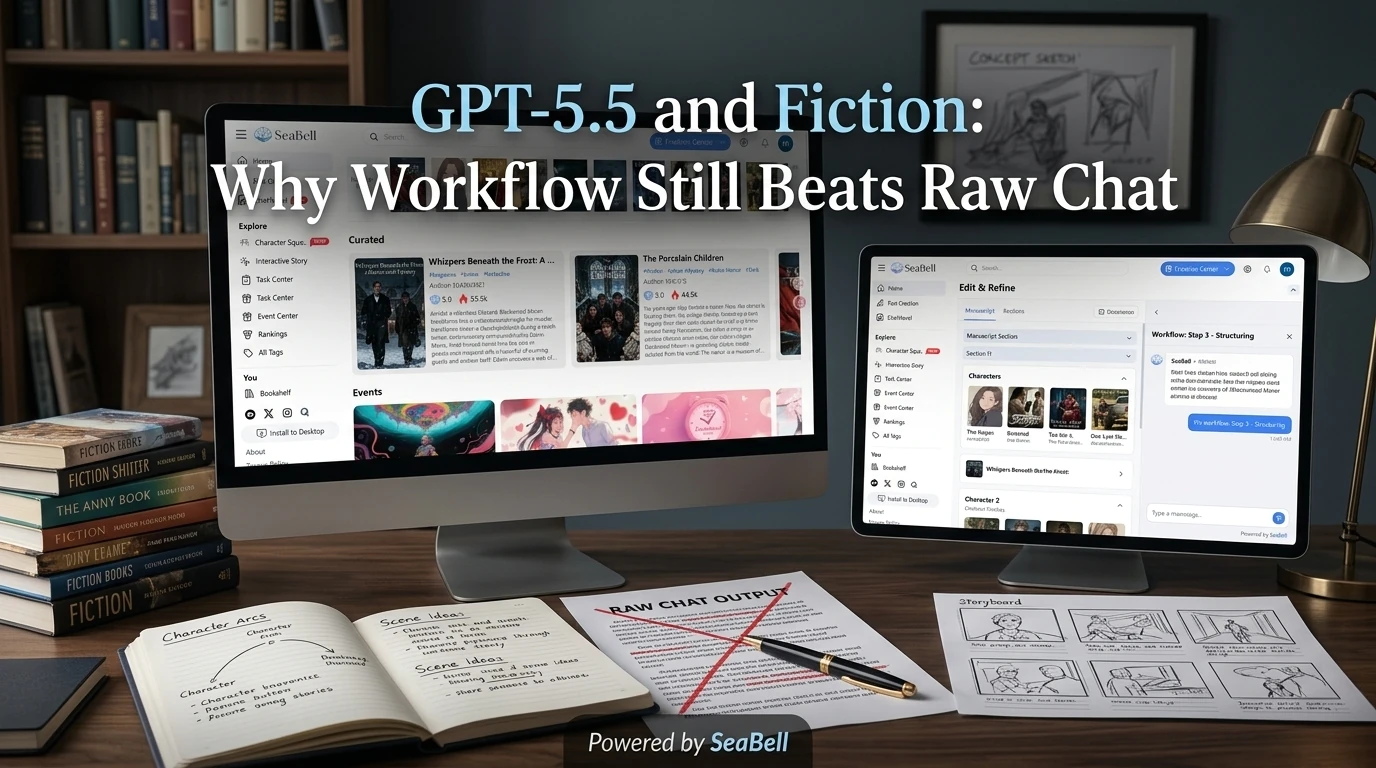

GPT-5.5 for Novel Writing: What Fiction Writers Should Know
Every time the frontier moves, fiction writers ask the same question in a new accent: will this version finally write the book for me
In spring 2026, attention shifted to GPT-5.5. OpenAI positioned it as a step up for complex, tool-heavy work—coding, research, long documents—and rolled access through ChatGPT paid tiers and Codex, with API availability following on OpenAI's own timeline. The honest fiction angle is smaller than the keynote, but it still matters if you care about finishing a novel.
This article stays grounded in what novelists actually do: hold tone, keep cast consistent, move chapters forward, revise without losing the thread. A stronger GPT generation can speed parts of that. It does not remove the need for structure, taste, or a workspace that remembers your story.
⚡ Quick answer
🔹 Better raw help; same need for story discipline
Expect GPT-5.5-class models to be sharper at following instructions, juggling longer excerpts, and offering cleaner rewrite passes. Do not expect them to replace your outline, your voice decisions, or your editorial eye. For long fiction, the win is usually workflow: premise to outline, chapter-sized drafting, organized references, iterative revision—exactly what SeaBell is built around.
🧭 What changed at a high level
🔹 From OpenAI's public framing, not bench hype
OpenAI's GPT-5.5 announcement emphasized stronger general capability, better use of tools, and support for long, multi-step tasks in professional settings—including large-context use in Codex for subscribers on eligible plans. Exact limits, pricing, and regional rollout change; check OpenAI's current pages before you budget a production pipeline.
For authors, the translation is practical: you may spend less time re-explaining the same context, see fewer derailments on tight constraints, and get more usable alternates when you ask for scene variants or line-level polish—provided you still supply the story facts the model cannot invent responsibly.

✍️ Where GPT-5.5 tends to help novelists most
🔹 High-friction stages that reward better language models
1. Turning a messy premise into a clearer arc or chapter map
2. Expanding a thin scene into more concrete beats or dialogue options
3. Compression when a chapter runs long
4. Tone passes when voice drifts
5. Continuity checks when you paste explicit story facts alongside the draft
Notice the pattern: each item works better when the manuscript already exists as a structured object, not as a forgotten chat thread.
⚠️ What GPT-5.5 still does not hand you for free
🔹 Taste, pacing judgment, and accountability stay yours
A frontier upgrade does not automatically know which subplot earned its page count. It will not feel the emotional turn you owe the reader at mid-book. It will not keep your cast straight unless you give it—or your platform gives it—a stable record of who is who.
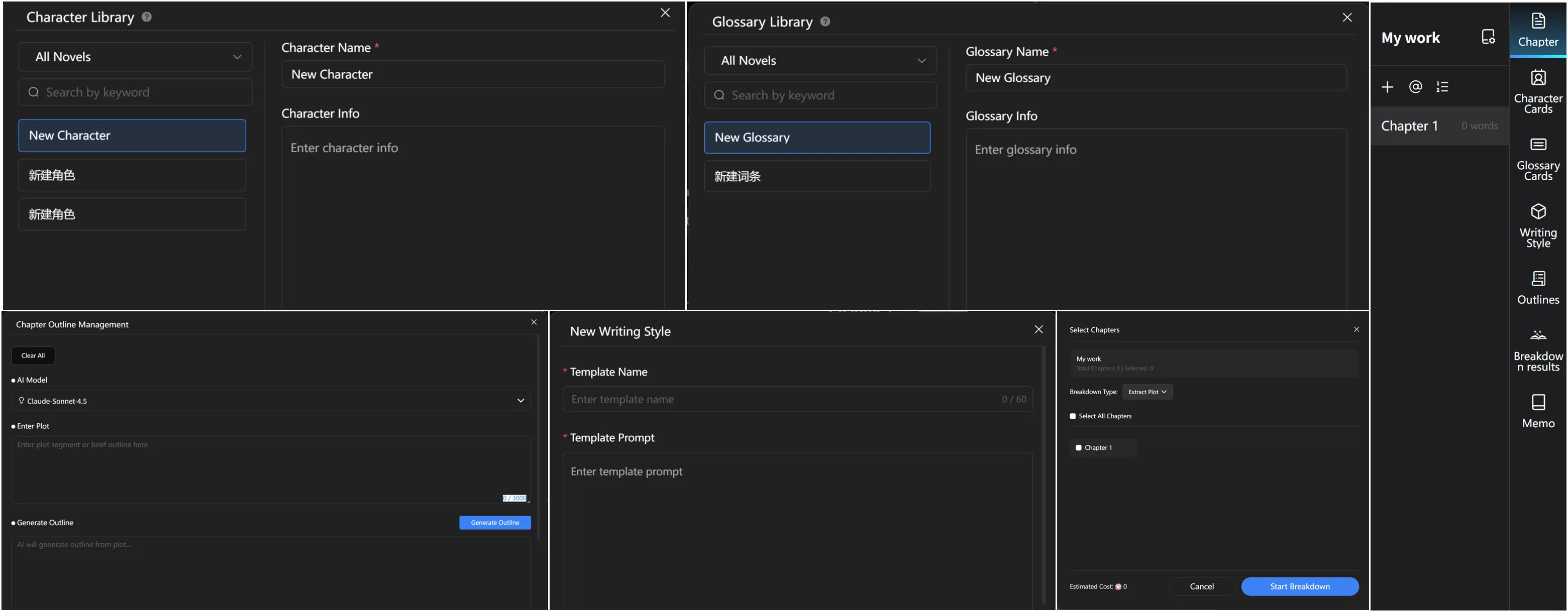
That is why serious novelists still pair model upgrades with fiction-first software: chapter flow, reference cards, memos, glossaries, and revision tools that match how books are actually finished.
🌊 Why SeaBell still fits the GPT-5.5 moment
🔹 Same engine upgrade, cleaner steering wheel
SeaBell's public writing flows already describe one-line starts, story frameworks, model choice, adjustable creation settings, character and term references, chapter-by-chapter drafting, and revision support. When GPT-5.5-level models sit behind that stack, the gain is less about a single flashy paragraph and more about repeating a reliable loop without losing the manuscript in chat history.
✅ Bottom line
🔹 Ride the model wave inside a book-shaped process
GPT-5.5 is worth attention for fiction writers because it tightens the engine, not because it redefines authorship. Treat it as better torque for outlining, drafting, and revision—then keep your novel inside a workflow that respects chapters, references, and rewrites. That is how the headline turns into pages.
❓ FAQ
🔹 Short answers
Is GPT-5.5 a separate product from ChatGPT
It is a model generation inside OpenAI's ecosystem. Access paths and names on menus can change; follow OpenAI's official documentation for what your plan includes today.
Will GPT-5.5 write my whole novel in one prompt
You might get a long block of text. You still need structure, selection, and editing to make it a novel readers experience as intentional art.
Why mention SeaBell in a GPT-5.5 article
Because long fiction rewards environments that hold story state. Model upgrades help most when they plug into outlines, references, and chapter workflows instead of isolated prompts.