

Light Novel Writing Style: How to Write Fast, Character-Driven Fiction
Light Novel Writing Style: How to Write Fast, Character-Driven Fiction
Updated May 23, 2026 · SeaBell Blog · Guides & Tips
Short version: light novel writing style is clear, close, fast-moving prose built around character voice, scene momentum, dialogue, and chapter endings that leave one thread unresolved.
A draft can look like a light novel and still miss the style. A magic academy, a reincarnation setup, and a few anime-shaped jokes may signal the genre, but they do not make a chapter feel quick, intimate, or addictive.
For me, the style shows up in page-level choices: how close the narration stays, how quickly a scene finds tension, whether dialogue changes the relationship, and whether the ending leaves something still unresolved.
This guide treats light novel writing style as a craft term, not a strict publishing label. The focus is practical: why many light novels feel readable, character-led, and serial-friendly, and how to borrow those habits without copying the surface tropes.
One thing to remember: readable does not mean thin. The best light novel pages feel simple because the writer has made hard choices about voice, pacing, and what to leave out.
📖 What is light novel writing style?
At its best, light novel writing style pulls the reader close to a character, pushes the scene forward quickly, lets dialogue do real work, and ends chapters with one thread still open.
The term gets used in a few different ways. Some readers use it for a Japanese publishing format. Others use it for anime-adjacent prose, fast serial fantasy, or romance with strong character voice. For writers, the real test is simpler: does the page move fast enough, stay close enough, and make you want the next chapter?
When I read a chapter that really works, I usually see five moves working together.
✨ Five traits that keep the style working
1. Close, character-first narration
Light novels often keep the reader near one character's thoughts and instincts. Even in third person, the narration usually leans toward a specific mind instead of hovering above the scene like a camera.
That closeness changes the texture of a moment. A magic duel is not only fire, movement, and damage. It also includes the protagonist misreading an opponent, panicking at the wrong time, or realizing the rival knows exactly where to strike.
Flat version: "The enemy mage raised her staff. Fire gathered at the tip."Closer version: "The enemy mage raised her staff, and my body decided it had several excellent reasons to stop cooperating. Fire gathered at the tip. Great. Wonderful. Exactly what this day needed."
Length is not what makes the second version stronger. The difference is that the character is inside the sentence, reacting before the scene has time to become flat description.
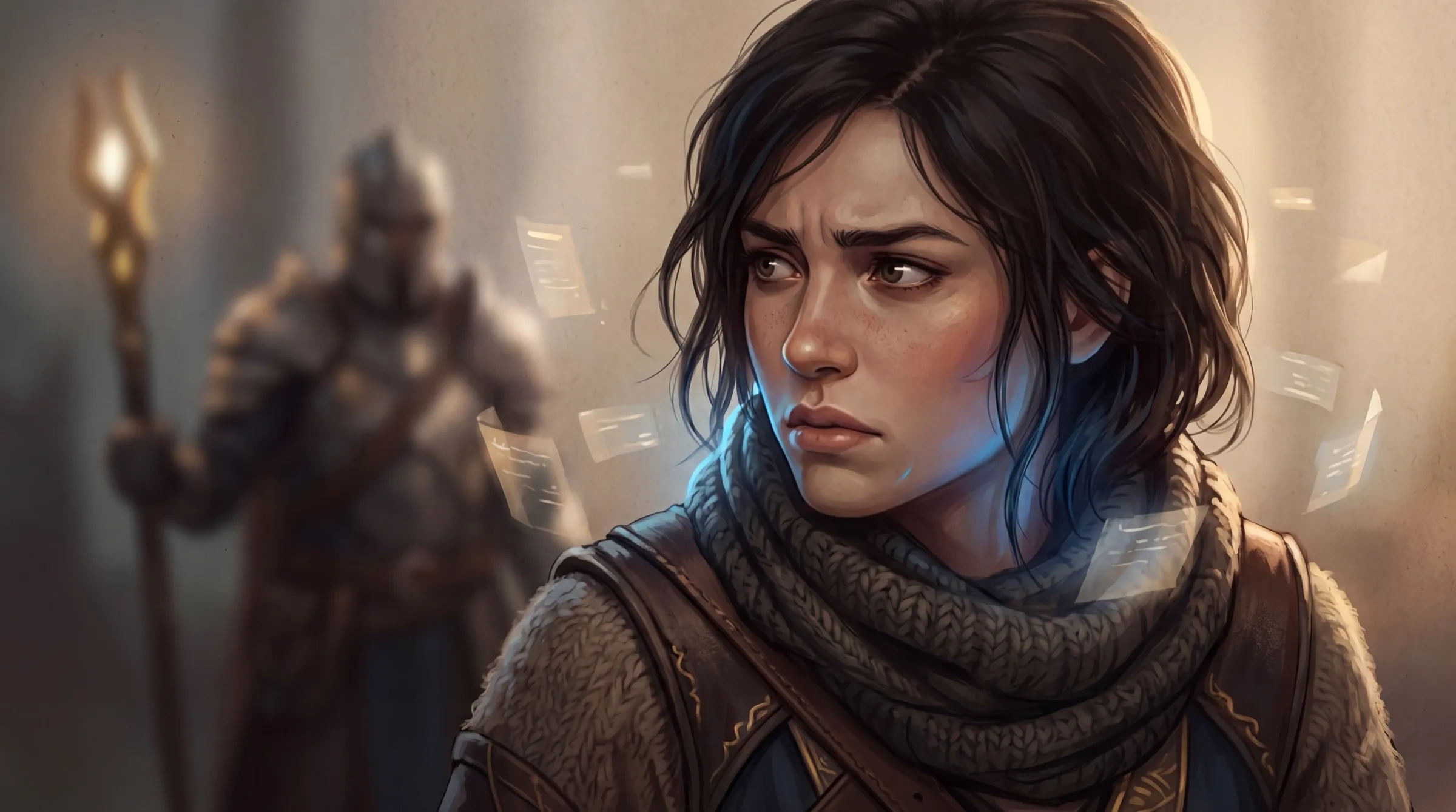
2. Fast, readable pacing
Light novels rarely reward heavy descriptive blocks unless the description carries tension, humor, romance, dread, or a sharp reaction. The story does not have to sprint, but the page still needs to point forward.
A page can breathe, but each paragraph has to earn its space. If a paragraph only proves that the writer had a picture in mind, I'd either give it a job or cut it.
3. Conversational prose with a point of view
The prose can be stylish, but the reader should never have to fight the language. Clear sentences, active verbs, and direct emotional beats tend to work better than ornate explanation.
Conversational prose still needs shape. The narration should feel like a living voice: sharp, nervous, arrogant, sweet, dramatic, or dry. Specificity matters more than polish.
4. Dialogue that changes the scene
Light novel dialogue often carries several jobs at once: humor, exposition, romantic tension, rivalry, fear, and character history. What matters is that the line still sounds like something one character would say to another, not like a note from the author.
The dialogue I distrust most is the kind of pure information exchange where one character says what the reader needs to know and the other simply receives it. Stronger dialogue has friction. Characters dodge, tease, lie, threaten, or reveal more than they meant to.
5. Chapter pressure
A light novel chapter does not need to end with an explosion. It does need to leave one thread open: a question, a new problem, an emotional turn, a reveal, a choice, or a relationship shift.
That unfinished thread is the handoff. Without it, the chapter just stops; with it, the next page has somewhere to go. A small, sharp promise usually works better than a huge twist that feels pasted on.
🔍 Light novel vs web novel vs manga: what is the difference?
These terms overlap in real life, which is why the advice often gets muddy. A story can begin online, later become a light novel, and eventually receive a manga adaptation. The plot may travel across formats, but the storytelling work changes.
| Format | What defines it | What the creator must handle |
|---|---|---|
| Light novel | Prose-first fiction, usually built around character voice, quick pacing, and occasional illustrations | Voice, pacing, scene rhythm, dialogue, chapter pressure |
| Web novel | Online serial fiction, usually shaped by update rhythm and direct reader momentum | Long-term continuity, regular hooks, reader retention, flexible arcs |
| Manga | Visual storytelling through panels, artwork, expressions, and page turns | Panel timing, visual clarity, facial expression, action flow |
A light novel can borrow the momentum of a web novel, and a web novel can be revised toward a more polished light novel style. Manga differs more directly: as Britannica's overview of manga as Japanese comic books and graphic novels explains, manga tells the story through panels, artwork, expressions, and page turns. Prose does not get those shortcuts, so the sentence has to carry more of the rhythm itself.
✍️ How to write in this style without losing the rhythm
Step 1: start with a simple, high-pressure premise
A light novel premise has to land quickly. The reader needs to know who the protagonist is, what changes their life, why it matters, and why walking away is not simple.
My quick test is simple: can you name the disruption, the pressure, and the relationship that makes things harder?
Loose setup: "A student enters a magic academy."Stronger premise: "A burned-out office worker wakes up as the weakest student in a magic academy, then discovers the top-ranked villain remembers her old life too."
The stronger version gives the protagonist a position to defend, a problem to solve, and a relationship that keeps generating friction.
Step 2: build a character-driven outline
A light novel outline needs more than events. It also has to keep the emotional movement in view: what the protagonist wants, what they get wrong, which relationship shifts, and what kind of pressure carries the story forward.
That keeps plot and feeling connected. If the outline only lists what happens, the chapter can still feel mechanical. The rival can save the protagonist and make sure everyone thinks it was an insult. Suddenly the plot, relationship, and voice land in the same beat.
A simple four-part outline helps: event, pressure, character turn, and hook. That keeps the outline from drifting into pure plot.

Step 3: write scenes in short, focused beats
Give each scene a specific job: reveal a secret, sharpen a rivalry, introduce a cost, deepen a romance, or force a choice. Once the beat lands, move on before the scene starts explaining itself.
Drafts often open too early: waking up, getting dressed, walking to the location, then thinking about the problem before it appears. Light novel style usually starts closer to pressure: the letter is already on the desk, the rival is already waiting, or the spell has already gone wrong.
The same scene logic applies beyond light novels. Now Novel's scene planning guide frames a scene around what it reveals, where it happens, who is involved, and why it matters. In light novel pacing, that answer needs to show up early.
Step 4: use dialogue to reveal character
Good light novel dialogue makes characters sound like different people under pressure. One may joke when cornered. Another may become formal. Another may answer emotional questions with tactics because honesty feels too dangerous.
That vocal difference is what keeps the cast from blurring. Their lines carry desire, fear, pride, and self-protection. If any cast member could say the same line, the line needs more voice.
Another quick test: remove the speaker tags from a short exchange. If the voices blur, the dialogue needs more shape.
Step 5: end chapters with a question, turn, or promise
A chapter ending cannot simply stop after the event is over. It needs a reason to pull the reader back: a changed relationship, a reopened mystery, a new cost, or a decision the protagonist cannot take back.
Weak chapter endings often turn into summary: "After that, I went home and thought about what happened." A stronger ending puts pressure back on the page: "When I opened my door, the rival I had just defeated was sitting at my desk, holding my mother's letter."
Quick check: a chapter with a clear goal, a visible emotional turn, and one unresolved thread is already close to light novel rhythm.
✅ Light novel style checklist
Use these light novel writing tips when a chapter starts to feel slow, distant, or too summary-like.
- Can the reader name the protagonist's goal in this chapter?
- Does the scene reveal character, not just plot?
- Does the prose move quickly without feeling empty?
- Does the dialogue carry personality, tension, or subtext?
- Does the chapter contain at least one emotional turn?
- Does worldbuilding appear through conflict, action, or character need?
- Does the chapter ending leave a question, choice, reveal, or promise?
- Does the emotional tone match the genre promise?
⚠️ Common mistakes that make a story stop feeling like a light novel
Too much worldbuilding upfront
Do not give the reader the full history of the kingdom before they understand the protagonist's problem. Show the rule when it creates trouble, the magic system when it limits a choice, and the politics when someone has something to lose.
Flat character voice
Light novel style depends heavily on voice. If every character speaks in the same polished rhythm, the cast starts to blur. Give important characters different ways of avoiding the truth, asking for help, showing affection, and reacting when they are afraid.
Slow chapter openings
A serialized chapter needs a reason to pull the reader on. A slow opening can work, but it still needs tension. Start with a problem, an expectation, a question, or a detail that promises movement.
Dialogue that only explains the plot
"As you know" dialogue feels dead because no one in the scene wants anything except to inform the reader. Let information come out through conflict, banter, discovery, bargaining, or emotional pressure.
Losing continuity over many chapters
Long stories drift when the writer stops tracking small promises. A character forgets a wound. A rule bends without cost. A relationship resets after an important argument. Every note needs a way back into the draft. When that gets hard to hold in your head, a tool can keep the pieces visible without taking over the story.
🤖 How to use AI without losing the voice
Use AI here for premise angles, alternate chapter beats, dialogue with more subtext, scene summaries, and continuity checks.
Fixing a clumsy sentence is easy. Keeping a serial consistent over dozens of chapters is harder. Memory starts to matter here: outlines, character details, style notes, unresolved setups, and revision decisions that need to survive more than one prompt.
Once a draft outgrows scattered prompts, the work needs one place to live. SeaBell's plot outline builder keeps the premise, chapter structure, subplots, motivations, and causal logic in view.
When the cast grows, SeaBell's novel character card system keeps recurring details, relationship turns, and consistency checks in view. The broader SeaBell AI novel generator keeps drafting, editing, and style control in one place, so each revision can build on the last.

A writing tool belongs here only when it lets the writer test choices and reuse what works without flattening the book into generic output. Taste, judgment, and the final call still stay with the writer.
Practical takeaway: use AI for options, pressure tests, rewrites, and continuity checks. Keep the voice and canon under the writer's control.
❓ FAQ
What is light novel writing style?
Light novel writing style is clear, fast, character-driven prose built around close narration, expressive dialogue, readable scenes, and chapter hooks. The style is less about one trope list and more about how the page moves.
How is a light novel different from a web novel?
A light novel is usually discussed as a prose-first category and style. A web novel is defined more by online serialization and update rhythm. The categories often overlap, especially when an online serial is later edited for publication.
How is a light novel different from manga?
Manga tells the story through panels, artwork, expressions, and visual timing. A light novel creates pace, emotion, and clarity through prose.
How do I write a light novel outline?
Start with the premise, protagonist goal, relationship pressure, major turns, chapter beats, emotional changes, and hooks. Do not outline only events.
Can I write a light novel with AI?
Yes, but only if you give it structure. Use an outline, character notes, style rules, and continuity checks. Let AI generate options, then make the final choices yourself.
What makes a light novel easy to read?
Clear prose, close point of view, focused scenes, dialogue with personality, and chapter endings with momentum. The reader should always feel oriented, but not finished.
🎯 Conclusion
Light novel writing style is not about copying a list of tropes. What matters is keeping the prose easy to follow, the scenes moving, the voices distinct, and each chapter ending with a reason to keep reading.
To write in the style, start with a premise that has pressure. Build an outline around character turns. Keep scenes focused. Let dialogue carry personality. Protect continuity as the story grows.
AI can speed up that process when it gives you useful options instead of taking over the book. For longer projects, SeaBell keeps the moving parts together: outlines, character cards, style notes, chapter drafts, and revision decisions, so the choices you make in chapter three still hold by chapter thirty.