
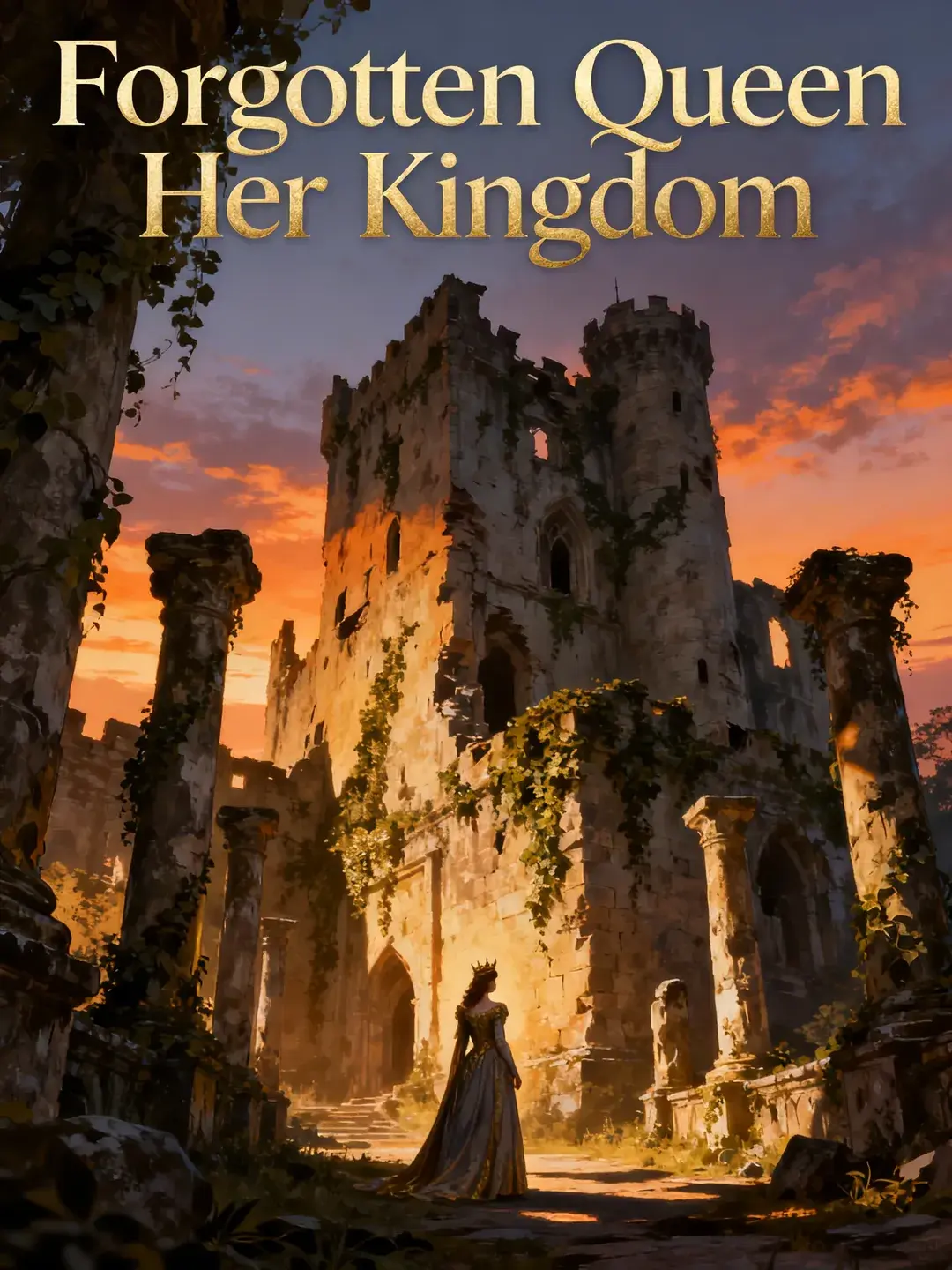
Forgotten Queen
Synopsis
Forgotten Queen reclaiming her Kingdom
Chapter1
The salt-marsh breathed cold at dawn.
Mist clung to the reeds like damp linen, and every step the woman took made a wet sucking sound. She kept the hood of her patched cloak low; the skin of her cheeks had cracked from weeks of wind, and her nails were black with peat. Only the straightness of her back recalled who she had been.
She stopped beside a half-submerged milestone. The carved stag—once the royal emblem—was chipped almost flat.
“Still pointing the same way,” she muttered, voice hoarse from disuse.
A snort answered.
The woman’s hand went to the knife at her belt.
From the reeds a boy stepped, leading a scrawny goat. He wore sheepskins stitched so many times the original colour was lost.
“Didn’t mean to scare you,” he said, eyes on the blade.
“You didn’t,” she lied, easing her hand away. “What settlement’s nearest?”
“Brackenfold. Two miles.” He tilted his head. “You’re not from the tax men.”
“Do I look fed enough to be a tax man?”
The boy cracked a small smile. “Follow the goat. She finds the path.”
They walked without speaking. The goat’s bell clinked, a thin sound swallowed by mist.
“What’s your name?” the boy asked at last.
“Mara.” The name tasted safe; she had worn it as a child, before the crown.
“I’m Wynn. My da says strangers bring trouble.”
“And your ma?”
“Dead.” He kicked a stone. “Trouble already came.”
Brackenfold appeared as roofs floating above fog: twelve huts, a stone well, a single watch-post with no guard. Smoke rose straight up, no wind to scatter it.
Wynn tethered the goat to the well. “You hungry?”
Mara’s stomach answered for her.
He darted into a hut, returned with a heel of black bread and a strip of dried eel. “Da’s at the peat-cut. Eat quick; folk here talk.”
She chewed. The eel was salt-strong, the bread hard enough to hurt her jaw; it tasted like survival.
An old woman emerged from a doorway, eyes sharp. “Boy, who’s that?”
“Traveler,” Wynn said. “She’s moving on.”
The woman limped closer. “Soldiers took our grain yestereve. We’ve nothing left to steal.”
Mara swallowed the last crust. “I don’t steal.”
“Everyone steals,” the woman rasped. “Kings, beggars, queens most of all—they just call it tax.”
Mara wiped her mouth. “Some queens forget the difference.”
The woman’s gaze lingered on the woman’s cracked lips, the small scar at her hairline. Recognition flickered, then fear. She made the sign against evil and backed away.
Wynn tugged Mara’s sleeve. “Come to the forge. It’s warmer.”
The forge was a shed built against the hut of the smith, its fire dead. Wynn scraped embers into a tiny heap.
“Why no fire?” Mara asked.
“Coal’s for the soldiers next week. They’ll measure what we kept back, then whip the smith for cheating.”
“And you light none before?”
“Can’t. They see smoke.”
She stared at the cold hearth. Memory came: the palace forge roaring day and night, smiths forging silver cups while villages went cold. She had never noticed.
Wynn whispered, “Old Leta saw something in you. What?”
“She saw a ghost,” Mara said. “Ghosts frighten people.”
“Are you a ghost?”
“Not yet.”
Footsteps outside. Three men entered, peat dust on their shoulders. The tallest, broad as an ox, eyed Mara.
“Traveler,” Wynn said quickly. “She leaves at dusk.”
The man—his father—grunted. “Road’s dangerous after dark.”
“Safer than staying,” Mara answered.
The father studied her boots: palace cavalry leather, cut down, still too fine. “Army deserter?”
“Something like that.”
He nodded slow. “Then you know how to use that knife. We’ve daughters here.”
“I use it on people who threaten me. Not daughters.”
A long silence. Then the father exhaled. “Sit. We talk.”
They sat on overturned troughs. The smith appeared, gaunt, hands black to the wrist. Others drifted in until the shed held half the village. No women—Mara noted—only men with calloused palms and eyes that jumped at every sound outside.
The father spoke. “Soldiers ride through every tenth day. They take grain, goats, nails, sometimes girls. We hide the girls in the reeds. We hide the grain under the dung heap—no soldier digs through dung. We’re alive, but barely. You bring news?”
“Only memory,” Mara said. “I remember when marsh folk sent eels to the palace and were paid in copper. I remember when the queen walked among you without guard.”
A snort from the smith. “Queen’s dead. King’s dead. Regent rules now—he taxes us to feed the foreign legion that keeps him on the chair.”
“And the princess?” Mara asked, heart loud.
“Exiled, rumour says. Or murdered. No one knows. No one cares.”
“I care,” she said before thinking.
They stared.
Wynn’s father leaned forward. “Why?”
“Because I swore to someone I would remember.” She met his gaze. “Promises outlive crowns.”
The smith spat into the ashes. “Pretty words. Words don’t stop swords.”
“No,” Mara agreed. “But swords need feeding. The legion is three thousand mouths. The marsh feeds none of them. How long before they drain the lowlands dry and turn on one another?”
Silence answered; they knew the arithmetic of hunger.
An elder spoke from the doorway, voice thin. “If the princess lived, would she fight the Regent?”
“She might,” Mara said. “If she had forgotten how to be royal and remembered how to be hungry.”
The elder stepped inside. His eyes were milk-white, but his voice carried. “I held her once, a babe with black hair and lungs like a forge bellows. Her father wept when she gripped his finger. A ruler who grips tight can also let go. Would she let go of us?”
Mara’s throat burned. “She would have to ask whether you want to be let go, or whether you prefer the devil you know.”
Murmurs rose, uneasy.
The elder lifted a hand. “Show us proof. A sign. A token. Otherwise you’re another wanderer spinning tales for bread.”
Mara reached inside her cloak. The circle of iron she drew was palm-sized, rust-pitted: the old royal seal, broken from its staff the night the palace burned. She laid it on the anvil.
Men drew breath as if struck.
Wynn whispered, “That real?”
“Real enough to hang me,” she said. “I offer it not as promise but as wager. Hide it, show it, melt it—your choice. I ask only a corner to sleep and a path north at dawn.”
The elder turned his blind eyes toward the anvil. “North is the capital. You aim to die quick?”
“To arrive alive,” she corrected. “The road is watched; the marsh is not. Guide me through, and when I fall the seal is yours to sell or bury.”
The father rubbed his forehead. “You gamble with our lives.”
“I gamble with my own. You gamble with a piece of iron.”
Long silence. Outside, the goat bleated once.
The elder spoke last. “Sleep in the peat shed. We talk among ourselves. At moonset we give answer.”
Mara inclined her head. “Fair.”
They left her there among the turf stacks smelling of earth and rain. She sat on a cut block, knife across her knees, listening to voices through the wall: low, angry, afraid. No names, only fragments: “trap,” “hope,” “fool,” “daughter.” She could not tell which side each voice took.
Hours thinned. The moon, a cracked coin, slid past the smoke-hole. Footsteps approached; Wynn slipped inside, blanket over his arm.
“They’re scared,” he said.
“So am I.”
He offered the blanket. “I told them you walked all day without stealing. That’s something.”
“Thank you.”
He hesitated. “If they say no, will you go alone?”
“Yes.”
“Then I’ll go with you.”
She studied the thin face, eyes too old for twelve. “Your father needs you.”
“He needs grain more. I can carry a sack, show paths. You’ll need someone who believes.”
“Belief is heavy.”
“I’m small,” he said. “But I can carry heavy things.”
Before she could answer, the door opened. The elder entered, followed by the rest. The father held the seal, now wrapped in rag.
“We keep the iron,” he said. “We guide you to the northern dike. Beyond that you’re shadow. If you live, remember Brackenfold. If you die, we never knew you.”
Mara rose. “Accepted.”
The elder added, “And the boy stays.”
Wynn started to protest; his father’s look silenced him.
Mara met the man’s eyes. “He offered freely.”
“Children’s choices are their parents’ burden. My son stays.”
She saw the tremor in the big man’s hands, the same that shook her own when she had signed exile orders. Fear dressed as authority.
“Then let him decide at the dike,” she said. “One mile more of freedom won’t break the world.”
The father’s jaw clenched, but the elder nodded. “So be it.”
They moved in single file before first light, mist silvering their shoulders. Mara walked third: behind the smith, ahead of Wynn. No one spoke; the marsh spoke for them—wings overhead, water sucking at boots, the heartbeat of unknown things beneath.
At the dike the world split: south the reeds, north the open moor leading to the capital road. The party halted.
The father faced his son. “Choose.”
Wynn looked at Mara. She saw the question in his eyes: Am I your subject or your weapon?
She knelt, bringing their faces level. “I go north to find what I lost. You stay south to guard what you love. Both paths are honour. Choose without shame.”
The boy’s lip trembled. He stepped back, stood beside his father.
Mara smiled—small, painful, real. “Live heavy, Wynn.”
She turned and walked. No farewells, no cheering. Behind her she heard the father’s breath release, the goat bell faint as they retreated.
The moor wind lifted her hood. She let it fall. Dawn bled across the sky, plain and colourless as iron. She touched the empty place at her belt where the seal had hung, felt its absence like new skin after a burn—tender, alive.
Ahead, the road waited, rutted by supply wagons, lined with the hanged who had refused tax. Crows rose as she approached, cursing. She did not quicken or slow. Each step measured the distance between who she had been and whoever might emerge.
At the first fork she halted. From her pouch she took a strip of the black bread Wynn had given her, broke it in half, and placed one piece beneath a wayside stone.
“For the living,” she said aloud.
She ate the other half, tasting salt and smoke, and walked on. The wind carried no banners, only dust. Yet somewhere behind, in a peat-scented hut, a circle of iron lay hidden under dung, warming like a coal.
She did not look back.
The salt-marsh breathed cold at dawn.
Mist clung to the reeds like damp linen, and every step the woman took made a wet sucking sound. She kept the hood of her patched cloak low; the skin of her cheeks had cracked from weeks of wind, and her nails were black with peat. Only the straightness of her back recalled who she had been.
She stopped beside a half-submerged milestone. The carved stag—once the royal emblem—was chipped almost flat.
“Still pointing the same way,” she muttered, voice hoarse from disuse.
A snort answered.
The woman’s hand went to the knife at her belt.
From the reeds a boy stepped, leading a scrawny goat. He wore sheepskins stitched so many times the original colour was lost.
“Didn’t mean to scare you,” he said, eyes on the blade.
“You didn’t,” she lied, easing her hand away. “What settlement’s nearest?”
“Brackenfold. Two miles.” He tilted his head. “You’re not from the tax men.”
“Do I look fed enough to be a tax man?”
The boy cracked a small smile. “Follow the goat. She finds the path.”
They walked without speaking. The goat’s bell clinked, a thin sound swallowed by mist.
“What’s your name?” the boy asked at last.
“Mara.” The name tasted safe; she had worn it as a child, before the crown.
“I’m Wynn. My da says strangers bring trouble.”
“And your ma?”
“Dead.” He kicked a stone. “Trouble already came.”
Brackenfold appeared as roofs floating above fog: twelve huts, a stone well, a single watch-post with no guard. Smoke rose straight up, no wind to scatter it.
Wynn tethered the goat to the well. “You hungry?”
Mara’s stomach answered for her.
He darted into a hut, returned with a heel of black bread and a strip of dried eel. “Da’s at the peat-cut. Eat quick; folk here talk.”
She chewed. The eel was salt-strong, the bread hard enough to hurt her jaw; it tasted like survival.
An old woman emerged from a doorway, eyes sharp. “Boy, who’s that?”
“Traveler,” Wynn said. “She’s moving on.”
The woman limped closer. “Soldiers took our grain yestereve. We’ve nothing left to steal.”
Mara swallowed the last crust. “I don’t steal.”
“Everyone steals,” the woman rasped. “Kings, beggars, queens most of all—they just call it tax.”
Mara wiped her mouth. “Some queens forget the difference.”
The woman’s gaze lingered on the woman’s cracked lips, the small scar at her hairline. Recognition flickered, then fear. She made the sign against evil and backed away.
Wynn tugged Mara’s sleeve. “Come to the forge. It’s warmer.”
The forge was a shed built against the hut of the smith, its fire dead. Wynn scraped embers into a tiny heap.
“Why no fire?” Mara asked.
“Coal’s for the soldiers next week. They’ll measure what we kept back, then whip the smith for cheating.”
“And you light none before?”
“Can’t. They see smoke.”
She stared at the cold hearth. Memory came: the palace forge roaring day and night, smiths forging silver cups while villages went cold. She had never noticed.
Wynn whispered, “Old Leta saw something in you. What?”
“She saw a ghost,” Mara said. “Ghosts frighten people.”
“Are you a ghost?”
“Not yet.”
Footsteps outside. Three men entered, peat dust on their shoulders. The tallest, broad as an ox, eyed Mara.
“Traveler,” Wynn said quickly. “She leaves at dusk.”
The man—his father—grunted. “Road’s dangerous after dark.”
“Safer than staying,” Mara answered.
The father studied her boots: palace cavalry leather, cut down, still too fine. “Army deserter?”
“Something like that.”
He nodded slow. “Then you know how to use that knife. We’ve daughters here.”
“I use it on people who threaten me. Not daughters.”
A long silence. Then the father exhaled. “Sit. We talk.”
They sat on overturned troughs. The smith appeared, gaunt, hands black to the wrist. Others drifted in until the shed held half the village. No women—Mara noted—only men with calloused palms and eyes that jumped at every sound outside.
The father spoke. “Soldiers ride through every tenth day. They take grain, goats, nails, sometimes girls. We hide the girls in the reeds. We hide the grain under the dung heap—no soldier digs through dung. We’re alive, but barely. You bring news?”
“Only memory,” Mara said. “I remember when marsh
Latest Chapters
Chapter Five – The White Keeps Its Own
The wind arrived like a slap the moment she
Chapter Five – The Hollow Fuse
Snow sifted through the broken roof like cold rice.
Chapter 5 – The Ledger of Frost and Iron
The snow was a living thing at dawn, wi
Chapter 4 – The Ledger of Snow and Ash
I
The council room was colder than