

Beat Writer's Block When Writing Fiction | SeaBell
🔓 How to Beat Writer's Block When Writing Fiction
You can be forty thousand words deep and still hit a wall. Interest is still there. Discipline is not the issue. You open the file for chapter seventeen, the caret blinks, and nothing arrives. It feels less like laziness and more like the story ran out of next moves.
Here is a quieter way to frame it. Writer's block is often mislabeled as a character flaw. In practice it behaves more like a shortage of options—plot forks, line reads, sensory detail, names, scene pivots. When the shelf is empty, grinding harder rarely refills it. What helps is a faster way to pour in new raw material, then choose what belongs in your book.
This guide walks through what that looks like for fiction writers, and how SeaBell's writing environment—built around long projects, not one-off replies—supports the habit of restocking and selecting instead of staring.
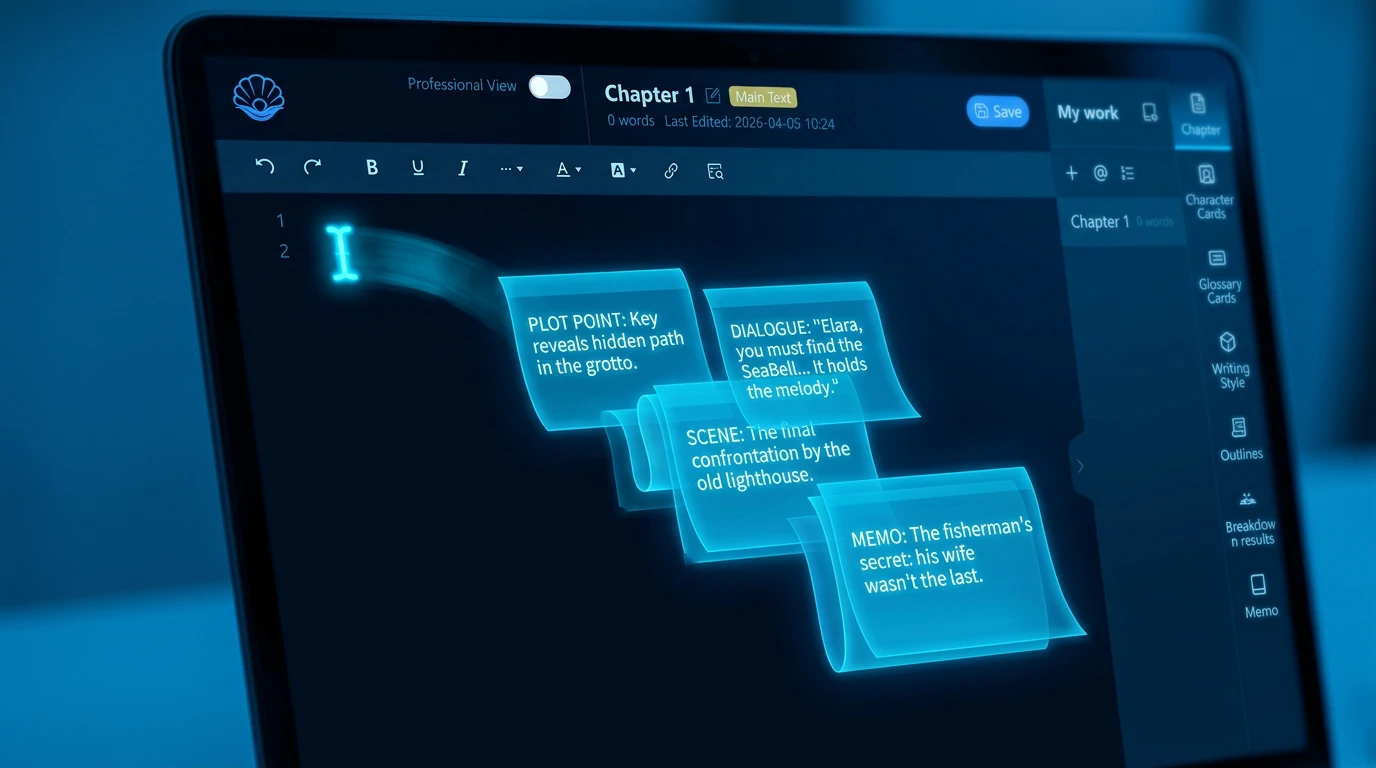
⚡ Quick answer
🔹 Refill options fast, keep authorship in your edits
Treat the stall as an input problem: generate many small, disposable sparks across dialogue, plot pressure, setting hooks, and cast texture. Sort what excites you, park the rest, then draft in short passes inside a project that already holds your outline, characters, and chapter boundaries. SeaBell is built for that loop—idea and controls first, chapter-shaped drafting second, revision woven in—so block becomes a phase you move through instead of a verdict on the book.
🧠 What writer's block actually is (and what it is not)
🔹 A dry spell of choices, not a missing virtue
Working definition: writer's block is the slowdown that happens when a fiction writer temporarily cannot see believable next steps—what a scene must do, how a character would speak, which beat earns the page—because the mental inventory of usable ingredients has thinned out. It shows up for beginners and for experienced authors alike. It is not proof that you are "not a real writer."
Classic advice—write badly on purpose, white-knuckle through—sometimes unsticks people, but it does not explain why the tap ran dry. If your brain is waiting on the next plausible move, shame rarely manufactures one. A more practical model: restore a menu of moves, then commit.
On SeaBell, that maps to using short, directed generations tied to your premise and references, then folding only what survives your taste into the manuscript. You are not asking the tool to replace judgment; you are asking it to widen the field so judgment has something to work with.
📌 Why beating block matters for long fiction
🔹 Momentum and confidence compound in both directions
The hidden cost of a frozen chapter
One stuck chapter rarely costs a single afternoon. It can leak into how you feel about the whole draft, push release plans, and make you avoid the file. For indie schedules especially, restoring velocity is not vanity—it is how the book stays alive as a project.
Why generic chat can deepen the freeze
A plain chat window has no obligation to remember your cast list, your last three chapter turns, or the tone you locked in. You may get long answers that still miss the spine of this story. More text that does not fit can feel like more failure. A fiction-first workspace pushes you back toward your constraints: who is in the room, what must change by scene end, what you already promised the reader.
🛠️ How SeaBell supports "unblocking" without taking the pen
🔹 Outsource volume of ideas; keep selection human
The pattern is simple. When forward motion stalls, you borrow speed from the system: pull a batch of scene-sized possibilities, lines, or structural nudges. You skim for friction—the line that makes you argue with it, rewrite it, or suddenly see the real scene. The draft advances because you reacted, not because you waited for a single perfect paragraph to fall from the sky.
Work the angle you are actually stuck on
Name the bottleneck in plain language: missing beat, weak entrance, flat exchange, unclear motive, wrong pacing. SeaBell's flows let you lean on story controls—style, length, characters, themes, chapter-level inputs—so generations stay tethered to the novel you are writing, not a generic synopsis of the genre.
Keep a scratch layer for half-formed wins
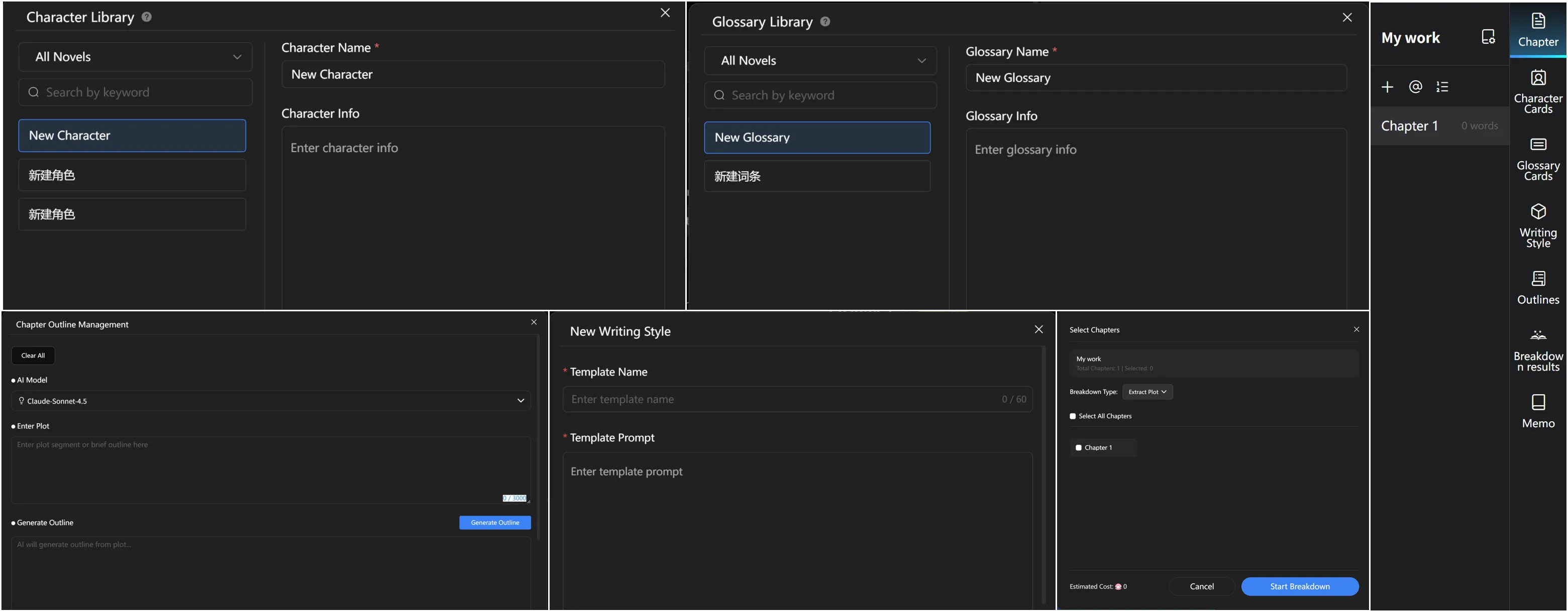
You do not need every line to ship immediately. Memos, glossary entries, character cards, and term cards (as described on SeaBell's public pages) give half-sparks a parking spot so they do not vanish between sessions. That matters because block often returns when good fragments have nowhere to live.
Use it at every phase of the book
Stuck while outlining is still block. So is being unable to name a walk-on character or to land the sensory frame for a climax. The same principle applies: short bursts of targeted generation, then fold winners into structure or draft. Chapter-by-chapter progress keeps each unit small enough to recover from.
📋 SeaBell workflow vs raw chat vs notebooks
🔹 Where friction shows up at novel length
| Need | Raw chat | Manual notes | SeaBell |
|---|---|---|---|
| Fiction-tuned idea bursts | Possible, heavy re-prompting | Depends on mood | Guided by story controls and project context |
| Keep cast and lore visible | Manual paste each session | Scattered files | Reference tools and cards (per public pages) |
| Chapter-sized drafting | Easy to sprawl off-scope | No generation assist | Built around chapter progression |
| Revise without losing thread | Thread drift | Slow rewrite cycles | Proofreading, paraphrase, consistency support in-product |
🪜 A four-step loop you can repeat
🔹 Small cycles beat heroic single sprints
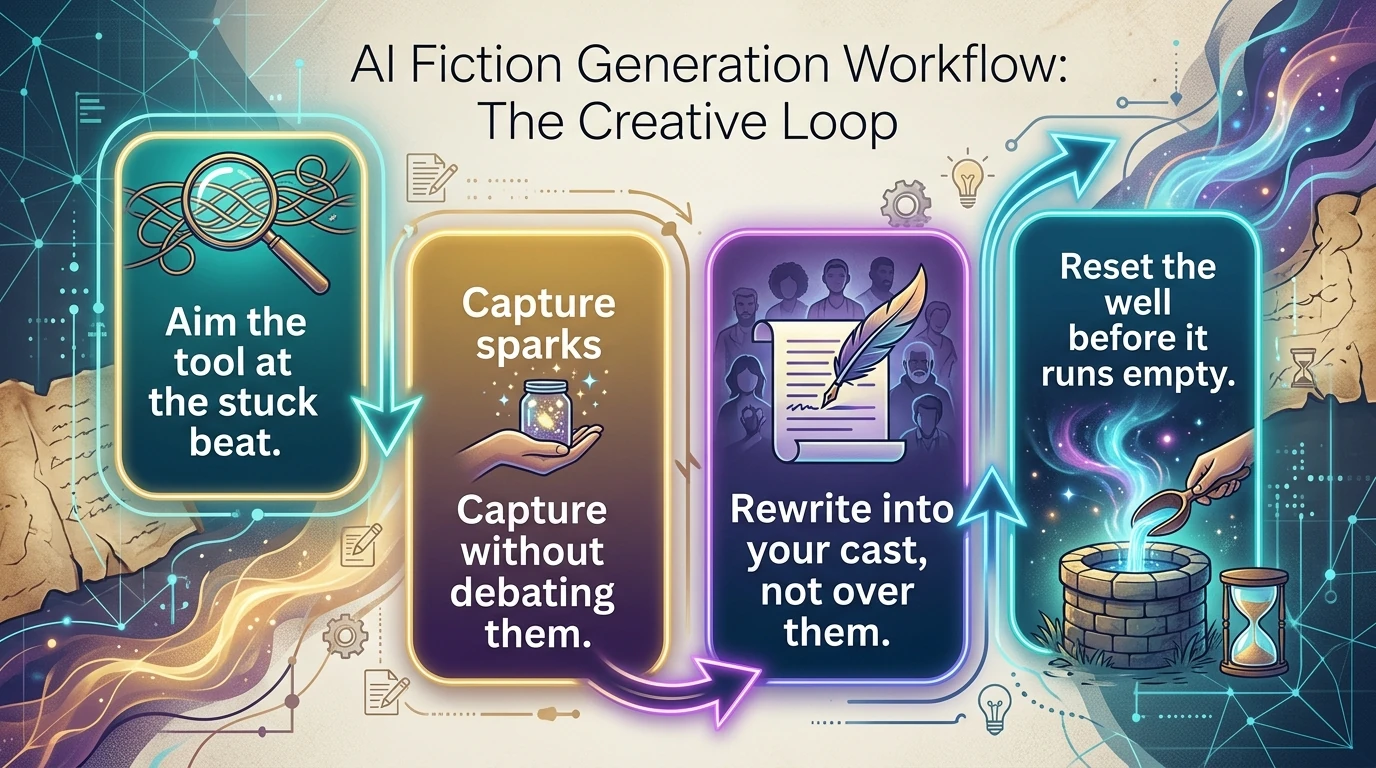
Step 1 — Aim the tool at the stuck beat
Open the chapter or outline node that hurts. State the job of the scene in one sentence: who must change, what secret slips, what obstacle escalates. Then run a short generation pass aligned to that job, with style and character inputs set so the output stays in voice.
Tip: If plot feels dead, borrow pressure from a different lane—setting detail, a prop, a line of subtext—then steer back. Cross-talk between dimensions of the story often unlocks plot.
Step 2 — Capture sparks without debating them
Move quickly: keep anything that creates a physical reaction—curiosity, disagreement, discomfort. You are not voting for final copy; you are collecting heat. Park lines in memo or scratch space so you do not lose them while you rewrite.
Step 3 — Rewrite into your cast, not over them
Treat AI lines as clay. Bend dialogue until diction matches the speaker. Twist a plot nudge until it honors prior chapters. SeaBell's revision helpers—grammar passes, paraphrase, style passes—are for when you already know the scene's job and need polish without nuking intent.
Step 4 — Reset the well before it runs empty
Do not reserve idea work for catastrophe. Start some sessions with a five-minute burst: alternate angles on today's chapter goal. You train the reflex that block is handled with supply, not shame.
✨ Best practices
🔹 Habits that keep the pipeline wet
Front-load options before the panic
If you only reach for help after hours of blank screen, everything feels high stakes. A lighter pattern: open SeaBell, skim yesterday's chapter note, run one small generation aligned to today's target, then write. You are borrowing momentum, not performing surgery.
Deliberately "mis-aim" once in a while
Stuck on plot? Ask for texture or object detail instead. A concrete image can smuggle in conflict. Stuck on dialogue? Ask for what the room is doing while they talk. Sideways inputs jog memory.
Let uncomfortable ideas exist in the sandbox
Serious fiction needs moral weight, threat, and desire that are not always polite. Exploring darker or messier branches in draft space—then choosing what serves the book—is different from publishing them unexamined. The sandbox exists so instinct can speak before strategy edits.
⚠️ Common mistakes
🔹 Patterns that recycle block in a new costume
Mistake 1 — Treating stall as identity
You are not broken; you are out of immediate moves. Reframe, refill, return.
Mistake 2 — Waiting for a "perfect" spark
If nothing feels publication-ready on first glance, you may be judging too early. Capture anything that moves the needle emotionally, even if the prose is wrong.
Mistake 3 — One giant prompt for a whole chapter
Long fiction rewards smaller asks tied to scene purpose. Huge asks blur accountability and inflate cleanup.
❓ FAQ
🔹 Plain-language answers
What causes writer's block in fiction?
Usually a temporary gap in usable story decisions—what happens next, why it matters, how it sounds—rather than a permanent lack of talent. Refilling options restores motion.
How can SeaBell help specifically?
Its public writing flows emphasize one-line starting points, frameworks and chapter breakdowns, model choice, adjustable creation settings, reference systems such as character and term cards, chapter-by-chapter work, and revision support. Together, those reduce how often you face a blank page with zero scaffolding.
Does this only help during drafting?
No. Outlining, casting, and polish all benefit when you can generate short lists of possibilities and fold them into structure or prose in controlled passes.
Is writer's block only for new writers?
Anyone who pushes characters through long arcs can hit a dry stretch. Experience changes how you recover, not whether you ever need fresh inputs.
✅ Key takeaways
🔹 Carry this list back to the manuscript
• Block often signals empty shelves, not weak character.
• Short, aimed generations plus fast curation beat waiting for one miracle paragraph.
• SeaBell's project shape—controls, references, chapters, revision—keeps those sparks tied to your actual novel.
• Repeatable loops turn recovery from a crisis into a habit.
Close the tab that only judges you. Open the one that restocks the shelf.