
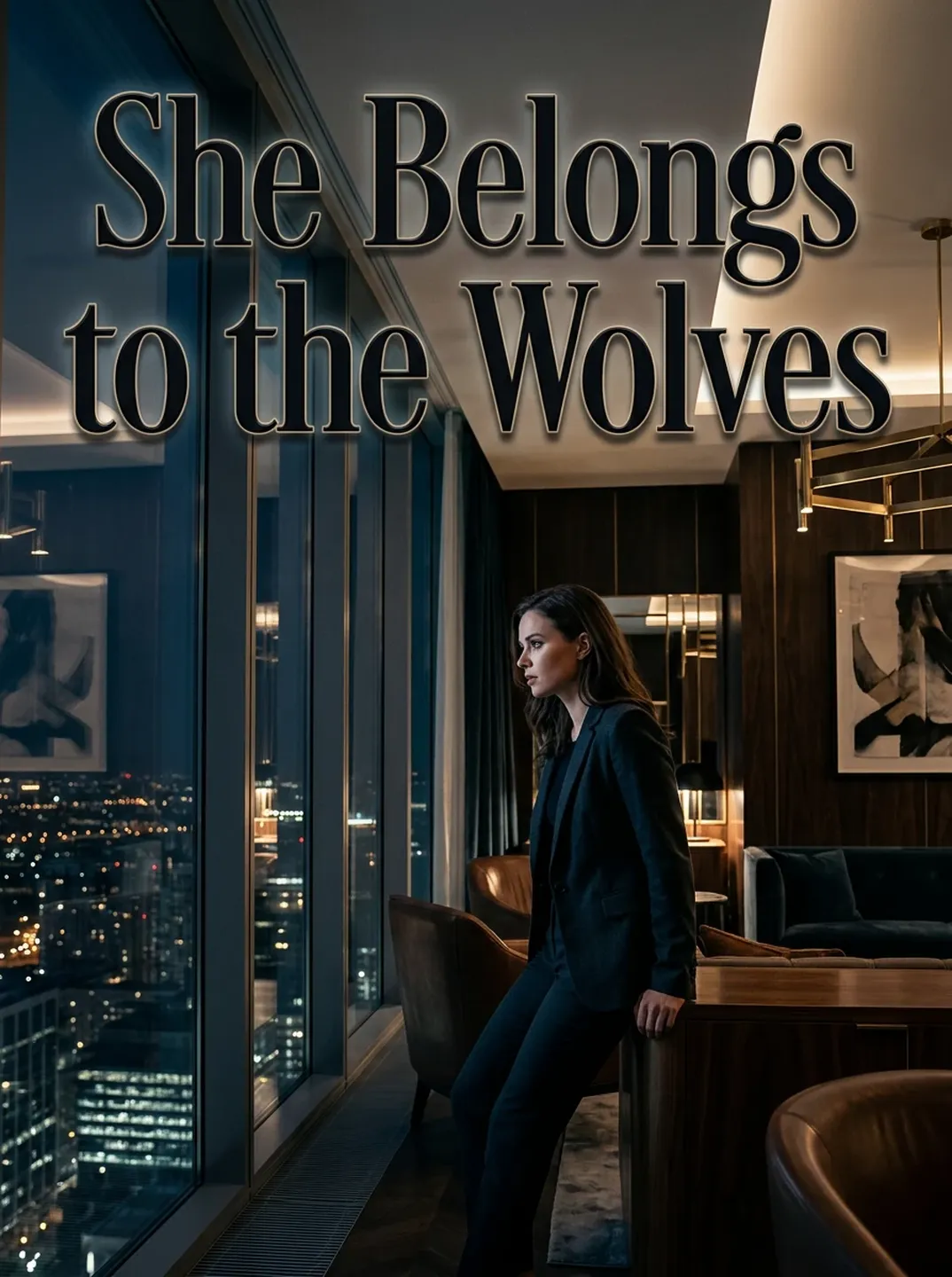
説明
Sold for fifty million dollars. Bound by a contract she couldn't refuse. Claire Whitfield became the possession of Alexander Langford, a man whose name was a fearful whisper from the grimy docks to the glittering penthouse suites.
He demanded her obedience, viewing her as a beautiful asset to be controlled. But in a deadly game of smuggled firearms and corporate treason, she refuses to be a pawn.
Trapped in his gilded cage, she must navigate a labyrinth of family secrets and a passion that could either save her or burn her to ash. When you’re owned by the devil, you either learn to command the fire, or you surrender to the flames. She chooses to rewrite the rules.
エピソード1
The crystal chandeliers of the Halcyon Grand trembled as the auctioneer’s gavel cracked like a starter pistol.
“Shit! Claire, we’ve gotta move!” Ruby hissed, yanking me behind a velvet curtain that smelled of champagne and old money.
My heart jack-hammered against the black bandage dress that had been glued to my body an hour earlier by a stylist who never bothered to ask my name. The hem crawled halfway up my thigh; every breath threatened to snap the dress's tiny zippers. I hadn’t chosen the outfit—Langford Global Freight had. Same way they’d chosen my life the night Dad’s Riverton plant locked its gates and left him holding an empty lunchbox and a mortgage he couldn’t pronounce.
Beyond the curtain, the ballroom’s golden doors swung open. A tide of tuxedos and silk gowns poured in, their laughter sharp enough to slice glass.
“Listen up, ladies, it is still a gentleman’s game,” Sterling’s aide—Diego—snapped, striding along our line of twenty trembling recruits. “Chins high, smiles vacant. You are not people tonight; you are Unit Forty-Seven through Sixty-Six. Forget your names, remember your numbers.”
He stopped in front of me, eyes flicking to the laminated tag clipped above my hipbone. “Whitfield. Number Fifty-Two. Try not to embarrass the house.” His whisper carried the sting of a riding crop. Then he spun on his heel, marching toward the stage where spotlights carved white holes in the dark.
Ruby squeezed my wrist. “We jump when the bidding hits ten million. East exit, left corridor, service elevator. I’ve got the ghost handset; Federal Shield won’t track us for at least six minutes.”
I swallowed. Six minutes sounded like six centuries when you were the merchandise.
The auctioneer—a woman in chrome stilettos that could puncture marble—lifted her microphone. “Welcome, distinguished guests! Tonight Langford Global Freight offers an exclusive opportunity to acquire premium, discretionary labor contracts.” Her smile was a scalpel. “Opening bid for Unit Forty-Seven begins at seven million dollars.”
A paddle rose near the front: a telecom baron who’d once graced Commonwealth’s business-school brochures.
“Seven million!”
“Eight!” barked someone behind him, voice muffled by a cigar that smelled of burnt money.
The numbers climbed like floodwater. Each shout slapped me harder than the last.
“Nineteen million!”
My knees threatened to fold. Dad used to say a million dollars was a myth people chased so they could stop feeling afraid. Tonight a million was pocket change, and fear was the main course.
Ruby’s plan dissolved the instant the bids hit thirty. Security in midnight dinner jackets ringed the room, earpieces glowing like coals. Jumping wasn’t an option anymore; we’d have to chew through iron first.
“Forty!”
“Forty-five!”
Then a voice, silk over steel, sliced through the chatter. “FIFTY MILLION!”
Silence detonated. Every head swiveled toward the balcony where Alexander Langford leaned on the railing, bespoke Savile Row suit catching the chandeliers like black ice. His hair—dark, precise, expensive—was the only thing about him I remembered from the magazines I used to thumb in the Whitmore Conservatory library, back when my biggest worry was a B-minus in music theory.
The auctioneer recovered first. “Fifty million dollars—going once… going twice…” She paused, savoring the taste of zeros. “Sold!”
Gavel down. Applause erupted, polite but hungry. Alexander nodded once, then disappeared into the shadows of the balcony corridor.
Diego clapped his hands. “Unit Fifty-Two, front and center. Mr. Langford requests immediate delivery.”
My lungs forgot how to work. Ruby’s nails dug crescents into my palm. “Claire, run.”
But there was nowhere to go except forward. Diego’s fingers clamped my elbow, guiding me past leering faces that blurred into a single, monstrous grin. We climbed a servant’s stairwell, carpeted but still echoing like a tomb. At the landing he stopped, straightened my dress’s shoulder strap with clinical detachment, then knocked on a mahogany door carved with the Langford crest—an anchor skewered by a compass rose.
“Enter.”
The office beyond swallowed city light through floor-to-ceiling windows overlooking Kingsport’s glittering spine. Ships on the Calder River blinked like low stars. Alexander stood with his back to me, pouring amber liquid into a crystal tumbler. He didn’t turn.
“Mr. Langford,” Diego announced, “Unit Fifty-Two, as requested.” He bowed out; the lock clicked softer than a heartbeat.
I counted five seconds before Alexander spoke. “Your file says you dropped out of Whitmore Conservatory. Piano performance, full scholarship. Father—Alex Whitfield—assembly-line foreman, now unemployed. Mother—Sofia—part-time nurse, night shift. Little brother—Zoe—asthma, expensive inhalers.” He sipped. “Did I miss anything?”
My tongue felt glued to my teeth. “You forgot the dog. His name’s Mozart. He eats better than we do.”
A low laugh. “Defensive humor. Predictable, but useful.” He pivoted finally, eyes the color of winter asphalt. “Fifty million is a lot of money, Claire. Do you know what it buys?”
“Whatever you want, apparently.”
“Wrong. It buys time. Your time. Twenty-four months, renewable at my discretion. You will reside at the Iron Pier estate, accompany me to public functions, and perform whatever duties I require—musical, conversational, or…” He let the sentence dangle, ugly possibilities dripping from its hook. “In exchange, your family’s debts evaporate, your brother receives top-tier medical care, and you walk away free at the end, no questions asked.”
I lifted my chin, though the dress suddenly felt made of lead. “And if I refuse?”
He set the tumbler down, liquid untouched. “Then tonight’s runner-up—Mr. Ashcroft—collects you instead. He keeps a private dock in Crescent Cove. Likes to test cargo durability over open water.” His smile was thin enough to slit wrists. “Your choice.”
The room tilted. I pressed my thumbnail into my palm until crescents of pain steadied the horizon. Dad’s voice floated up from memory: Never sign a contract you haven’t read twice. But Dad had never stood in a predator’s sky-chamber wearing a dress that cost more than our house.
Alexander extended a leather folder. Inside, a single page. Blank spaces for my signature glowed under recessed lights like empty graves. Beside it lay a fountain pen heavy enough to fracture glass.
“Sign, and we conclude the evening like civilized people.”
My hand moved without permission, fingers closing around the pen. The nib trembled above the paper, a diver afraid of the depth below. I thought of Zoe wheezing through paper-thin walls, of Mom’s shoes that leaked when it snowed, of Mozart chasing sticks along the Riverton levy the day before the plant closed, tail wagging like the world would never break.
Footsteps echoed in the corridor—Diego returning with two security bulls. Time coughed, then sprinted.
I scrawled Claire Whitfield, the letters uglier than anything I’d ever played on a piano. Ink bled like a bruise.
Alexander reclaimed the folder, inspected my signature the way a jeweler appraises a flawed diamond. “Excellent. Welcome to Langford Global Freight, Ms. Whitfield. Your onboarding begins now.”
He pressed a button under the desk. A panel slid back, revealing a private elevator plated in brushed steel. “Down to the garage. My driver will brief you en route.”
I stepped inside, spine straight, pulse wild. As the doors sealed, I caught my reflection: bandage dress, glassy eyes, lips bitten raw. The girl in the mirror looked like someone I used to know, sold for the price of a skyline.
The elevator descended thirty floors in silence, but my mind screamed every number. Fifty million. Twenty-four months. One signature. Zero choices.
When the doors parted, a black sedan waited under flickering sodium lights. The driver—an older woman with a scar like a lightning bolt across her cheek—opened the rear door. “Miss Whitfield. Seat belt, please. Iron Pier is forty minutes east.”
I slid across leather that smelled of pine and secrets. Before she closed the door, I blurted, “Do you know what happens to… units… after the contract ends?”
She met my gaze in the rearview mirror. “Some get their happily-ever-after, Miss. Some discover the contract never ends—it just changes venue.” She shut the door with a sound like a coffin lid.
The sedan purred toward the ramp, city night swallowing us whole. I pressed my forehead to cool glass, watching Kingsport blur into streaks of gold and blood-red. In my purse—clutched like a life raft—my old smartphone buzzed: a text from Mom. Zoe’s inhaler prescription renewed, cost covered by an anonymous donor. A emoji smiley face ended the message.
I turned the phone facedown, heart hammering against fifty million dollars of invisible chains. The sedan accelerated onto the Calder Bridge, water black and bottomless below. Somewhere behind us, Ruby might still be waiting for a signal that would never come. Ahead, Iron Pier estate glittered like a blade on velvet.
I closed my eyes, breathed through the dress’s strangling embrace, and tried to remember how Mozart’s tail felt wagging against my leg—something alive, something mine. The memory came faint, fragile, already fading under the weight of a signature and a winter-gray stare.
Twenty-four months. Fifty million dollars. One life, repossessed.
The oncologist’s voice crackled through the cheap speaker of my ghost handset, each syllable a dull hammer on the hollow of my ribs.
“Stage-two lymphoma, aggressive. Without the first cycle your sister has weeks, not months.”
Weeks. Ruby’s nineteenth birthday was twenty-three days away.
I closed the call, leaned against the chipped siding of our Easthaven walk-up, and stared at the Calder’s distant glint until my eyes watered. Same-day cash. No job I knew paid that fast unless you were willing to carry a gun or sell the last thing you owned. Ruby had already hawked her violin; I’d sold the car. What remained was me.
The Backpage listing appeared at 2:17 a.m. while I doom-scrolled, knees drawn to chest, praying the landlord’s eviction notice was only a nightmare.
EXCLUSIVE HOSTESS – PRIVATE CHARITY AUCTION
RETAINER PAYOUT DELIVERED NIGHT OF EVENT
INQUIRIES: UNIT 47
I almost swiped it away—every alarm bell clanged—but the phrase retainer payout glowed like a flare. Exactly the number on Ruby’s chemo estimate. I typed before courage evaporated.
A single reply arrived:
Halcyon Grand, 40th floor, midnight. Wear black. Bring nothing.
No name, no signature. Only an attachment of a QR code that dissolved after one scan.
I told Ruby I’d landed a catering shift. She lifted her surgical mask, smiled the small smile that still looked like childhood, and asked me to smuggle home a slice of chocolate cake if any survived the night. I kissed her fever-warm forehead and tasted salt.
The Halcyon Grand rose over Kingsport’s skyline like a chrome blade. I arrived at eleven-forty in the only black dress I owned—polyester, high-school recital, one size too small now—clutching a borrowed clutch that contained only my ID and a tube of drugstore lipstick. Velvet drapes the color of dried blood framed the express elevator. A man in a tailored midnight dinner jacket inspected my invitation, pupils flicking over my collarbones as if pricing poultry. He pressed a discreet button; the lift purred upward so smoothly my stomach arrived a second late.
Forty floors of acceleration later, doors parted onto old-Hollywood money made solid: dark mahogany panels, champagne walls, crimson linens that looked recently kissed. The air itself felt charged, the hush before a summer storm slams the Calder across the western flats. Crystal chandeliers were dimmed to conspiratorial candle-level; every gleam seemed to murmur secrets.
A string quartet in masks of beaten silver sawed away on a low dais, but no one listened. Patrons drifted in clusters of three and four, voices kept soft, the way people speak in churches or casinos. Nearly every woman wore silk that moved like water; nearly every man smelled of oud and old accounts. I tasted metal on my tongue—my own fear leaching iron.
Waiters ghosted past with flutes of something golden. I declined; I needed every neuron. Instead I studied exits: two obvious, one service corridor, a terrace visible through French doors, night wind ruffling the drapes. I catalogued angles, columns, blind spots, the way Ruby once memorized symphonies.
At twelve-thirty sharp the quartet fell silent. Lights dimmed further until faces became watercolor smudges. A single spotlight found the master of ceremonies: tall, hair slicked so severely it appeared painted on. His tuxedo seemed cut from midnight itself.
“Esteemed benefactors,” he began, voice velvet-lined steel, “thank you for gathering at such a late hour. Tonight’s offerings are unique, as always. Remember: discretion guarantees value.”
Polite laughter fluttered.
“Opening act, a palate cleanser.” He gestured.
From the shadows glided a troupe of Whitmore Conservatory ballerinas—barely legal, bones like bird wings—who arranged themselves in an asymmetrical tableau. Music swelled; they rose en pointe, limbs trembling with the effort of looking effortless. Their eyes were glassy, pupils blown, as if dancing inside someone else’s dream. They spun for the bored billionaires, tulle whispering against crimson tablecloths, and I felt the room inhale them, metabolize their youth, then exhale disinterest.
Applause pattered like sleet. The girls curtsied and vanished.
“And now,” the MC continued, “the primary market.”
A hush descended, deeper than before. I realized I was clutching my own wrist so hard nail moons whitened.
“Unit 47—Claire Whitfield.”
My name cracked the air like a split whip. For a heartbeat I thought someone else had answered, but every gaze swiveled, magnetized. My pulse hammered in my ears, a drumline of pure panic.
Paddles—sleek obsidian plaques—shot up around the room. No shouting, no theatrics, only the soft electronic click of numbers ascending on hidden screens. I couldn’t see the figures, but I felt them climbing, each increment another rung of ladder out of Ruby’s grave.
A gloved hand nudged me between the shoulder blades. I stumbled forward into the spotlight’s scalpel. Heat roasted my cheeks; the polyester dress clung like shrink-wrap. I tried to locate the MC, but the glare erased everything beyond the lip of the dais.
“Gentlefolk,” the MC crooned, “our catalogue describes Unit Forty-Seven as”—he consulted a discreet tablet—“twenty-four years, natural auburn, cardiovascular endurance documented at VO₂ max fifty-six. No surgical alterations, non-smoker, moderate ethanol. Educated sibling caretaker, therefore proven loyalty asset.”
Documented? Loyalty asset? My stomach folded in on itself.
“Opening tier begins at one hundred.”
One hundred thousand, I understood. The number hit like ice water yet steadied me; Ruby’s first chemo cycle was ninety-eight. I lifted my chin, met the darkness where faces floated like masks on black water.
The bidding rose—110, 125—each uptick a small salvation. Then a new voice, laconic, amused:
“Quarter million.”
Silence detonated, followed by murmurs rippling outward. Even the MC paused, eyebrows arching like circumflexes.
“Quarter million acknowledged,” he said at last. “Do I hear—”
“Three,” another voice countered, crisp, British-tinged.
“Three-fifty.”
“Four.”
They volleyed without hesitation, numbers climbing like rockets. My legs began to tremble; I locked my knees. Who were these men? What exactly were they buying? The catalogue had spoken of endurance, loyalty—words that could describe a thoroughbred or an indentured guard dog.
“Five hundred thousand,” the first drawl returned, almost bored.
A sigh rippled through the crowd, half envy, half arousal.
The MC waited the requisite three seconds. “Sold, to the gentleman in the sapphire tie. Unit Forty-Seven, please exit stage left for processing.”
Sold. The word thudded inside my ribcage. I wanted to ask Processing for what, but my tongue felt stapled to the roof of my mouth. The same gloved hand guided me down three steps, through a velvet curtain into a corridor smelling of cedar and ozone.
Doors hissed shut behind, muting the ballroom. Fluorescent panels flickered on, harsh after the candlelight. A woman awaited—tailored pencil dress, steel-gray bun, eyes the temperature of liquid nitrogen. She held a digital clipboard.
“Ms. Whitfield, I’m Director Saito. Congratulations on your valuation. This way.”
I found my voice, cracked but serviceable. “What exactly did I just sell?”
She didn’t break stride. “A renewable lease on your biological and professional utility, duration negotiable, exit clauses generous if reciprocity is honored.”
Renewable lease. Biological utility. The euphemisms coated my tongue like rancid oil. Yet beneath the revulsion blazed a brighter image: Ruby in a hospital bed, IV pump beeping steady, color returning to her cheeks.
Director Saito paused beside an unmarked door. “Beyond this point you’ll undergo medical verification and contract orientation. Final payment transmits upon signature.” She offered a stylus. “Any last questions before we sanitize?”
Sanitize. As if I were bacteria. I tasted blood, realized I’d bitten the inside of my cheek.
“Just…” I swallowed copper. “Make sure the money reaches Riverton Oncology, account under Ruby Whitfield, tonight.”
Saito’s expression didn’t soften, but she inclined her head a centimeter. “Funds will be irrevocably allocated per your stipulation.” She tapped the tablet; wire instructions glowed. My hand shook as I signed, the stylus squeaking like a small animal.
The door slid open onto a white chamber that smelled of alcohol and ozone. Two technicians in surgical blues waited beside a reclined chair fitted with restraints. My heart sprinted, but I stepped forward.
Behind me, Saito spoke to someone unseen: “Inform Mr. Langford that Unit Forty-Seven is compliant. Transport to Crescent Cove at dawn.”
Langford. The name meant nothing yet everything. I filed it away with the exits and the chandeliers and the taste of my own blood.
Ruby first, I told myself as straps closed around my wrists—soft leather, almost gentle. Ruby first, questions later.
The technician approached with a hypo filled amber. I felt the needle’s kiss, then a warm tide climbing my veins. As the room blurred, I caught my reflection in a polished panel: auburn hair like spilled ink, eyes ringed violet with exhaustion, mouth set in a line that looked, for the first time in months, like hope.
The lights dimmed to a single red diode, the color of crimson linens, of lipstick smudges, of the storm that would break over the Calder before sunrise. Somewhere far above, billionaires sipped champagne and congratulated themselves on philanthropy. Somewhere farther still, Ruby slept beneath thin hospital sheets, dreaming maybe of chocolate cake.
I let the dark have me, carrying her name like a match struck against a very large night.
The other contestants had whispered warnings while we waited in the velvet-curtained wings: some victors treat you like a shiny watch on their wrist, others like a deed to a house. I’d rolled my eyes, pretending the gossip slid off me like rain on glass. Only Zoe—freckled, flame-haired Zoe from Baystate—had admitted she needed the cash to keep the bank from padlocking her mother’s little blue bungalow. The rest? They spoke in follower counts, not dollar amounts. Zero shame, just the constant click of phone shutters as they leaned over the brass rail of the mezzanine, snapping selfies with the row of platinum-dial Omegas glittering beneath the chandeliers.
I stood fifth in line, the silk of my borrowed gown sticking to the small of my back. Each breath tasted of stage powder and nerves. When the emcee called the girl before me, the applause felt polite, almost bored. Then my name floated through the smoky spotlights—Claire Whitfield—and the room exhaled, curious. I walked until the marble lip of the stage kissed the toes of my shoes, squinting past the glare. Bidding opened at twenty thousand, a playful number tossed out by a hedge-fund prince in a chartreuse jacket. Hands flicked, paddles lifted, numbers climbed. The announcer’s voice grew sleek with delight.
At half a million, my kneecaps vibrated. At one million, my stomach dropped clean through the soles of the stilettos, plummeting somewhere beneath the orchestra pit. I forced my lips to stay curved—contractual smile, clause 4B—but inside I was free-falling, waiting for the parachute of sanity to open. The gavel hovered. Then a new paddle rose, dead center, steady as a metronome.
The crowd’s murmur swelled into a wave of disbelief. I blinked salt from my eyes and found him. Alexander Langford—thirty-something, maybe thirty-five—sat with the stillness of a king who had already won the war and saw no need to wave the flag. His midnight hair was combed back so precisely it looked painted on. The bespoke Savile Row suit—charcoal with a ghost-stripe—lay against his frame like liquid night. No watch, no rings, no pocket square; he didn’t need garnish. Gravity itself seemed embarrassed to pull on him.
His eyes—arctic blue, almost silver—locked on mine. Not the casual sweep of a buyer inspecting fruit, but the cold, curious stare of a chess master who has already decided where every piece will die. My lungs shrank. Heat rushed up my throat and pooled in my cheeks until I felt certain the spotlight would hiss against my skin. I dropped my gaze, staring instead at the tiny scar just above my wrist, a white crescent I’d gotten climbing a chain-link fence at thirteen. Pray, Claire. Pray the stage opens and swallows you whole.
The auctioneer’s voice cracked with glee. “Fifty million dollars—for one evening with Miss Whitfield!”
The room detonated. Phones flashed, capturing the moment the anonymous whale surfaced. Security men in black earpieces closed ranks around Langford, but he didn’t move, didn’t smile, didn’t even nod. He simply lowered the paddle and rested it across his knee as though it had never been raised at all. Fifty million. More than the charity had netted in the past five years combined. The gavel slammed before rival bidders could recover their voices.
Backstage, Zoe caught me as I stumbled down the side stairs. “Girl, you just broke the moon,” she whispered, squeezing my elbow. Her freckles looked pale under the fluorescents. “You okay?”
I couldn’t answer. My tongue felt laminated. Fifty million meant headlines, hashtags, maybe federal scrutiny. It meant I couldn’t back out, couldn’t fake sick, couldn’t disappear into the subway steam. Contract 4C: breach forfeits treble damages. I’d signed with a pink-tipped pen, half-hypnotized by the charity’s glossy brochure.
A velvet curtain swept aside and Armand Langford—Alexander’s younger cousin, according to the rumor mill—appeared, all teeth and tan. “Miss Whitfield, if you’ll follow me.” His smile was set to “charming,” but his pupils flicked to my left ear, checking for recording devices. I lifted the hem of my gown and walked, the corridor stretching like a fun-house tunnel. Behind us, the next girl’s bidding began, the numbers already sounding petty.
We entered a salon paneled in black walnut. A single orchid rested on a glass table. Alexander stood at the window, hands clasped behind him, surveying Kingsport’s neon arteries thirty floors below. Without turning, he spoke. “Miss Whitfield, thank you for accepting my terms.”
Accepting? My pulse thumped against the diamond-cut neckline. “I haven’t accepted anything yet.”
He pivoted. The room’s warm light carved shadows beneath his cheekbones. “Your signature on the escrow waiver says otherwise. But let’s not pretend either of us had a choice.” He gestured toward the orchid. “A symbol of rarity. It is like you.”
I exhaled through my nose, buying seconds. “People keep telling me what I am tonight. Arm candy. Property. Rare flower. Gets confusing.”
A ghost of a smile. “Then I’ll be precise. I need a companion for four hours tomorrow evening. You will wear what my stylist provides, speak only when spoken to in public, and smile as though the world is already perfect. In return, the charity receives fifty million, and you receive”—he paused, letting the number dangle—“a story no one will ever believe.”
I folded my arms, silk rustling like dry leaves. “Why me?”
“Because you looked terrified,” he said simply. “Terror is honest. Honesty is scarce.”
The door opened again and a woman in graphite scrubs wheeled in a metal case. She snapped on nitrile gloves. “Standard precaution,” she murmured, extracting a device that looked like a slim chrome pistol. “We’ll need a blood drop for the genome scan.”
My spine iced. “Excuse me?”
Alexander’s expression didn’t shift. “Insurance. Certain parties would love to slip a tracker beacon into my bloodstream. I verify everyone.”
I stepped back. “You bought a date, not a lab rat.”
“Same thing,” he replied, voice soft. “The difference is how gently the needle slides in.”
The woman waited, polite but unmovable. I pictured the contract, the triple damages, my mother’s face when the bank forecloses on our Riverton duplex. I extended my index finger. The lancet clicked. A ruby bead welled, trembling like a guilty secret before it slid into the vial. The woman sealed it, labeled it, wheeled the case away. Alexander watched the entire ritual as though observing tide patterns.
When the door shut, he loosened, just a fraction. “You are free to leave. Car service is downstairs. My stylist will text you by noon.”
I rubbed the puncture. “And if I run?”
“Then the fifty million disappears, the charity denounces you, and every camera in Kingsport hunts your silhouette.” He stepped closer, voice dropping to a murmur. “But you won’t run, Miss Whitfield. You are too angry to run. Anger wants confrontation.”
My laugh came out brittle. “You don’t know me.”
“I know your father declared bankruptcy the year you turned seventeen. I know you work two jobs while finishing your dissertation on urban transit inequality. I know you rode the tram here tonight because rideshare felt extravagant.” His lashes cast thin shadows. “I know the exact shade of fear in your eyes when the bidding hit seven figures. It matches the shade of resolve you wear now.”
The floor seemed to tilt. “Stalking is a weird flex.”
“Due diligence,” he corrected. “I protect my investments.”
I turned toward the door, needing air that didn’t taste of his certainty. My hand found the brass knob when he spoke again, almost wistful. “One more thing, Claire.”
I froze at the sound of my first name.
“Tomorrow night, whatever you see, whatever you hear, remember the orchid. Rarity survives by staying silent in the right soil.”
I left without answering, the corridor swallowing me in plush silence. In the elevator, I studied the tiny red dot on my fingertip, a private supernova. Fifty million dollars. Four hours. Arctic eyes that had already mapped my next twenty moves. The doors slid open to the marble lobby where Zoe waited, clutching her phone like a life raft.
“Tell me everything,” she demanded.
I opened my mouth, but the night felt suddenly too fragile to share. So I showed her the dot of blood instead. Her freckles darkened. “Claire,” she whispered, “what the hell did you just sell?”
The automatic doors sighed apart, spitting us onto the curb. A charcoal sedan idled, rear door open, chauffeur cap tilted just enough to hide the eyes. Overhead, Kingsport’s skyline blinked like a faulty circuit, and somewhere among those towers Alexander Langford watched, certain I would return. I tasted iron and orchid perfume, wondering if terror and opportunity were simply different names for the same free fall.
最新エピソード
The glass walls of my forty-second-floor perch in the Sterling Tower reflected Kingsport’s midnight
“Welcome, Ms. Whitfield,” the driver said, voice smooth as the armored SUV purred to life. Claire
The corridor outside the Halcyon Grand’s service elevator smelled of bleach and overripe lilies. Cla
The overhead fluorescents of the Langford Global Freight warehouse buzzed like hornets, throwing a c
おすすめ作品
おすすめなし
おすすめ小説がありません。しばらくしてからお試しください